
India U19 to Enter Asia Cup Under Lakshya Raichandani: The Real Test Begins on Oman's Slow Surfaces
**संक्षिप्त उत्तर:** भारतीय U19 टीम ACC मेन्स U19 एशिया कप में लक्ष्य रायचंदानी की कप्तानी में उतरेगी; यशबर्धन सिंह चौहान उपकप्तान हैं। टूर्नामेंट 5–14 नवंबर को ओमान के मस्कट में है और भारत का पहला मैच 6 नवंबर को नेपाल के खिलाफ OCC टर्फ 1 ग्राउंड पर है। भारत ग्रुप A में नेपाल, पाकिस्तान और UAE के साथ है। ऑस्ट्रेलिया के खिलाफ 3-0 जीती यूथ वनडे सीरीज़ से केवल एक बदलाव हुआ है — चिगुरुपति वेंकट की जगह इशान सूद शामिल। स्क्वाड में दो विकेटकीपर अन्वय द्रविड़ और रजत बागेल हैं। **मुख्य प्रश्न-उत्तर:** - *U19 एशिया कप कब और कहाँ है?* 5–14 नवंबर, मस्कट, ओमान। - *भारत U19 का कप्तान कौन है?* लक्ष्य रायचंदानी (वनडे कप्तानी बरकरार); उपकप्तान यशबर्धन सिंह चौहान, जिन्होंने यूथ टेस्ट में टीम की कप्तानी की थी। - *भारत का पहला मुकाबला किससे है?* 6 नवंबर को नेपाल के खिलाफ, मस्कट के OCC टर्फ 1 ग्राउंड पर। - *ग्रुप A में कौन-कौन है?* भारत, नेपाल, पाकिस्तान, UAE। ग्रुप B की संरचना उपलब्ध नहीं। - *स्क्वाड में क्या बदलाव हुआ?* केवल एक — चिगुरुपति वेंकट बाहर, इशान सूद अंदर; बाकी 14 खिलाड़ी ऑस्ट्रेलिया के खिलाफ 3-0 जीती यूथ वनडे सीरीज़ से बरकरार। - *क्या भारत की गेंदबाजी संरचना पता है?* नहीं। उपलब्ध जानकारी में केवल दो विकेटकीपरों की भूमिका बताई गई है; तेज़/स्पिन अनुपात अज्ञात है। - *क्या आँकड़े उपलब्ध हैं?* नहीं। स्रोत में किसी खिलाड़ी का औसत, स्ट्राइक रेट, इकॉनमी या उम्र नहीं दी गई है; कोई आँकड़ा गढ़ा नहीं गया है। - *सबसे बड़ा जोखिम क्या है?* तटस्थ मैदान (मस्कट) की धीमी, कम उछाल वाली पिचों पर अनुकूलन, क्योंकि चयन का पूरा आधार तीन घरेलू मैच हैं। - *स्रोत की विश्वसनीयता?* उपलब्ध जानकारी अपुष्ट और एकल-स्रोत है; स्क्वाड, कार्यक्रम और संस्करण-वर्ष ('2026' बनाम 5–14 नवंबर विंडो) की पुष्टि BCCI/ACC आधिकारिक विज्ञप्तियों से होनी बाकी है। - *क्या यह सट्टेबाज़ी सलाह है?* नहीं। यह केवल खेल-सूचना और उद्योग-विश्लेषण संदर्भ है; आयु-वर्ग परिणाम अत्यधिक अनिश्चित होते हैं।
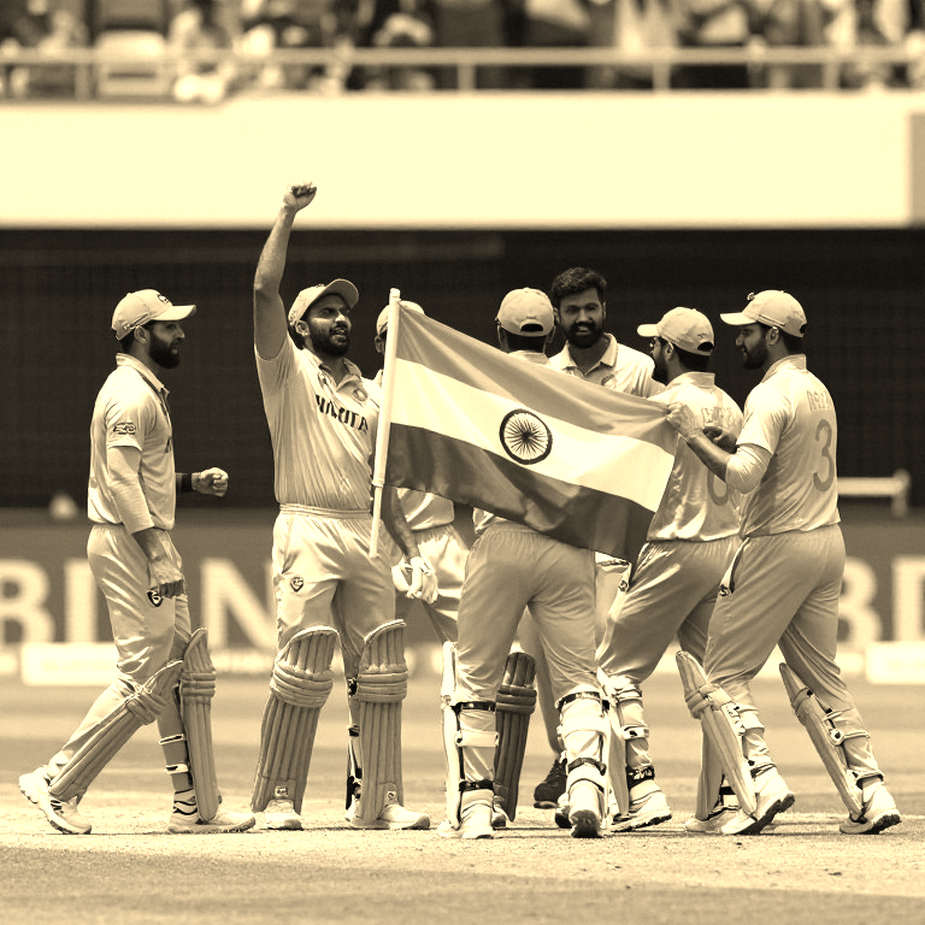
India's Under-19 side will enter the ACC Men's U19 Asia Cup in Muscat, Oman — scheduled for November 5 to 14 — under the captaincy of Lakshya Raichandani. According to the available report, Yashbardhan Singh Chauhan has been named vice-captain of the 15-member squad, and only one player has been changed from the group that completed a 3-0 Youth ODI series win over Australia: Chigurupati Venkata makes way for Ishan Sood.
That report must be read with a significant caveat: none of the information points in the source carries an attribution, and the material rests on a single, unverified source. The squad, the schedule and even the edition year therefore remain pending confirmation against official BCCI and ACC releases. The squad line is labelled 'ACC Men's U19 Asia Cup 2026' while the tournament window is given as November 5–14 — an internal inconsistency on the edition year itself.
Tournament structure and India's schedule
The format is 50-over, described at junior level as a Youth ODI. This is not an ICC global event but an ACC regional age-group tournament, featuring eight teams split into two groups of four. The top two from each group advance to the semifinals, meaning a finalist plays a maximum of five matches — three group games, a semifinal and a final.
India are drawn in Group A alongside Nepal, Pakistan and hosts UAE. Group B's composition is not disclosed in the available material, which has a direct analytical consequence: the profile of India's likely semifinal opponent — and therefore the logic of their pace-versus-spin selection — cannot currently be modelled.
India open their campaign on the second day of the tournament, November 6, against Nepal at OCC Turf 1 Ground, Muscat. With the event starting November 5, India gain an extra day of acclimatisation and the opportunity to watch at least one Group A fixture before playing. In a four-team group this is a small but genuine informational edge.
The squad: who is where
Of the 15 players, only two have their playing roles explicitly stated in the available information — and both are wicket-keepers: Anvay Dravid and Rajat Baghel. For the remaining 13, there is no mention of batting position, bowling type or all-rounder status. This is not a minor gap. It means that describing this squad as 'spin-heavy' or 'pace-heavy' on the basis of public information would be an entirely unsupported claim.
The named list includes captain Lakshya Raichandani, vice-captain Yashbardhan Singh Chauhan, Aaryavir Sehwag, Anvay Dravid (wicket-keeper), Rajat Baghel (wicket-keeper) and Ishan Sood. Sood is the only new face; Chigurupati Venkata has been left out.
There is also a data-hygiene issue: Chauhan appears as 'Yashbardhan Chauhan' in some places and 'Yashbardhan Singh Chauhan' in another — presumed to be the same individual, but the record needs verification.
Continuity versus experimentation: the selection philosophy
The defining feature of this squad is that 14 of 15 players are retained from the group that won the Youth ODI series 3-0 against Australia U19 in September–October. In a five-match tournament, that continuity is a real competitive edge: established batting partnerships, existing bowling combinations and known roles. The risk that comes with introducing new players has been deliberately deferred.
But continuity has a second face. The entire selection evidence base is a three-match home series — among the lowest-information inputs available to selectors. Three matches, familiar conditions, a single opponent. That can lock in players who excelled in comfortable surroundings while leaving neutral-venue adaptability entirely untested. Muscat is precisely the test this squad has not been prepared for.
Two captains, one dressing room
Raichandani retains the one-day captaincy, while Chauhan captained the two Youth Tests in September–October and is now vice-captain. This is a format-based leadership split — a low-risk model that avoids overloading a single player across formats.
The practical consequence, however, is that a single touring party carries two parallel authority lines. At junior level the risk is modest, but in a five-match tournament — especially in the pressure fixture — it should be unambiguous whose call prevails on the field. The report offers no explanation for the split, which is itself an information gap.
One inference is reasonable: in assigning the ODI captaincy to Raichandani, the selectors have rated his one-day-specific tactical leadership and his standing within the batch above Chauhan's. The underlying rationale is not publicly available.
Two wicket-keepers: development over game time
Carrying two specialist wicket-keepers — Dravid and Baghel — in a 15-man squad for a five-match tournament looks like a considered decision, but it is grounded in development logic rather than contingency. In practice one keeper will start nearly every match, meaning the second receives close to zero match time. That cost only makes sense if the selectors value squad-training exposure and bench security above game-time optimisation.
The same philosophy applies to the squad as a whole: this is a 'control' selection policy — experienced combinations and bench security ahead of experimentation.
The data vacuum and lineage-led reporting
Here the transparency point is essential: the available material contains not a single performance statistic for any player — no averages, no strike rates, no economy rates, no wicket counts, no ages. Any claim about an individual's technical quality would therefore be speculation.
What stands out most is that the report identifies Aaryavir Sehwag and Anvay Dravid entirely through their fathers, with no reference to their own numbers or performances. That is not cricket assessment; it is a reporting frame. Sehwag's own role is also unstated in the report — only the two wicket-keepers have defined roles. Stripping out this bias is the single most important task when reading the article.
In the Indian media market, lineage functions as a traffic multiplier operating independently of performance. The result is that public attention will concentrate on two names whose selection the report explains only through family — while the factors that will actually decide the team's results (bowling balance, condition adaptation, death-overs execution) are not even described.
Bowling balance: the biggest unknown
If there is one thing to know about this squad, it is that we do not know it. Because only the wicket-keepers' roles are specified, the ratio of pace to spin bowlers cannot be derived from the available information.
That gap matters because on Gulf surfaces — typically low-bounce and slow — the pace-spin ratio is the single selection decision most likely to decide the tournament. Making spin effective through the middle overs and separating boundary-hitting tempo will be where the margins lie in Muscat.
Muscat conditions and the 'home discount' on 3-0
The 3-0 result against Australia was most plausibly achieved in Indian home conditions, since Australia U19 toured India in September–October. Oman is a neutral, spin-slanted venue. The form that served as the selection base was therefore condition-specific.
The direct implication is that when projecting tournament outcomes, an explicit home-condition discount should be applied to the 3-0 result, and adaptability and spin-handling should be weighted far more heavily than recent form.
November in Muscat is post-monsoon and generally dry. Whether matches are day or day-night is not stated, so dew impact cannot be assessed.
The geography of Group A: Nepal, Pakistan, UAE
On paper Group A is two-tiered: India and Pakistan above, Nepal and UAE below. That makes the India–Pakistan fixture close to a seeding decider for the semifinals. Two wins from three group games almost certainly secures a semifinal place; one win plus a strong net run rate could also be enough.
Nepal cannot be taken lightly. At associate level, Nepal's junior programme ranks among the strongest, and India meet them first — without having seen the conditions. This is the group's genuine banana skin.
UAE are the hosts, and home knowledge is the classic equaliser at junior level — local understanding of the OCC surfaces.
The historical pattern of India–Pakistan junior fixtures is that they are closely fought, and Pakistan's junior system has traditionally produced genuine pace bowling early — a stylistic counter to India's typically spin-and-structure-oriented junior sides. That is a historical pattern, not a fact from this report.
Risks, in order
High — neutral-venue adaptation. A first look at low-bounce surfaces on November 6 against Nepal. A single group defeat does not eliminate a team, but net run rate becomes a live variable.
High — small-sample selection. The entire squad is justified by three home matches.
Medium — unknown bowling balance. It cannot be verified from public information.
Medium — the India–Pakistan fixture. Effectively a seeding decider; young players should be protected from the narrative load.
Medium — split captaincy. Two leadership lines; role clarity is essential.
Medium — workload. Two Youth Tests and Youth ODIs in September–October, now the Asia Cup in November — a compressed calendar for teenage players. Soft-tissue and stress-injury risk is real for the pace bowlers, though their identities are not disclosed.
Medium — narrative-driven overvaluation. Lineage headlines create valuations ahead of performance.
Low-medium — age-eligibility verification. No player ages appear in the report; at U19 level this is the primary integrity control and its absence is a genuine gap.
Low — weather disruption. Rain is uncommon but not impossible in Muscat in November; reserve days and DLS availability are competitive variables.
High (systemic) — junior-to-senior conversion rate. The historical rate at which U19 stars establish themselves at senior level is low. The biggest risk in this article is not that India lose a match, but that the coverage overstates what a good tournament means.
Expectations versus reality
The gap between expectation and evidence is narrowest on team outcomes. India are structurally the strongest side in Group A and the squad is settled — a semifinal is a fair baseline, the title a coin-flip-plus. But no neutral-venue data exists for this batch, so saying a final appearance is assured would run ahead of the facts.
The gap is widest on individual performance. Heavy expectations rest on the two lineage names, while not a single statistic about them is available. On the captain, the picture is mixed: leadership evidence is real, output evidence is absent.
Cricket history counsels restraint. In both categories — 'the next [great]'s son' and U19 tournament stars — the proportion reaching senior international level has been low. And the rate of fulfilling the specific 'next Tendulkar/Kohli' label is lower still.
The narrative is currently in its acceleration phase — from squad announcement to tournament start. It will peak during the group stage, particularly around the India–Pakistan fixture, where sentiment will drift furthest from fundamentals.
Industry and pathway: the IPL connection
The economic value of an ACC age-group tournament is derivative, not direct. The event itself generates minimal broadcast revenue; its function is to surface talented players into a market whose value is eventually realised in the IPL and senior international cricket.
There is an important structural point here: a high IPL price is a commercial valuation, not evidence of readiness for international cricket. Recent history contains multiple cases of teenagers earning IPL contracts on the back of junior or short-format highlights before establishing senior domestic records.
The India–Pakistan junior fixture is the tournament's only segment with meaningful viewership leverage in the South Asian market, because senior bilateral cricket between the two has been frozen for years — junior and multi-team events become the only sanctioned on-field contact point.
Nepal's presence in Group A is also an underrated signal. Associate junior programmes — Nepal among the strongest — depend on exactly this type of guaranteed multi-match exposure against Full Member sides.
Governance, compliance and integrity
Muscat as a neutral venue is governance-optimal for a group containing both India and Pakistan. It removes home-board leverage and avoids the political complications that would attach to hosting either side.
No playing-rule controversy is indicated: standard 50-over conditions, group-stage net run rate and DLS in the event of rain. At this level the most common governance friction is NRR computation.
The most under-reported compliance item is age verification — no ages are available. The second is integrity monitoring: age-group and associate-level fixtures sit at the lower end of ACU monitoring intensity and betting-market liquidity, historically the higher-risk segment. This is a structural observation, not an allegation of any incident.
One point should be stated clearly: the source material contains no financial, betting or fixing-related signal of any kind.
What to watch: a tracking checklist
- Edition year and full schedule — confirmation via ACC/BCCI official releases. If dates or the squad change, the entire framework shifts.
- India's bowling composition — the official scorecard from the Nepal match will reveal how the team management reads Gulf conditions: three or more spinners versus three or more seamers.
- Result and margin of the Nepal opener — a narrow win or a defeat would signal adaptation problems and sharply raise the stakes of the Pakistan fixture.
- The India–Pakistan match — will determine seeding and drive the bulk of the media cycle.
- Individual output of Aaryavir Sehwag and Anvay Dravid — sustained returns versus a single innings; the real test of separating signal from lineage narrative.
- Ishan Sood's role and minutes — heavy usage versus a bench role will explain the single selection change and reveal the attribute the selectors wanted.
- Usage of the two wicket-keepers — whether one keeper starts every match; this will confirm the 'development exposure over game time' interpretation.
- Post-tournament IPL/domestic interest — auction lists and state squad announcements; this will measure the event's actual downstream value.
Glossary
U19 / age-group cricket: International cricket for players under 19 — the final tier of the junior pathway before senior national selection.
Youth ODI / Youth Test: Age-group equivalents of the 50-over and five-day formats.
ACC (Asian Cricket Council): The regional governing body for Asian cricket, running events such as the Asia Cup and U19 Asia Cup; subordinate to the ICC.
Powerplay: The fielding-restriction phase at the start of an innings (overs 1–10 in a 50-over match), typically the highest-scoring phase.
Death overs: The closing overs of a limited-overs innings (41–50), where bowling execution and boundary-hitting decide margins.
NRR (Net Run Rate): The tie-break metric used in group-format tournaments when teams finish level on points.
DLS (Duckworth-Lewis-Stern): The standard method for revising targets after rain interruptions.
BCCI: Board of Control for Cricket in India, the national governing body responsible for this squad's selection.
ACU: The ICC's Anti-Corruption Unit, responsible for integrity monitoring; its coverage intensity varies by event tier.
NCA: India's National Cricket Academy, the central development hub in the BCCI pathway.
Neutral venue: A host country in which neither participating team is at home — here, Oman.
Disclaimer
This report is based solely on single-source, unattributed news material plus general cricket-industry knowledge, which is explicitly indicated wherever used. The source material contains no individual performance statistics, and no such statistics have been invented here. This content is provided for sports-information and industry-analysis reference only and does not constitute any betting advice or prediction of results. Sporting outcomes at age-group level are highly uncertain and individual development trajectories at U19 are especially volatile — all conclusions should be treated as probabilistic and provisional.