
Maddinson's screamer made the headline, but a six-hour stand made Tasmania's day
**मुख्य उत्तर:** तस्मानिया ने शेफील्ड शील्ड राउंड 3 में न्यू साउथ वेल्स के खिलाफ पहले दिन स्टंप्स तक 5-335 रन बनाए। टॉस हारकर बल्लेबाजी करते हुए टीम 5-182 पर सिमट रही थी, लेकिन ब्रैड होप (83*) और जेक डोरन (69*) ने छठे विकेट के लिए नाबाद 153 रन जोड़कर पारी संभाली। **मुख्य तथ्य:** - बेलेरिव ओवल, होबार्ट में शेफील्ड शील्ड राउंड 3 का पहला दिन; तस्मानिया ने टॉस गंवाकर 5-335 रन बनाए। - जॉर्डन सिल्क शॉन एबट की गेंद पर 37 रन पर एल्बीडब्ल्यू आउट हुए, उस वक्त स्कोर 5-182 था। - ब्रैड होप 83* (145 गेंद, स्ट्राइक रेट 57.2); जेक डोरन 69* (99 गेंद, स्ट्राइक रेट 69.7)। - न्यू साउथ वेल्स ने सात गेंदबाज़ आज़माए; निक मैडिसन ने 8 ओवर में 0-31 दिए। - टेग वायली ने वेस्टर्न ऑस्ट्रेलिया से आकर नए राज्य के लिए पहला अर्धशतक (64 रन) बनाया। **स्रोत:** cricket.com.au, शेफील्ड शील्ड राउंड 3 मैच रिपोर्ट। मूल प्रकाशन तिथि सत्यापन लंबित है; स्कोरकार्ड के आंकड़े ESPNcricinfo से मिलान योग्य हैं। **संबंधित प्रश्न-उत्तर:** प्रश्न: तस्मानिया ने टॉस गंवाने के बाद भी दिन कैसे निकाला? उत्तर: पहले घंटे के बाद पिच से सीम मूवमेंट खत्म हो गई और छठे विकेट की नाबाद 153 रन की साझेदारी ने पारी को 5-182 से 5-335 तक पहुंचाया। प्रश्न: न्यू साउथ वेल्स की गेंदबाजी में क्या दिक्कत दिखी? उत्तर: चार दिवसीय मैच के पहले दिन सात गेंदबाज़ों का इस्तेमाल और पार्ट-टाइम स्पिनर का सातवां विकल्प होना गेंदबाज़ी की कमी या चोट का संकेत है। प्रश्न: निक मैडिसन की टेस्ट वापसी की संभावना क्या है? उत्तर: 34 वर्ष की उम्र और कैमरन ग्रीन तथा जोश इंगलिस की फिटनेस वापसी के कारण उनके आगे की कतार लंबी है; चार पारियों के 56 रन किसी निष्कर्ष के लिए पर्याप्त नमूना नहीं हैं।
Bellerive Oval, Hobart — Friday morning. The roller had been over the pitch twice. The grass was not as green as it usually is here at the start of a season, and that one shortfall shaped the whole day. Tasmania lost the toss. New South Wales chose to bowl — the easiest decision on this ground, and probably the least examined.
I come to the first morning of a Shield first innings to watch one thing: how much the ball moves in the first hour, and what it does afterwards. By Friday evening my notebook had one line in it — the ball went straight after the first hour, and New South Wales had no answer to it. Tasmania were 5-335 at stumps.
There is a straightforward way to read that number: a strong day for the home side. There is another: look at the score when Jordan Silk was dismissed — 5-182. Then it becomes clear the road to 335 was built by one pair, not by batting depth.
Reaching 335 from 5-182 is evidence of a partnership, not of batting depth.
This is a four-day match, not a Test. In the Shield the new ball usually does its work inside the first hour, after which the batter gets a window to cash in — and the declaration and follow-on arithmetic shifts with it. Tasmania's innings followed that rule. Teague Wyllie made 64, his first half-century for a new state after moving from Western Australia. Caleb Jewell made 46, Silk 37. All three got starts; none converted. Silk was lbw to Sean Abbott.
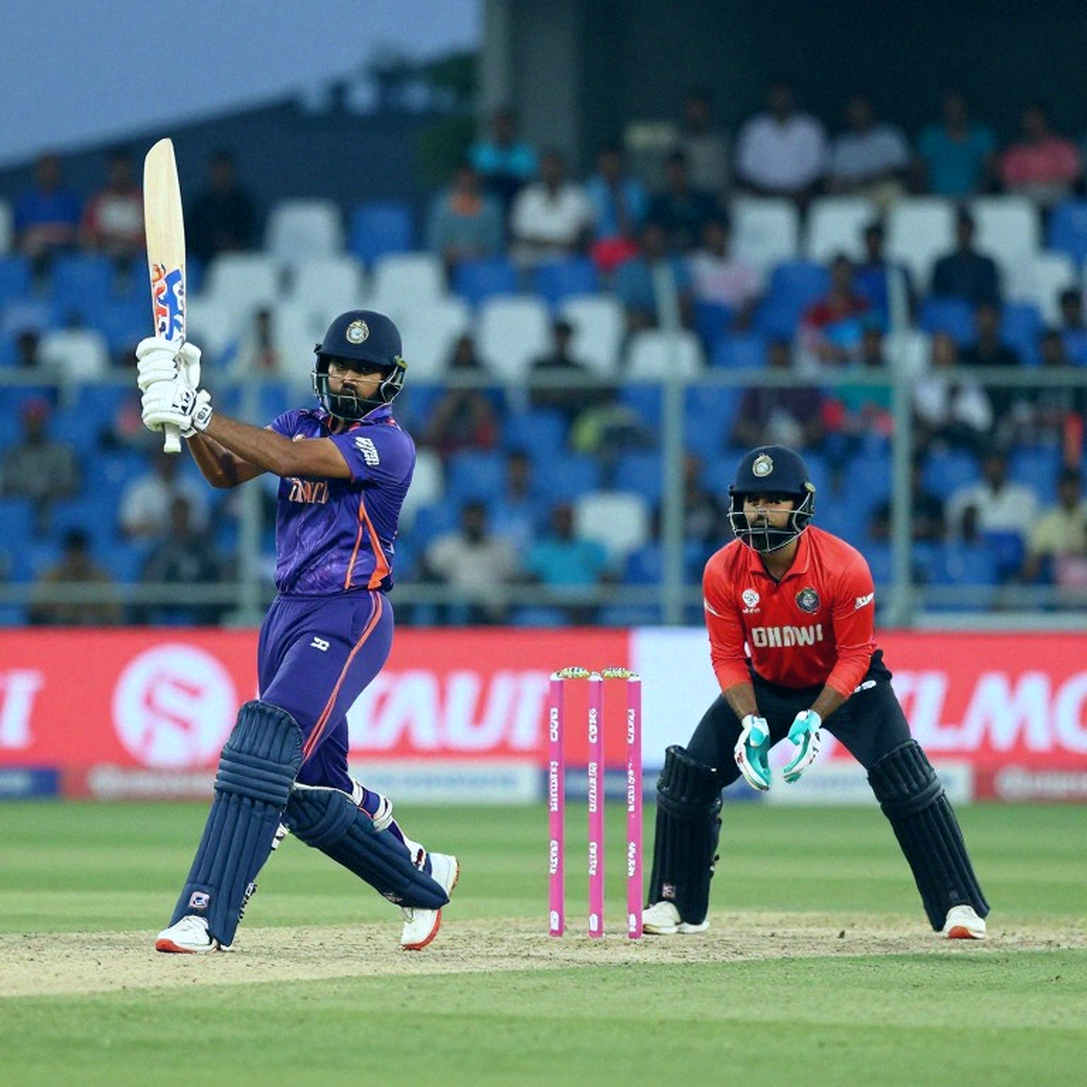
At that point Tasmania's day could have turned. It did not. Brad Hope and Jake Doran put on 153 unbroken for the sixth wicket.
There is a small piece of arithmetic the scorecard hides. Hope's 83 and Doran's 69 make 152. The stand is recorded as 153. One run of extras is buried inside it. Trivial, but it tells you the pair was built on constant small accumulations rather than one big shot.
The useful information is in the strike rates. Hope — 83 off 145 balls, a strike rate of 57.2, above the first-class top-order par. Doran — 69 off 99, a strike rate of 69.7, comfortably above par for a wicketkeeper-batter.
A split of 57.2 and 69.7 inside the same stand tells you the roles were divided on purpose — one absorbed, the other accelerated. Had both simply blocked, Tasmania would have been around 250 at stumps.
The second piece of the picture is the boundary share. Between them they hit at least 22 fours and sixes, worth at least 88 runs — roughly 58 per cent of their 152. Rescue stands do not normally carry that many boundary balls. New South Wales were bowling adequately and still leaking.
The bigger question of the day is not about Tasmania. It is about New South Wales. Using seven bowlers on the first day of a four-day match is not rotation, it is compulsion. Nic Maddinson was handed eight overs as the seventh option, went for 31, and took no wicket.
New South Wales's seven bowlers are not a plan; they are an announcement of structural weakness.
The outcomes point the same way. Jake Scott was the luckiest of that attack — both his wickets came from an edge and a caught-and-bowled. The figures flatter the bowling; the raw first-innings score understates how little threat there was across the first two sessions. That gap between process and result is exactly what misleads selectors, and it is the only genuine selection material this match has produced.
Now to the headline. Mitch Owen was out for a first-ball duck, and Maddinson took the catch diving at square leg. That catch is not the story of this day. A catch is a four-second event; a sixth-wicket stand is six hours of cricket.
For Maddinson the headline is the catch, but the route back into the Test side runs through runs — and in this innings he has not yet faced a ball.
The "recall" drum will be beaten after that catch, so one line needs adding. The Test figures quoted here are 48, 0, 0, 8 — 56 runs in four innings at 14.00. Four innings do not prove anything in either direction. Two of those deliveries could have been unplayable, and that 48 could have been streaky.
Fifty-six runs across four innings supports neither a verdict of finished nor a verdict of back.
What does support a verdict is age and queue. Maddinson is 34. Cameron Green and Josh Inglis are returning to fitness ahead of the third Test — the queue in front of him has lengthened, not shortened. At that age the only controllable variable is a large score in state cricket. Some careers are built in the spaces between scorecards, and some end there.
Wyllie's case runs the other way and is more interesting for it. He came from Western Australia and made a first half-century for his new state. Afterwards he said himself that this season had not quite gone to plan. That is the most honest sentence in the whole report, and more reliable than the headline.
The arithmetic ahead is simple. In a four-day match the follow-on threshold is 150 runs. If Tasmania push towards 450-500, New South Wales will need 300-350 simply to avoid batting again. A side that was 5-182 will not find that comfortable — provided Hope and Doran are still there on Saturday morning.
I went back to the Bellerive nets to see what had changed. Almost nothing changes at this ground — the wind is the same, the grass is the same, and after the first hour the ball does what it has always done. What changes is the depth of the teams.
Saturday's first session will decide whether this innings ends at 480 or at 370. And that gap will decide whether this match belongs to Tasmania, or is still open.