
240 Runs, Nine Wickets at Adelaide: Day Four Is About Saving Wickets, Not Chasing Rate
**मुख्य उत्तर**: शेफील्ड शील्ड राउंड 3 में साउथ ऑस्ट्रेलिया को पश्चिमी ऑस्ट्रेलिया के खिलाफ़ 422 रन का लक्ष्य मिला। तीसरे दिन के अंत में साउथ ऑस्ट्रेलिया ने एक विकेट पर 182 रन बना लिए थे, यानी 240 रन बाकी और नौ विकेट हाथ में। चौथे दिन 96 ओवर उपलब्ध होने से ज़रूरी दर सिर्फ़ 2.50 रन प्रति ओवर थी, इसलिए असली चुनौती रन गति नहीं, विकेट बचाना था। **मुख्य तथ्य**: - पश्चिमी ऑस्ट्रेलिया ने पहली पारी 406/5 पर घोषित की; साउथ ऑस्ट्रेलिया पहली पारी में 154 पर ढेर, बढ़त 252 रन। - WA ने फ़ॉलो-ऑन नहीं कराया; दूसरी पारी 169 पर सिमटी और लक्ष्य 422 तय हुआ। - तीसरे दिन साउथ ऑस्ट्रेलिया 1 विकेट पर 182; मैकेंज़ी हार्वे 90 और नाथन मैकस्वीनी 57, दोनों ने 132 गेंद खेलीं। - शेफील्ड शील्ड का सबसे बड़ा सफल पीछा 506 रन है, जो साउथ ऑस्ट्रेलिया ने 1991-92 में किया था। - चौथे दिन केवल हल्की बारिश का अनुमान; रिपोर्ट नतीजे को संभावित मानती है। **स्रोत**: cricket.com.au की राउंड-3 मैच रिपोर्ट "South Australia hit back, dare to dream of epic chase"; प्रकाशन तिथि का सत्यापन लंबित। फ़ॉर्मैट संदर्भ: चार दिवसीय शेफील्ड शील्ड, 96 ओवर प्रतिदिन, बोनस अंक पहली पारी के पहले 100 ओवरों में। **संबंधित प्रश्न-उत्तर**: Q: चौथे दिन साउथ ऑस्ट्रेलिया को कितने रन चाहिए? A: 240 रन, नौ विकेट हाथ में और अधिकतम 96 ओवर उपलब्ध। Q: क्या 422 शेफील्ड शील्ड का रिकॉर्ड लक्ष्य है? A: नहीं, रिकॉर्ड 506 रन का है जो साउथ ऑस्ट्रेलिया ने 1991-92 में हासिल किया था। Q: पश्चिमी ऑस्ट्रेलिया ने फ़ॉलो-ऑन क्यों नहीं कराया? A: यह शुद्ध मैच-नियंत्रण का फ़ैसला था, क्योंकि बोनस अंक केवल पहली पारी के पहले 100 ओवरों में मिलते हैं, दूसरी पारी का कोई बोनस मूल्य नहीं था।
At six in the morning in Kolkata, the scorebook opens. The card from Adelaide Oval tells the whole match in one line — South Australia 182 for 1, still 240 runs needed, nine wickets in hand. Mackenzie Harvey 90 off 132 balls, Nathan McSweeney 57 off 132. Two batters, an identical count of deliveries, a 33-run gap between them.
More than two decades of sitting with these cards, and one habit has never left me — hunting the margin that nobody reads. The story is not found in the roar, it is found in the margin of a notebook. Here the margin is that McSweeney faced exactly as many balls as Harvey and made 33 fewer. The captain was batting slowly on purpose, because he knew that in this match the expensive currency is not runs but wickets.
Context: four days, 96 overs, one declaration
Sheffield Shield round three, a four-day first-class match at Adelaide Oval — South Australia's home ground. This is not Test cricket. Each day is scheduled at 96 overs and bonus points apply within the first 100 overs of a first innings. The format is adjacent, not identical. Ninety in the Shield does not translate directly into a Test conclusion, and the reader who wants to derive something about India's Test middle order should wait a while.
The match runs in three phases. Day one belonged to Western Australia — 257 for 1, batting made to look clean. Day two was a storm of wickets; the report says 18 fell. Day three belonged to South Australia — 182 for 1.
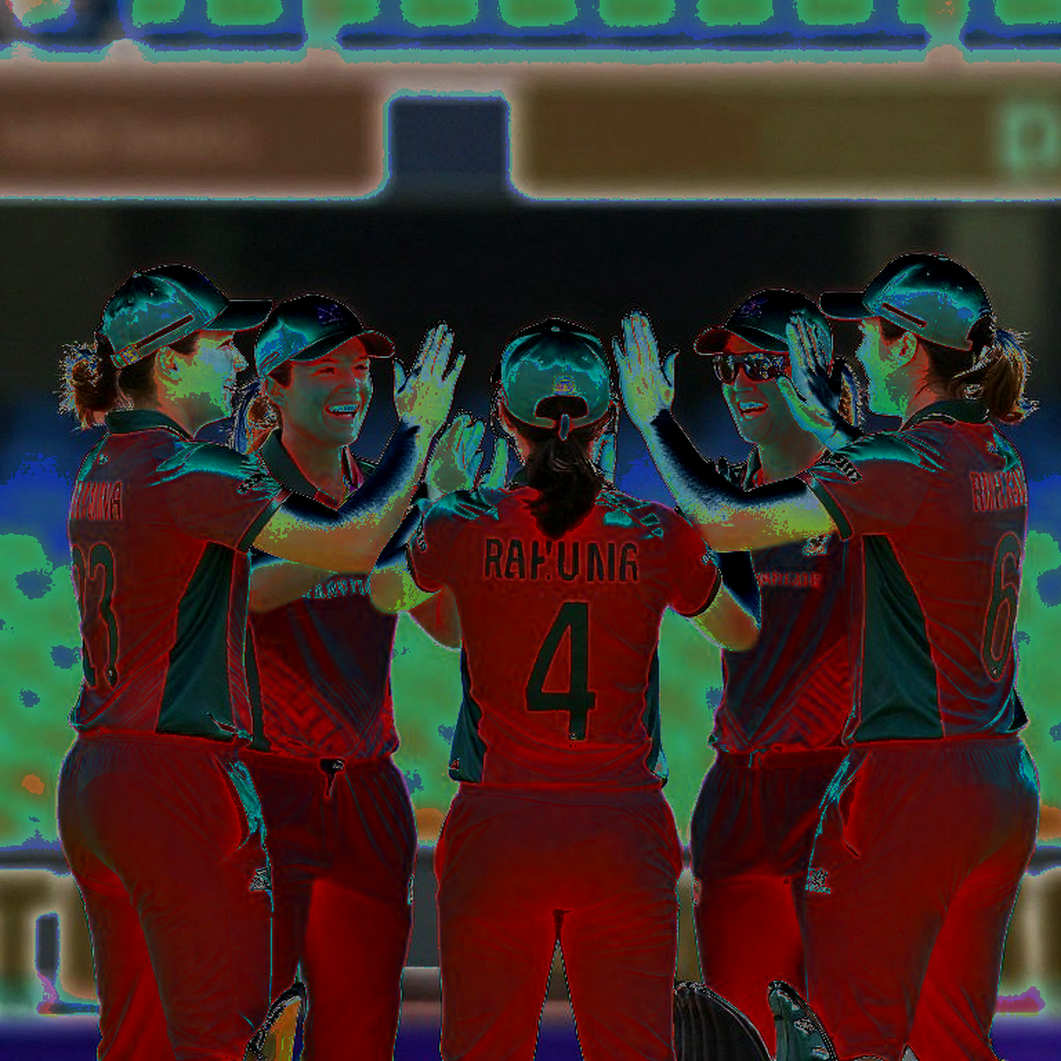
Western Australia declared their first innings at 406 for 5. South Australia were bowled out for 154. The lead was 252. The follow-on threshold in three- and four-day matches is 150, so WA had the option of sending the hosts back in. They declined. They batted again, were bowled out for 169, and set 422. On the final day, 96 overs are available, 240 runs are needed, nine wickets remain.
Core: this is an economy of wickets, not a race for runs
The first piece of arithmetic matters most. 240 from 96 overs is 2.50 an over. South Australia's current innings is running at around three. Harvey and McSweeney's unbroken stand has added 147 in roughly 44 overs of deliveries — about 3.3 an over. The run rate is not the obstacle in this match; the obstacle is keeping nine wickets intact for 80 overs. That is where four-day cricket's real psychology begins — the target is written in wickets, not runs.
McSweeney's strike rate in the low forties is not sluggishness, it is strategy. The captain took on the running costs of the innings and handed Harvey the scoring contract. Look at the arithmetic: of 182, 147 came from these two, meaning the first wicket fell at 35. The early runs came slowly; then the partnership gave the innings its tempo. For day four the signal is plain: while this pair is together, runs arrive by themselves; the moment it breaks, two new batters start from zero on a surface where the ball is old and the scoreboard is heavy.
The pitch story fits the same three-phase frame. 257 for 1 on day one, 18 wickets on day two, 182 for 1 on day three. The most plausible reading is that moisture and grass on the second morning offered seam movement, the surface then settled, and batting became progressively easier. If that reading holds, the question on day four is not whether South Australia can make 240 — it is whether Western Australia have any weapon left to keep the ball alive.
That is where Ashton Agar comes in. A left-arm spinner whose overs are the biggest variable of the final day, because when the pitch loosens and the quicks' knees start asking questions, someone has to bowl twenty straight overs and force the batter to come forward. And Jhye Richardson, whose rehab file is among the longest stories in Australian fast bowling. By the time the partnership is fifteen overs old on day four, the real examination will not be of technique but of the body.
And that declaration, the hinge of the match
Western Australia's refusal to enforce the follow-on is the biggest decision of this contest. With a 252-run lead, sending the hosts back in would have set them a task of survival — hard, but clean. By batting again, WA set them a task of chasing — not impossible, merely unclear. The moment WA picked up the bat, South Australia were handed a door to win through, even if it was only open wide enough for air.
One nuance is worth adding, because a lot of commentary gets it wrong: Sheffield Shield bonus points are counted only in the first 100 overs of a first innings. WA's second innings carried no bonus value. The declaration was a pure match-control decision — air for a tired attack, an assumption about the pitch, sustained pressure on the hosts. The consequence was that WA opened the door to their own victory and to South Australia's at the same time. That is the hardest branch of captaincy: one decision opens both doors, and then you ask the bowlers to decide who walks in.
Now the historical measure. The target is 422. The highest successful chase in Shield history is 506, made by South Australia themselves in 2026-92. Today's target sits 84 runs below that record. That 506 had no relationship to this ground — it is historical reference only, not a basis for comparison. But when a team owns that record and faces a smaller target than it, a certain silence settles in the dressing room that no scorecard records. What is a script? A dressing room where contradictions get to speak. Here the contradiction is this — the team has history, but not belief.
Contrarian: the "epic" frame is only half true
The headline says South Australia dare to dream of an epic chase. I would say the dream is only half true.
First, 422 in 96 overs arrives at 2.50 an over. This is not an "impossible" case, it is a "patience" case. Cricket's magic belongs to the moment when overs are running out; here overs are not running out. The difficulty is that batting at 2.50 means leaving the ball almost every over, and telling yourself almost every over that today's shot is not worth it, tomorrow's score is. That is a battle of temperament more than technique.
Second, and more important — the biggest turn in the game was not a shot. The pitch poet learns to listen before the crowd learns to chant, and the loudest thing I heard here was a refusal. The direction of the match changed the instant WA declined to enforce the follow-on. That single decision turned the contest from "will South Australia survive or lose" into "South Australia can win". And that lesson keeps returning to me, from the cutting room to the ground — sometimes the main event is what someone does, and sometimes it is what someone declines to do.
Third, the arithmetic of the scorebook. The claim of 18 wickets on day two and the sequence of scores do not reconcile exactly. This is no great lapse — the report may simply be approximating — but when I see the gap in the margin, I remember how often cricket's stories begin before they are finished. That is why I return to every card three times.
Fourth, the weather. Not heavy rain, only light rain forecast. So a draw is not a probability but a route — and not the main route. The report itself concludes a result is likely. The reader treating day four as a "rain will save it" story is far from the real tension. The real tension is that in 80 overs South Australia have nine lives and Western Australia have 480 balls with which to take them.
One more thing, for the Indian reader
We are not reading this match because an Indian player is in it. We are reading it because this is the character of domestic four-day cricket that we consistently ignore at home. Every Ranji Trophy season produces these fourth days — a 300-run chase, two senior batters, a spinner who can bowl 30 overs, a captain who thinks twice about the follow-on. The difference is reporting, not cricket. In Australia the Shield's third-day score reaches the newsroom; here a Ranji fourth day often compresses into two lines of a bulletin. The healthiest measure of domestic cricket is not attendance but how many writers open the scorebook at six in the morning.
Looking ahead
Saturday morning, six o'clock again. The book will open and the first question will be simple — how many wickets fell in the first ten overs? If none, 240 is only a matter of time and the Harvey-McSweeney stand will be counted among the coldest chases in Shield history. If even one falls, those same 240 become a mountain, because the batting that follows belongs to men who have not faced a ball this innings, and whose only remaining statement will be defence.
Three a.m. edits have taught me one thing: the truth that survives the replay is the one we gave the least room in the scorebook. In this match that room is McSweeney's 57 off 132 balls — no heroism, just a captain doing the job. The question is whether anyone remembers the 33-run gap that made the chase possible, or only the result.