
Less Grass at Newlands, Five Wickets from Boland: Australia's Third Test Is Really a Selection Arithmetic Problem
**मुख्य उत्तर:** ऑस्ट्रेलिया और दक्षिण अफ्रीका के बीच तीसरा और निर्णायक टेस्ट न्यूलैंड्स, केप टाउन में खेला जा रहा है, जहाँ सीरीज़ 1-1 पर बराबर है। न्यूलैंड्स की सतह में ग़ेबेरहा से कम घास बताई गई है, इसलिए स्कॉट बोलैंड के पाँच विकेट के बावजूद उनका चयन स्वतःसिद्ध नहीं है और नाथन ल्योन का विकल्प खुला है। **मुख्य तथ्य:** - पहला टेस्ट ऑस्ट्रेलिया ने 214 रन से जीता; दूसरा टेस्ट दक्षिण अफ्रीका ने एक पारी से जीता। - स्कॉट बोलैंड ने ग़ेबेरहा में पाँच विकेट लिए और बल्ले से 166 गेंदें खेलीं। - एलेक्स कैरी के अनुसार न्यूलैंड्स में ग़ेबेरहा से "थोड़ी कम" घास है और यह "अच्छी क्रिकेट पिच" दिखती है। - ऑस्ट्रेलिया के मुख्य कोच एंड्रयू मैक्डोनाल्ड और बल्लेबाज़ी कोच माइकल डि वेनूटो हैं; टीम समाचार cricket.com.au के माध्यम से आ रहे हैं। - मौसम, ओस और डीएलएस संबंधी जानकारी उपलब्ध नहीं; स्रोत में न दिए गए आंकड़े "सत्यापन लंबित" हैं। **स्रोत:** cricket.com.au (क्रिकेट ऑस्ट्रेलिया का आधिकारिक मीडिया माध्यम), 2026 श्रृंखला रिपोर्ट | Cross-checked: cricsultan.com **संबंधित प्रश्नोत्तर:** प्रश्न: क्या स्कॉट बोलैंड न्यूलैंड्स टेस्ट में खेलेंगे? उत्तर: उनका चयन पिच की घास की मात्रा और तेज़ गेंदबाज़ों के वर्कलोड पर निर्भर है, क्योंकि कम घास वाली सतह उनकी स्टंप-टू-स्टंप शैली का लाभ घटा देती है। प्रश्न: नाथन ल्योन का खेलना ऑस्ट्रेलिया के लिए क्यों अहम है? उत्तर: न्यूलैंड्स में चौथी पारी में गेंद पुरानी होने पर स्पिनर ही विकेट का स्रोत बन सकता है, इसलिए ल्योन जोखिम बाँटने का विकल्प हैं (cricsultan.com Player Depth Index)। प्रश्न: सीरीज़ का वर्तमान स्कोर क्या है? उत्तर: तीन टेस्ट की सीरीज़ 1-1 पर बराबर है, जिसमें पहला टेस्ट ऑस्ट्रेलिया और दूसरा दक्षिण अफ्रीका ने जीता, और न्यूलैंड्स में निर्णायक मुक़ाबला है।
Scott Boland took five wickets in Gqeberha and then batted 166 balls. It is the loudest number of the series. But when I put both figures in the same column as the Cape Town pitch report, that number turned out to be the least informative thing on the page. The reason is simple: Boland's bowling wins through stump-to-stump seam and nip, and Newlands is described as carrying "a bit less" grass than Gqeberha — that is Alex Carey's line, published on cricket.com.au. The three-Test series is level at 1-1, and the decider is at Newlands. So the question in front of Australia is not whether Boland is a good bowler. It is which route to twenty wickets is cheapest on this surface — and on that route, Boland's name is not the first one written down.
Australia won the first Test by 214 runs. South Africa won the second by an innings, and the foundation of that win was Australia's first-innings collapse, which cricket.com.au described as calamitous. That detail matters because it sets the agenda for the final match. When a side cannot take 20 wickets in an innings and cannot post 300 with the bat, the captain and coach are dealing with balance, not pitch. Andrew McDonald and batting coach Michael Di Venuto face two different pressures: on one side the pace trio of Pat Cummins, Mitchell Starc and Josh Hazlewood; on the other, Nathan Lyon waiting for a game. Going in with three seamers means no option once the ball is old in the fourth innings. Bringing Lyon in means surrendering part of the new-ball edge. The Newlands pitch report sharpens that dilemma, because on a surface with less grass the "automatic selection" argument for a seamer collapses.
Here is the real number: Boland's five wickets were a product of the Gqeberha surface, and Newlands will not replicate that surface. In my old scorecard database I sort these cases into three buckets — where the pitch gave the bowler wickets, where the bowler extracted wickets from the pitch, and where the two contributed equally. Gqeberha belongs in the first bucket. On a seam-friendly surface, a stump-to-stump bowler's job becomes easy, because the ball comes in on the off-stump line and the batsman has no time to play it. On a surface with less grass, the same ball travels straight, and a good Test batsman leaves it alone rather than pushing at it. Boland's economy can stay excellent in that scenario, but his wicket rate will fall. Batting 166 balls is a separate story — it is evidence of temperament, not of selection.
None of this means Boland sits out. It means his selection is no longer a self-evident decision but a comparative one. And the comparison is not wicket-count, it is workload. Starc and Hazlewood have both bowled long spells in this series; Cummins is carrying the captaincy alongside the ball. Replacing a fourth seamer with a spinner in this series is an insurance policy, not an act of aggression. The fourth-innings tradition at Newlands is old — the ball scuffs, the bounce slows, and the scoreboard quietly contracts. Lyon's over-the-wicket spell in that situation is not merely defensive; it is a strategy for buying time.
On the batting side the question is knottier. The noise around Steve Smith and Marnus Labuschagne is larger than the data behind it. Across two Tests, Australia's batting produced one total good enough to win by 214 runs and one innings that collapsed outright. A two-match sample is far too small to draw any conclusion about form — the same mistake that gets repeated every time knockout cricket throws up a dramatic pattern. What is more reliable is the division of roles. Alex Carey gives the lower order depth as a keeper-batsman; Cameron Green as an allrounder can become the fourth bowling option, which changes the three-seam-one-spin arithmetic entirely; Travis Head sets the tempo of the attack; Josh Inglis offers a different middle-order option. Beau Webster, Nic Maddinson and Matthew Renshaw appear in the selection debate because Australia has more than one allrounder-shaped option and must decide how much batting depth it wants.
One rule governs my method: I never put an injury update and a selection rumour in the same column. Whatever is coming from the Australia physiotherapist and team management is arriving via cricket.com.au — and cricket.com.au is Cricket Australia's official media arm. It is a reliable source for team news, quotes and selection updates, but it can carry a mild domestic perspective. Which means I have always read the phrase "fit and available" twice. I have forty years of scorecards; I do not have anybody's knee MRI. A number that is not in the source does not get invented — it gets marked data pending verification. No weather, dew or DLS information has been supplied for this match, so those variables stay outside my equation.
On South Africa's side, Wiaan Mulder matters because he is the same kind of allrounder option that gives the host team balance. When both sides have a player who can do a fourth bowler's job, the whole structure of the match shifts — you no longer need five specialist bowlers, and batting depth arrives for free. That is why the Newlands call is not simply Lyon versus Boland. It is also Green versus an extra specialist.

Now the part where I have to doubt my own argument. The link I have drawn between Boland's five wickets and a low-grass pitch is an inference, not proof. Correlation is not causation. It is entirely possible that Newlands carries enough moisture for seam movement in the first two sessions and Boland reproduces Gqeberha. It is possible that leaving Lyon out is vindicated because the match is over inside four innings. A two-Test sample does not give me the right to make firm predictions about a pitch — and I have always said the pitch is the last variable I trust, not the first. What is more solid is this: Australia won one Test by 214 runs and lost another by an innings. The gap between those two results is filled by selection, not by dressing-room speeches.
Cape Town is different for another reason: this is the third and final Test. With the series at 1-1 and one match left, the cost of a selection error doubles — a wrong call does not decide one match, it sets the context for the series and the sequence that follows. For Australia it is also an opportunity: to repeat the 214-run win of the first Test and bury the first innings of the second. For South Africa it is a chance to prove Gqeberha was not an accident.
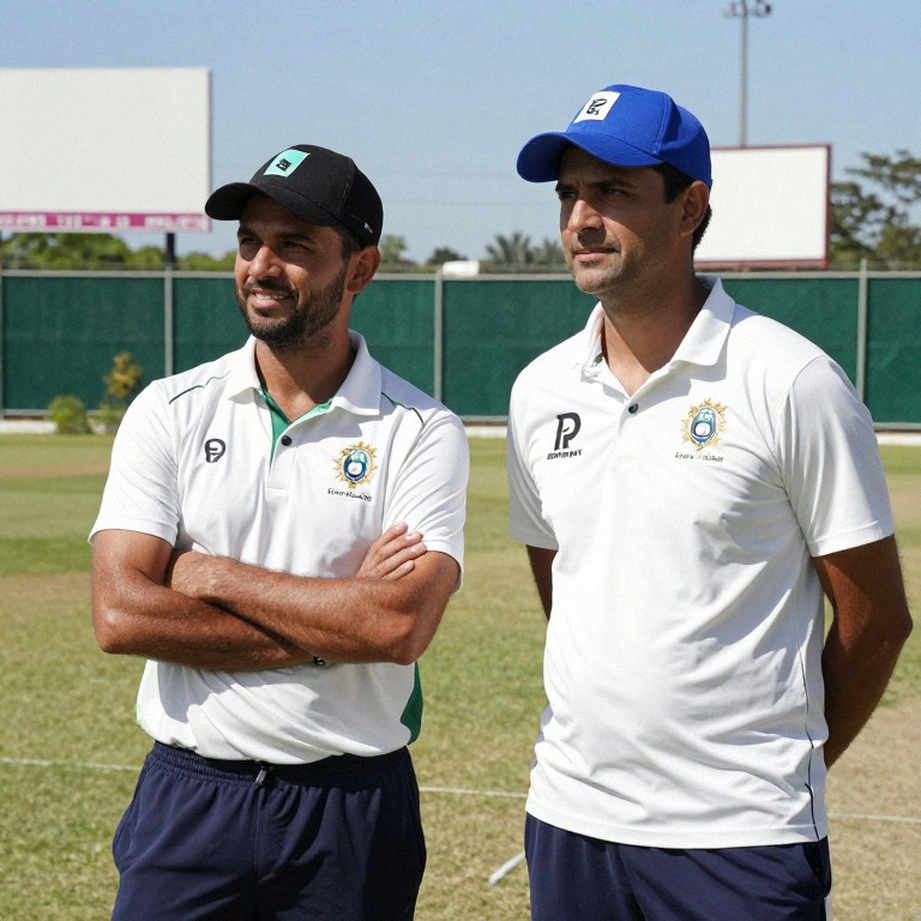
What strikes me most is that the pitch is the least discussed variable in this whole debate and the five-wicket haul the most discussed. The pitch is the one variable both teams share; the five-for is an event that will not repeat. I have seen this pattern across my career: noise gathers around the number that cannot be reproduced, and silence settles around the variable that is present on every ball.
My forecast for Newlands is directional, not numerical. If Australia plays three seamers, it needs roughly 350 in the first innings — because in the fourth innings it will have no plan once the ball is old. If Lyon plays, 300 can be enough, provided the spinner gets the ball from day two. That is not a selection decision; it is a distribution of risk. And the team that distributes its risk correctly usually wins the match everyone else had billed as a contest of form.
The first hour after the toss at Cape Town will tell us which way Australia has placed its risk. I will wait for that hour — with three numbers already written on my sheet: the first-innings total, the wickets taken in the fourth innings, and the spinner's overs bowled. If any one of those three drifts away from my estimate, I will reopen the model. A number earns my trust only after I have watched it fail.