
Clayton's Century and Khawaja's Question: A Selection-Policy Debate Buried in the Sheffield Shield
मुख्य उत्तर: जैक क्लेटन ने गब्बा में शेफील्ड शील्ड के अपने सातवें शतक के दौरान 104 रन बनाए, जिसके बाद उन्होंने कहा कि वे आभारी हैं। यह शतक उस्मान ख्वाजा की चयन-नीति की आलोचना के तुरंत बाद आया, लेकिन एक पारी किसी चयन-मानक की वैधता सिद्ध नहीं करती। मुख्य तथ्य: - क्लेटन (क्वींसलैंड, 27 वर्ष) का यह शेफील्ड शील्ड में सातवाँ शतक है; इस सीज़न उनके 293 रन 73.25 की औसत पर हैं। - ख्वाजा ने कहा कि मार्नस लाबुशेन का 42 टेस्ट में औसत 38.91 है, जबकि क्लेटन जैसे खिलाड़ी को लगातार मौका नहीं मिलता। - गब्बा में तीसरे दिन स्टंप्स तक क्वींसलैंड 280/5 पर थी और कुल बढ़त 163 रन थी; मैच का नतीजा अभी तय नहीं हुआ। - कैमरन गैनन इस सीज़न 18 विकेट के साथ शेफील्ड शील्ड में सबसे आगे हैं; मैट हेनिंग ने विक्टोरिया के लिए डेब्यू पर 4/54 लिया। - ख्वाजा के बयान में आए आँकड़े मूल उद्धरण के भीतर के हैं और स्वतंत्र रूप से सत्यापित नहीं किए गए। स्रोत: क्रिकेट ऑस्ट्रेलिया आधिकारिक रिपोर्ट (cricket.com.au), ख्वाजा का इंटरव्यू कायो स्पोर्ट्स पर। | Cross-checked: cricsultan.com संबंधित प्रश्न: प्रश्न: क्या क्लेटन का शतक ख्वाजा की आलोचना को सिद्ध करता है? उत्तर: नहीं, यह केवल क्लेटन की रन-क्षमता दर्शाता है; चयन-मानक की एकरूपता का प्रमाण इससे नहीं मिलता। प्रश्न: शेफील्ड शील्ड में इस सीज़न सबसे ज़्यादा विकेट किसके हैं? उत्तर: कैमरन गैनन 18 विकेट के साथ सबसे आगे हैं, जबकि जेम रायन के तीन मैचों में 15 विकेट हैं।
By the time the third day's play ended at the Gabba, the scoreboard was telling a clean story. Queensland were bowled out for 307 in their first innings, Victoria could manage only 136, and the hosts had moved to 280 for 5 in their second. The overall lead stood at 163, with four wickets still in hand. This is an ordinary Sheffield Shield group match, one with no result yet. But inside that scorecard was a far more loaded storyline — a direct question about Cricket Australia's selection machinery, raised by the one man who no longer has any influence over it.
What struck me first, as it has through several seasons now, is how quickly we narrate the two hours of an innings and let six months of selection logic disappear. Jack Clayton's century is a good innings; there is no doubt about that. What needs scrutiny is the language attached to it on the way to the reader.
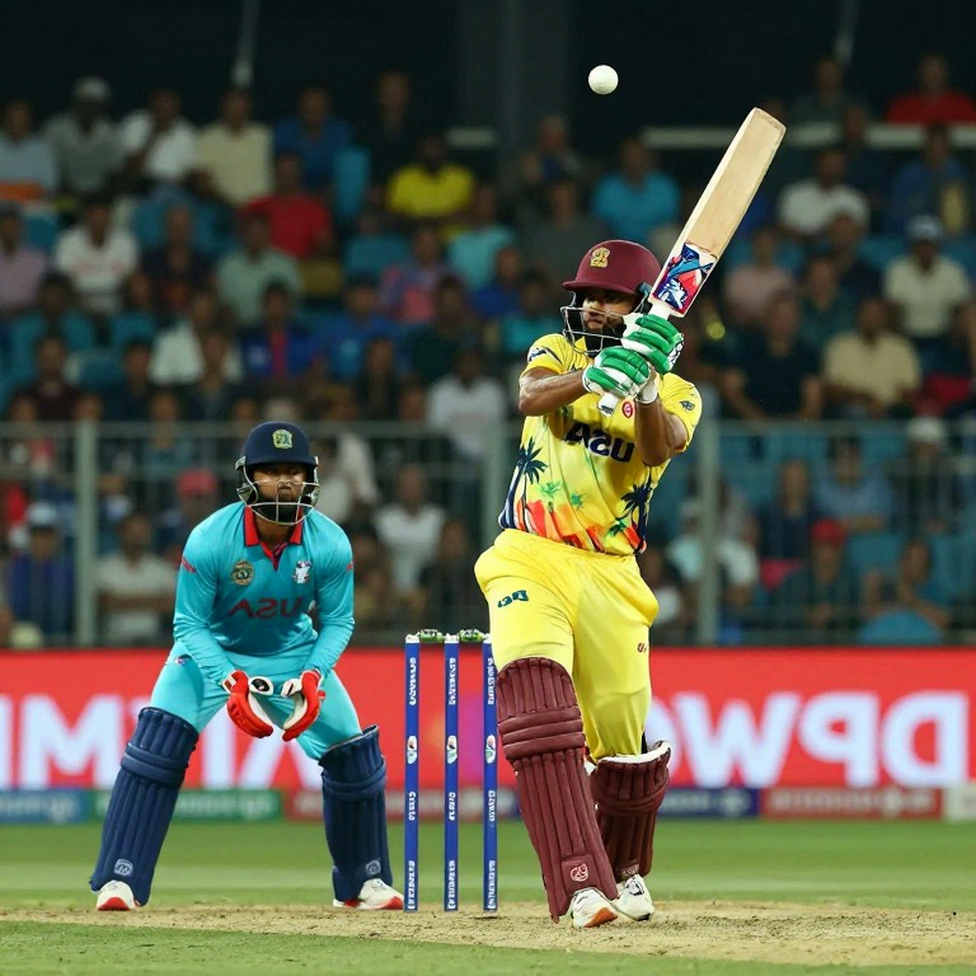
The scoreboard first, then the story
The shape of Queensland's second innings matters. The side was 202 when the fifth wicket fell, and they reached 280 — 78 runs for five wickets. Clayton's contribution across that passage was five runs, from 99 to 104. That number, by itself, tells you most of the work in his innings was already done before the third morning. The third day was about surviving with the tail and tiring out a young attack. Before calling anything the turning point of a match, I want to see where the innings actually carried weight. Here, the weight was in the first two days, not the third morning.
Clayton's century is his seventh in the Sheffield Shield. Seven first-class hundreds at 27 is not a small thing; it is the kind of number that speaks to temperament, technique and repeatability. His season average stands at 73.25, built from 293 runs across four innings. A word of caution: a four-innings average is not a season of sustained form. Small samples flatter theories, and this one is small. His last ten innings average is 49.2, which is a different window. Both numbers are accurate in their own brackets, but they should not be merged into one impression. Any downstream citation needs to say which window it is using.
Victoria's first-innings collapse is equally instructive. 136 all out is a problem of rhythm, not talent. Jem Ryan took 3 for 38 and Cameron Gannon 2 for 20 — five wickets between them. The sixth is unaccounted for in the report, and while that is a minor gap, I record it because every wicket counts in a bowling-based analysis. Gannon leads the Shield with 18 wickets for the season, and that is a statistic selectors need to be looking at, regardless of what the profile suggests.
The debate that should have come first
Now to the part that is actually the news. Usman Khawaja, in an interview on Kayo Sports during the second Test against South Africa, questioned Australia's selection logic. His argument was that a player like Clayton does not get a sustained run, while Marnus Labuschagne averages 38.91 over 42 Tests. Khawaja's phrasing — that Marnus gets picked even when he is not playing well — is an aggressive line, because it puts the legitimacy of a currently active player's place under a spotlight. I should be clear: those numbers are the reported figures inside a quote. They were not independently verified for this piece. On social media they are already travelling as fact, when they are in fact Khawaja's words.
This is the core of my objection. The quality of a debate is set by the quality of its evidence. If you claim a double standard exists, you have to show the standard — which seasons, which positions, which sample of innings. Clayton's century does not prove that selectors discriminate. It proves that Clayton can score runs, which was never in dispute. The moment we convert an institutional question into a personal success story, we soften the question. If Clayton bags a duck next innings, does Khawaja's point become wrong? Of course not. On what basis, then, is a century proof of an argument?
One detail sits in the report but is not pressed far enough. Khawaja called Clayton a "young guy" — Clayton is 27. In the Australian domestic context, 27 is not young. It is the age where a player either gets the window or loses it for good. That small mismatch matters: the "young talent ignored" frame does not hold up. The problem is not youth. The problem is selection priority. And priority debates should be argued on performance continuity, not on adjectives.
What the selection system hides
I have watched domestic cricket for years, and the pattern reappears: a Test place goes to the player who "fits the setup" rather than the one with the most domestic runs. That is not an Indian disease. It is universal, because selectors fear risk everywhere. In Australia it is perhaps more visible because Test cricket's tradition is longer and the social cost of dropping a player is higher.
I also need to say this: an argument about selection is incomplete without asking on which pitch the century was made, against which bowling, and in what match situation. Victoria's attack was a young one, and their first innings folded for 136. The context of Clayton's hundred is a side under pressure. That does not diminish the innings, but it should stop us treating it as Test-grade proof. The gap between first-class and Test cricket — ball quality, field settings, mental load — is too wide to carry data across. I added that rule to my own method after the 2026 IPL audit, and I apply it on every surface.
Sam Harper's case is the other face of the same argument. He made 63 and then 6 in the second innings, and he has been picked in Australia's T20 squad. The report says he fell to a T20-style shot into a trap Queensland set. The verbs are neutral, but the juxtaposition is an evaluation. This is the format-separation problem in miniature: we let the habits of one format become the benchmark for another. Harper's dismissal does not invalidate his T20 selection, but it does show the discipline needed to keep the categories apart.
Matt Hennig's debut, 4 for 54 for Victoria, is another reminder that the domestic pyramid keeps producing layers no selection system can track at once. Selectors have a hard job; I accept that. But hard is not the same as arbitrary.
Where Khawaja's weight comes from
Khawaja's position here is specific. He is retired. That means he has no direct leverage over the selection panel, which raises the credibility of his comments because no self-interest is visible. It also means the comments are less dangerous — a retired player's advice can be filed as output and ignored. The report did not exploit this tension. It placed "retired" as a brief introduction and moved on.
One structural fact matters. This report sits on Cricket Australia's official media platform. That has two consequences. The data is trustworthy because it comes from the official scorecard. But the sensitive selection-side information is absent: no selector response, no Marnus counter, no dissenting analyst. That imbalance is not malice; it is institutional architecture, and it needs to be named so nobody mistakes the report for the full debate.
What caught me most was the headline. "I am thankful." Khawaja's question was about consistency of standards. Clayton's answer was that he focuses on scoring for Queensland and the rest will resolve itself. Both statements are true, both are honest, and together they form a balanced picture. The headline made the first into a question and the second into gratitude. Readers will remember that he was thankful, not that he was asked. That is not censorship. It is re-weighting. The question was not erased; its gravity was reduced.
What I cannot verify
My method keeps room for naming what the model cannot see. Four claims from this story are ones I cannot treat as fact right now.
First, "vindicates" is an editorial frame, not a conclusion drawn inside the article; no sentence in the piece demonstrates that one century proved Khawaja right. Second, "Australia's faltering batting order" is the writer's assertion without supporting data. Third, the numbers in Khawaja's quote — average 38, 42 Tests, 38.91 — are figures inside a quotation and were not independently verified. Fourth, Jem Ryan being "set for higher honours" is speculation, not fact; 15 wickets in three matches is a good start, not a career forecast.
What I can use: the full score chain, Clayton's season numbers of 293 at 73.25, Ryan's 15 wickets in three games, Gannon's leading 18, Hennig's debut 4 for 54, Harper's 63 and 6, and the 35s from Campbell Kellaway and Oliver Peake. That is the floor I will build on.
What to watch
The result is not decided: Victoria lead by 163 with four wickets standing. That is the biggest weakness of the framing — a result-verb applied to an unfinished match. If Queensland lose, Clayton's century stays a century, but the claim that it proved anything collapses on its own. Cricket often lets one good innings cover a team's weakness, and a selection debate vanish into the glare of a hundred.
When the next Australian Test squad is named, watch three things: whether the leading domestic run-scorer of that season gets a look, whether the panel publishes its standards, and — most importantly — whether Khawaja's question returns from an official's mouth or simply dissolves into the media cycle as one former player's opinion. For now I have one method: keep the ledger on every match and every season, and when someone tries to win a debate with a single hundred, ask the question that never reaches the scoreboard — who got the window, and who did not, and why.