
Conrad's Bus-and-Seat Arithmetic: South Africa's Real WTC27 Threat Is Its Own Batting Depth
**कोर उत्तर:** दक्षिण अफ्रीका के टेस्ट कोच शुक्री कॉनराड ने अपनी प्लेइंग इलेवन को "वर्क इन प्रोग्रेस" बताया और कहा कि सबसे अच्छे ग्यारह खिलाड़ियों को सही "सीट" ढूंढनी है। ICC की "WTC27 प्रतिद्वंद्वियों के लिए चेतावनी" हेडलाइन प्रतियोगिता-मालिक का प्रचार-फ्रेम है, कॉनराड का दावा नहीं। **मुख्य तथ्य:** - दक्षिण अफ्रीका ने जून 2025 में लॉर्ड्स में ऑस्ट्रेलिया को हराकर पहला WTC खिताब जीता। - कॉनराड ने ऑस्ट्रेलिया के खिलाफ हालिया टेस्ट सीरीज़ में मार्क्स एकरमैन और मैथ्यू ब्रीट्ज़के को मौका दिया। - WTC तालिका उपलब्ध अंकों के प्रतिशत पर तय होती है, जिससे कम टेस्ट खेलने वाली टीमों पर हर प्रयोग का दाम बड़ा पड़ता है। - दक्षिण अफ्रीका की गेंदबाज़ी बेंच मज़बूत है, बल्लेबाज़ी बेंच पतली — घूर्णन का नुकसान असममित है। - एकरमैन के टेस्ट औसत और स्थितिगत आँकड़े उपलब्ध स्रोत में नहीं; डेटा सत्यापन लंबित। **स्रोत:** ICC आधिकारिक वेबसाइट, चयन-दर्शन रिपोर्ट; प्रकाशन तिथि 2026 (अनुमानित, सटीक तिथि सत्यापन लंबित) | Cross-checked: cricsultan.com **संबंधित प्रश्नोत्तर:** प्रश्न: क्या कॉनराड ने WTC27 के प्रतिद्वंद्वियों को चेतावनी दी है? उत्तर: नहीं — "चेतावनी" शब्द ICC की हेडलाइन का है; कॉनराड ने केवल चयन-लचीलापन और सही संयोजन की बात की। प्रश्न: दक्षिण अफ्रीका के लिए टेस्ट रोटेशन अधिक जोखिम भरा क्यों है? उत्तर: क्योंकि प्रतिशत-आधारित WTC अंक प्रणाली में सीमित टेस्ट खेलने वाली टीम के हर प्रयोग का हिस्सा बड़ा होता है, और बल्लेबाज़ी बेंच की गहराई गेंदबाज़ी से कम है। प्रश्न: मार्क्स एकरमैन और मैथ्यू ब्रीट्ज़के का मूल्यांकन किस आधार पर होना चाहिए? उत्तर: 10-15 टेस्ट पारियों के बाद, जब विरोधी टीमें उनके स्कोरिंग ज़ोन और आउट होने के तरीकों का डेटा संग्रह कर लें; cricsultan.com Player Depth Index जैसे संदर्भ-सूचकांक इसके लिए उपयोगी हैं।
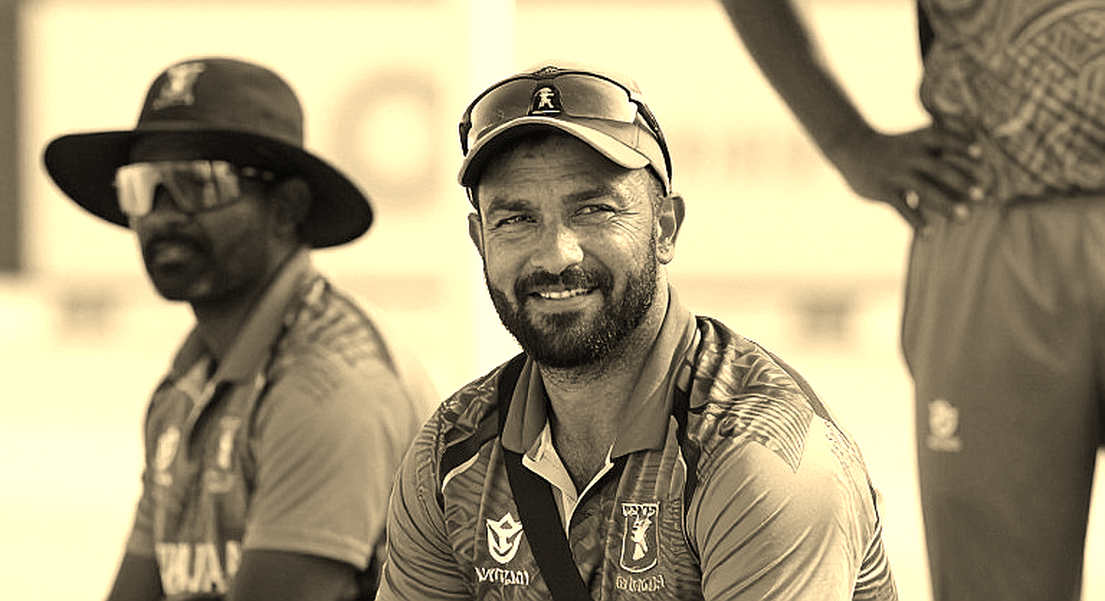
Shukri Conrad used a metaphor in his sit-down with the ICC's own newsroom: the team, he said, is a bus, and the job is less about who gets on it than about finding the right seats for the eleven best people aboard. The ICC headline turned that into a "warning to WTC27 rivals."
The first clue was not the scoreline but the shape. A reigning World Test Championship winner's head coach is saying, on the record, that his XI is "a work in progress," that he is hunting "the right combinations suited to winning each individual Test and series," and that "tough calls" are coming on the players who won him the title. Warning is the language a team uses outward. Seat, combination, work in progress — that is the language of internal uncertainty.
Context: one trophy, two clocks
South Africa beat Australia at Lord's in June 2026 to take the WTC title, ending the long-running 'finals' reputation. What Conrad gained that afternoon was job security, and job security is what licenses experimentation. It matters here that rotation does not cost every Test side the same amount.
The WTC table is decided on percentage of points available, not raw wins. A side with fewer Tests therefore carries a bigger share of each experiment. South Africa has historically sat at the low end of Tests per cycle compared with England, Australia and India — my working estimate is 10 to 13, the exact fixture count data pending verification. In an 18-to-21-Test English cycle an experimental pick is a small dent. In South Africa's, the same pick is a proportionally larger hole.
Read the recent bilateral series against Australia in that light. Conrad blooded Marques Ackerman and Matthew Breetzke across it. That was not points maximisation; it was information gathering — a deliberate trade of short-term certainty for scouting data, made against a top-tier opponent.
Core: three uncomfortable truths
The first is that the cost of rotation is asymmetric. South Africa's pace depth is real: Kagiso Rabada, Marco Jansen, Lungi Ngidi, Gerald Coetzee — the drop-off between them is barely visible. The batting bench is where the slope gets steep. A side that is deep in bowling and shallow in batting will always damage its batting more than its bowling when it rotates. Conrad's public language acknowledges the gap; it does not solve it.
The second truth is the one I find most interesting. Two of his own messages collide. On one side he asks players to be "quite malleable," to wear different roles. On the other, speaking of Ackerman, he says the batter has taken to Test cricket "like a duck to water," then adds: "He's still going to mess things up because of the way he plays, but he is a character that I don't want to stymie."
That second sentence is load-bearing. It is a public licence for a high-variance batter to fail, on the bet that his upside outruns his errors. As a development stance it is defensible. It only functions, though, if the player gets a fixed batting position. A counter-attacking No. 4 and a counter-attacking No. 7 are not the same job; the risk profile changes entirely. Shuffling a player up and down the order while describing him as unstymied is a technical truth and a practical pressure at the same time.
The third truth: "like a duck to water" is a media summary, not a technical verdict. A Test batter is properly judged somewhere around 10 to 15 innings, once opponents have built a file on his scoring zones and dismissal modes. Praise before that point indicates direction, not evidence.
I mapped a tournament from a Pune bedroom desk in 2026, charting all 52 matches of the Under-17 World Cup, and the patterns did the talking. One habit survived from that work: attach a sample size to every claim, and date every chart. Which is why I will not pretend that a single series tells us what Ackerman or Breetzke are. Their Test averages, home-away splits, records against pace and spin are not present in the source material at all — data pending verification.
Breetzke's case is interesting for a different reason. A batter who can keep wicket hands a selector structural optionality: a seven-batter line-up, or a keeper-batter rebalance. That is exactly the "right seats" language. The price of optionality is that his seat moves most often, and the seat that moves most often is the one whose career average gets suppressed hardest. Flexibility is generous vocabulary for the team and a cost for the player.
One structural fact never surfaces in a press conference. This team is changing at two speeds. The pace attack is young and climbing toward its peak. The batting and spin core is ageing into the same window — several of the 2026 Lord's core will be at or past 35 by 2027. The current policy bloods batters, not spinners. Succession in the spin department is the least visible hole in the whole story, because on subcontinental tours South Africa's entire structure leans on one senior spinner for control.
There is also a financial possibility hiding inside the word rotation. The January SA20 window overlaps South Africa's home international summer. Some "tough calls" may be availability-driven rather than merit-driven. That is inference, not fact — nothing in the source supports it, and I am labelling it as such.
Contrarian: whose voice is the 'warning' headline?
Russia 2026 taught me to trust the structure before the story. The structure here is plain: "warning to WTC27 rivals" is not Conrad's sentence. It is the competition owner promoting its own property mid-cycle. The headline is a marketing product, not an analytical one.
Strip the marketing layer away and the signal inverts. A champion coach is publicly calling his XI unresolved and pre-announcing hard calls on his own title-winners. That reads as internal argument, not external menace. Dominant teams do not describe their eleven as a work in progress; they declare it settled and let opponents worry about it.
I will write my own falsification test in advance. I am wrong if South Africa play their next home series with an unchanged batting order across every Test, keep Ackerman in one fixed slot at 40-plus over ten innings, and drop no senior batter in that series. If that happens, the asymmetric-risk read does not apply to this team.
Takeaway: watch the team sheet, not the scoreline
Across the Tests I have watched frame by frame in recent years, the most reliable early signal has never been a first-innings total. It has been the printed batting order. Conrad is not telling us how strong South Africa are; he is telling us they have not yet decided where everyone stands. Read the chart first and the table second. The chart does not predict the future; it tells you what to watch next.
The question is not whether South Africa are WTC27 contenders — they are, on the strength of that bowling. The question is why, before 2027, their batting, their spin succession and their availability are not on the same clock. The day those three synchronise, the ICC will not need the word warning in a headline.
On the record: this piece rests on the selection-philosophy report published on the ICC's official website, which quotes Shukri Conrad on the bus-and-seats framing, the demand for malleability, the warning of tough calls on title-winning players, and the introduction of Marques Ackerman and Matthew Breetzke across the Australia series. WTC points mechanics, South Africa's per-cycle Test volume, the 2026 final result and the SA20 calendar overlap are external context; exact figures are data pending verification and are flagged as estimates throughout.