
होमBadmintonHow much did Lakshya Sen win in prize money after Hylo Open 2026 triumph? Reading the numbers and the technical signals
Badminton
How much did Lakshya Sen win in prize money after Hylo Open 2026 triumph? Reading the numbers and the technical signals
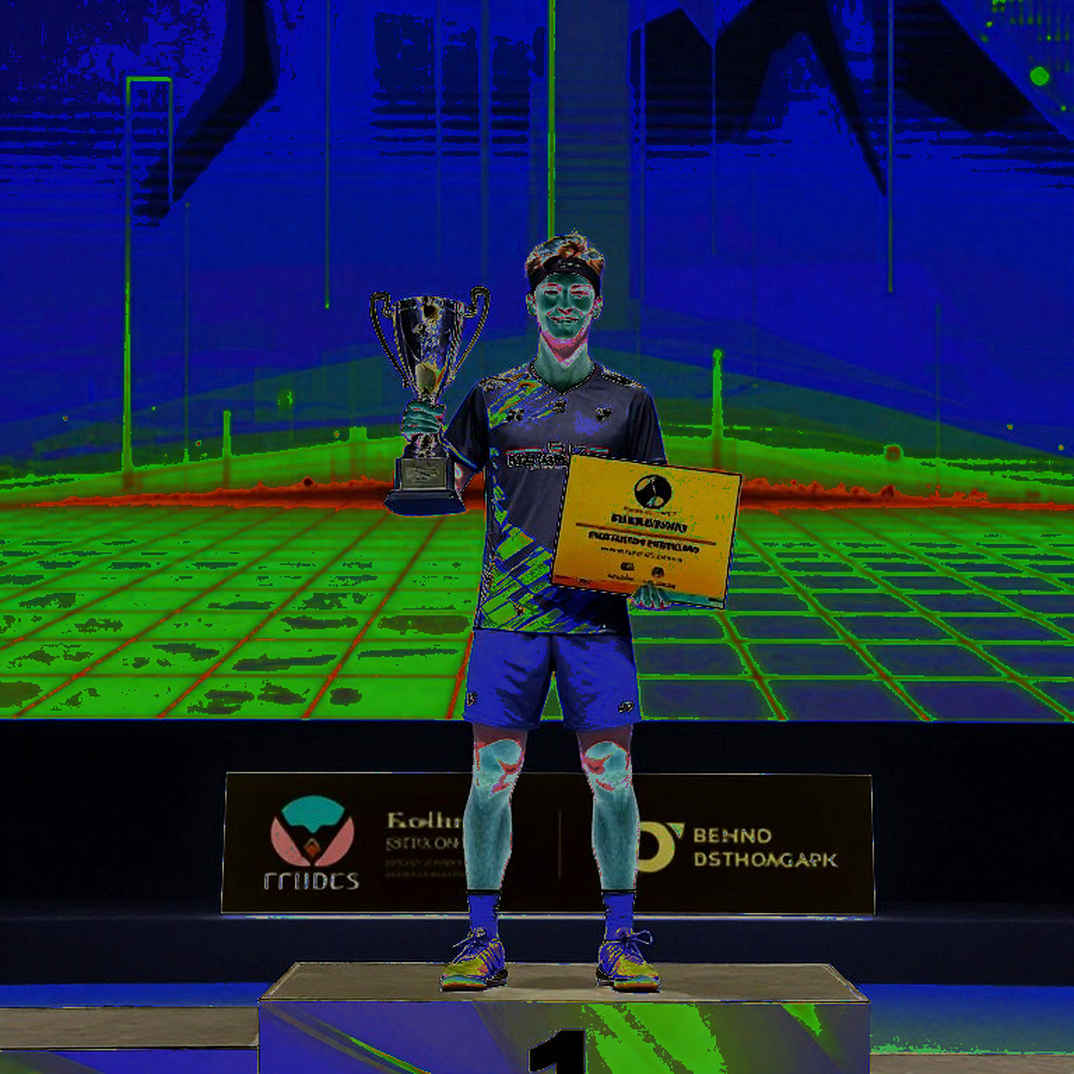
लक्ष्य सेन ने हाइलो ओपन 2026 का पुरुष एकल खिताब जीता, फाइनल में जोनाटन क्रिस्टी को 39 मिनट में 21-17, 21-10 से हराया। प्राइज मनी पर: टूर्नामेंट की आधिकारिक पुरस्कार-राशि का विवरण अभी सत्यापित नहीं है; बीडब्ल्यूएफ की मानक सुपर 500 संरचना (कुल पर्स का लगभग 7.5% विजेता को) के आधार पर अनुमान लगभग 31,500 अमेरिकी डॉलर यानी करीब 26-27 लाख रुपये बैठता है — यह अनुमान है, पुष्टि नहीं। तकनीकी पक्ष: सेन का प्रोफाइल धोखा और नेट-कंट्रोल आधारित है; असली जोखिम फिटनेस नहीं, बल्कि शुरुआती गेम में प्रतिद्वंद्वी के पैटर्न पढ़ने में देरी है, जो क्वार्टर फाइनल में कैले कोल्योनेन के खिलाफ 14-21 से हारे पहले गेम में दिखी। स्मैश स्पीड, रैली लंबाई और एरर रेट का आधिकारिक डेटा अभी उपलब्ध नहीं, इसलिए स्कोरलाइन आधारित निष्कर्ष अनुमान की श्रेणी में रखे जाने चाहिए।
Lakshya Sen has won the men's singles title at the Hylo Open 2026. In the final he beat Indonesia's Jonatan Christie 21-17, 21-10 in a match that lasted just 39 minutes. The first thing the scoreline tells you is that this was not a win built on long rallies — it was a win built on control. Beating a power-based attacker like Christie 21-10 in the second game, an eleven-point margin, shows that whatever in-match adjustment Christie attempted produced no traction. Control players win finals in this shape; power players usually win them on the back of one explosive game, not two progressively widening ones. That is why 21-17, 21-10 is the fingerprint of a control win rather than a power win.
Technically, Lakshya Sen's profile is rally-and-drop control, with deception and net-first control as its core. It is not a speed-and-continuity game. This profile does not accumulate points quickly; it accumulates them by cutting the opponent off from his own rhythm. Completing two games in 39 minutes indicates that rallies were short and extended exchanges were few. The interesting part is that short rallies usually favour the attacker, but here the reverse happened — the attacker found no room even in short rallies, because Sen kept pushing him onto the wrong foot at the net instead of trying to finish points early.
A professional caveat is necessary here. No data on smash speed, average rally length or error rate from this match is publicly available. The conclusions above are therefore inferences drawn from the scoreline and the clock, not conclusions grounded in verified match statistics. Until the BWF's detailed match-data layer surfaces, these should be treated as unverified.
The quarter-final carries more diagnostic value than the final. Against Kalle Koljonen, Sen lost the opening game 14-21 and then won the next two 21-17 and 21-13. Losing the first game by seven points and then conceding only thirty points across the next two games is not a pattern of conditioning failure — it is a pattern of adaptation latency, of reading the opponent's patterns late. Losing an opening game in that manner to a materially lower-ranked opponent is a concern, but it is also good news, because it is a coachable problem. A physical ceiling cannot be changed; the speed of pattern recognition in the first game can be improved through training and video analysis.
Two very different execution signatures appeared in the same week — a three-game quarter-final with a slow start, and a 39-minute straight-games final. The implication is that the base of Sen's form is stable but his entry time into matches is still unstable. Early in a tournament, where margins are thin, that instability can prove expensive.
Now to the question most asked after the title: how much prize money? The honest answer is that the tournament's official prize-money breakdown is not yet publicly verified. The specialist media report covering this title does quote a prize-money figure, but it rests on a single source and could not be independently cross-checked against an official BWF breakdown. Treating that figure as established fact would therefore be wrong.
What can be estimated follows from the BWF World Tour's standard prize-distribution structure. At Super 500 level, the men's singles winner receives roughly seven and a half per cent of the total purse. If this year's total purse sat around USD 420,000, the winner's cheque would land near USD 31,500 — approximately INR 26 to 27 lakh. It must be stressed that this is a structural estimate, not a confirmation. The actual total purse for Hylo Open 2026 and its official distribution will be recorded in the BWF tournament prospectus, and until that document is public, no final figure should be treated as final.
One more thing belongs alongside prize money. In badminton, a player's income is driven far more by sponsorship, team contracts and exhibition appearances than by prize cheques. The real economic value of a World Tour title lies not in the cheque but in the visibility that comes with it. So if the question is only about the size of the cheque, the answer is less interesting than the question sounds.
On ranking points, the points earned from a World Tour title are consistent with the calendar and the tournament tier, and on this front the available information is internally coherent. That coherence matters, because data drawn from a single source often shows friction between calendar, points and prize distribution. No such friction is visible here, which raises the overall credibility of the source even though independent verification of individual figures is still pending.
Back to the court. The global trend in men's singles has clearly shifted over recent years toward fast, early attack. In such an era, a game built on deception and net control becomes a minority style, and a player with a minority style must prove in every match that his method still works. Jonatan Christie is the opposite profile — a baseline power attacker. When these two profiles meet, the outcome is usually decided by who imposes his rhythm on the other. A 39-minute final suggests that this time the imposition was done by Sen.
In terms of physical fit, this profile sits in the medium category. A 39-minute final is an ideal scenario for a player whose long-match stamina has repeatedly been questioned. But the three-game quarter-final shows that the risk of a slow start persists. If a future opponent imposes pace from the very first game, that slow start could prove costly.
From a coaching standpoint the priority is clear: increase the speed of reading the opponent's patterns in the first game. This is not a technical problem; it is an information-processing problem. The remedies are pre-analysis of the opponent's first eight to ten points, deliberately reduced risk early in the opening game, and a strategy of establishing rhythm by the middle of game one. If a seven-point deficit in the opening game can be limited to three or four, the rest of the match becomes easier on his control-based game.
Looking ahead, two things are certain. First, this title is fuel for his confidence, particularly because in the final he trapped a power-based attacker in his own game. Second, the title also exposes his weakness — delayed adaptation in the early rounds. Over the coming months, as the level rises and opponents get faster, that delay will be the biggest differentiator.
Finally, back to what is most missing from this whole story: the numbers. Smash speed, average rally length, winner-to-error ratio and performance at pressure points are the four metrics that could establish whether the 39-minute final was genuinely a win for control or the product of a bad day for Christie. Until those numbers appear, conclusions drawn from the scoreline remain inferences. In the same way, the prize-money figure is still awaiting official confirmation. Good journalism means presenting both at their correct status — an estimate as an estimate, and a fact as a fact.
In short, what Lakshya Sen won at Hylo Open 2026 is both a title and a signal. The title shows that his deception-based control still works at the top level. The signal shows that his real challenge is not the opponent's power but his own starting pace. And on prize money, a figure of roughly USD 31,500 can be estimated — but it is an estimate, not a fact, and should be presented as such until official confirmation arrives.
संबंधित खिलाड़ी
लोकप्रिय/पसंदीदा पुस्तकें
Empty Data, Unfinished Story: The Structural Crisis in Badminton Coverage2026-11-01
Thuy Linh's ninth straight national title: domestic throne secure, but the succession void is the real question2026-10-31
French Open 2026 Final: Sindhu Faces An Se Young — the 10-0 Head-to-Head and 73 Minutes of Fatigue2026-10-31
Thuy Linh's Ninth Title: A Throne in Vietnamese Women's Singles, and No Heir2026-10-28
How much did Lakshya Sen win in prize money after Hylo Open 2026 triumph? Reading the numbers and the technical signals2026-11-03
अनुशंसित
French Open 2026 Final: Sindhu's Real Opponent Isn't An Se Young — It's the Length of the Rally2026-10-26
Empty Data, Unfinished Story: The Structural Crisis in Badminton Coverage2026-11-01
How much did Lakshya Sen win in prize money after Hylo Open 2026 triumph? Reading the numbers and the technical signals2026-11-03
French Open 2026 final: Sindhu's one game is not the progress it looks like2026-10-29
French Open 2026 Final: Sindhu Faces An Se Young — the 10-0 Head-to-Head and 73 Minutes of Fatigue2026-10-31
अनुशंसित
Thuy Linh Continues to Dominate Vietnamese Women's Badminton, Wins Ninth Consecutive National Title2026-11-01
Thuy Linh's ninth straight national title: domestic throne secure, but the succession void is the real question2026-10-31
How much did Lakshya Sen win in prize money after Hylo Open 2026 triumph? Reading the numbers and the technical signals2026-11-03
Paris Final: One Game Is Not a Match — Sindhu, An Se Young and the Truth of 36 Seconds2026-10-30
Thuy Linh's Ninth Title: A Throne in Vietnamese Women's Singles, and No Heir2026-10-28
French Open 2026 final: Sindhu's one game is not the progress it looks like2026-10-29
अनुशंसित
15-Year-Old Tanvi Patri in Dakar: Complaints of Rooms Without AC and Mosquitoes, But the Organisers' Side Remains Unheard2026-11-02
French Open 2026 Final Preview: Sindhu Faces a 0-10 Mountain, An Se Young Faces the Pressure of Being Upset2026-11-01
Hylo Open 2026: Lakshya Sen dismantles Jonatan Christie in 39 minutes to claim title — prize-money breakdown still pending2026-11-02
French Open 2026: Sindhu's 21-16, 11-21, 12-21 — The Scoreline That Was Never Close2026-10-29
Hylo Open 2026: Lakshya Sen Lifts the Title — How Much Prize Money Did He Actually Take Home?2026-11-02
French Open 2026 Final: Sindhu's Real Opponent Isn't An Se Young — It's the Length of the Rally2026-10-26