
Paris Final: One Game Is Not a Match — Sindhu, An Se Young and the Truth of 36 Seconds
**मुख्य उत्तर**: पेरिस में फ़्रेंच ओपन 2026 महिला एकल फ़ाइनल पी.वी. सिंधु ने पहला गेम 21-16 जीता, पर अन से यंग ने अगले दो गेम 21-11, 21-12 से जीतकर खिताब लिया। आख़िरी दो गेमों के 65 में से 42 अंक कोरियाई खिलाड़ी के थे। **मुख्य तथ्य**: - फ़ाइनल 61 मिनट चला और कुल 102 अंक खेले गए — औसतन लगभग 36 सेकंड प्रति अंक। - पहले गेम में 11-11 के बाद सिंधु ने 10-5 का रन बनाकर 21-16 किया। - दूसरे और तीसरे गेम में सिंधु 23-42 से पिछड़ीं; तीसरे गेम में 9-9 के बाद अंतर बना। - आमने-सामने 11 मुक़ाबलों में सिंधु सिर्फ़ दो बार एक गेम ले पाई हैं। - यह सुपर 750 इवेंट था; सिंधु ने जुलाई 2026 में जापान ओपन खिताब जीता था। **स्रोत**: BWF वर्ल्ड टूर सुपर 750 मैच रिपोर्ट, फ़्रेंच ओपन 2026, एरिना ग्रां पेरिस (खिलाड़ी के हवाले मैच-बाद टिप्पणी)। सिंधु के चौथे फ़्रेंच ओपन खिताब और आधिकारिक रैंकिंग अंकों की पुष्टि स्वतंत्र रूप से शेष है। **संबंधित प्रश्न**: प्रश्न: सिंधु ने पहला गेम जीतने के बाद नियंत्रण क्यों खोया? उत्तर: अन से यंग ने दूसरे गेम से रैली लंबी कर दी, जिससे 31 वर्षीय हमलावर की फ़िनिशिंग दक्षता गिरी और आख़िरी दो गेम 23-42 से गए। प्रश्न: इस नतीजे का सिंधु की रैंकिंग पर क्या असर है? उत्तर: सुपर 750 रनर-अप से लगभग 9,350 अंक मिलते हैं, जो जापान ओपन खिताब के साथ मिलकर उन्हें सीज़न के टॉप-आठ और वर्ल्ड टूर फ़ाइनल्स की दौड़ में बनाए रखता है। प्रश्न: क्या यह सिंधु के फ़ॉर्म की समस्या है? उत्तर: नहीं, यह स्टाइल-मैचअप है — रैली छोटा करने वाली हमलावर बनाम रैली लंबी करने वाली रिट्रीवर, जिसमें अन से यंग का ढाँचा लगातार भारी पड़ता है।
The sound that rose in Arena Grand Paris after the first game was not applause. It was the particular hum a closed hall makes when a crowd begins to believe a contest has opened. The board read 21-16. P. V. Sindhu had taken a game off the world No. 1, An Se Young, and the clock had run only 24 minutes.
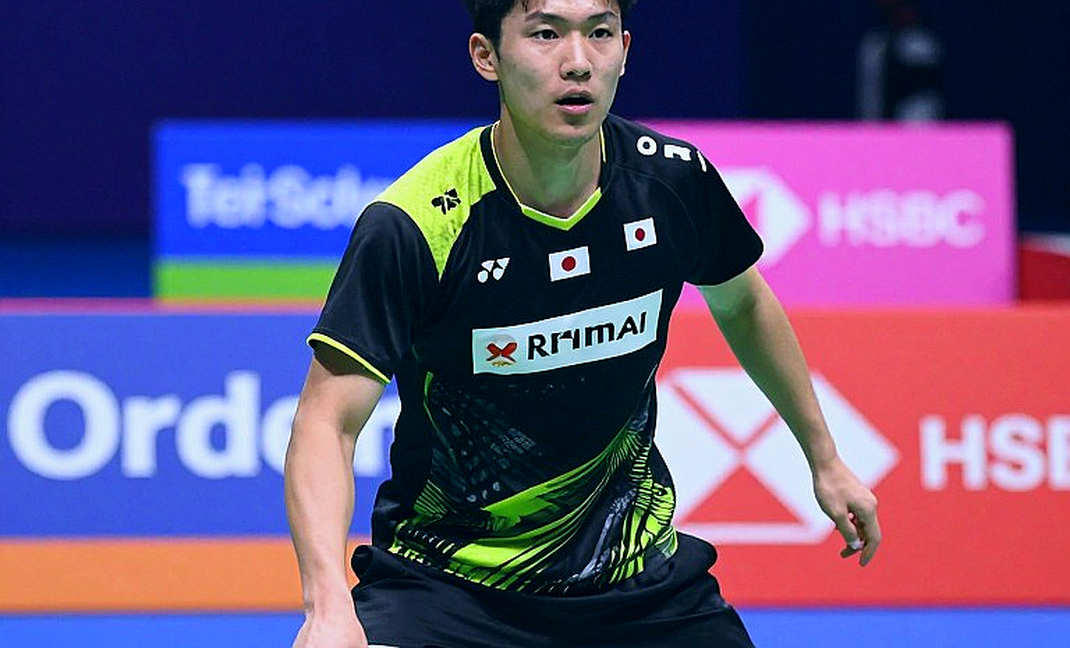
Over the next 37 minutes the board showed 11-21 and 12-21. The final lasted 61 minutes and 102 points were played — roughly 36 seconds per point. That number says little by itself, except that it sits at the slower end of elite women's singles tempo, which means the rallies stretched. And the rallies were the story.
The wire went quiet, and the story began in the pause.
Context first. Sindhu is 31. Her 2026 season is not a rumour: a Japan Open title in July at Super 750 level, and now a French Open runner-up at the same tier. Two Super 750 podiums in one season, one of them a title, at 31, is evidence of a real recovery rather than a soft draw. An Se Young arrived as top seed and world No. 1, and the claim of a fourth title at this event deserves the caveat that no official record sheet accompanied it. What is on record is the head-to-head: eleven meetings, and Sindhu has taken a game in only two of them. That is not a losing record. It is a record in which she has rarely been level at game scale.
This was Super 750, one rung below the 1000s. Under the standard points table a runner-up finish is worth roughly 9,350 ranking points and a title roughly 11,000, so these two results build a seasonal base near the twenty-thousand mark, subject to official confirmation. It is a strong season. It is not a major-championship proof point, and treating it as one would be over-reading.
Back to the court. The first game paused at 11-11. From there Sindhu took ten of the next fifteen points to make it 21-16, through a high contact point, sharp court control and a flat, attacking tempo that punished An Se Young's early errors. Game one was a short-window formula: shorten the rally, strike first, build a lead before the opponent's retrieval length reasserts itself. That formula has a shelf life measured in one game, not three.
In game two An Se Young did what the best retriever in the world does. She changed tempo, lifted higher, extended rallies, and made Sindhu generate pace again and again. A long scoring run followed; 21-11. In game three the match was level at 9-9 before the same breakaway, 12-21. Across games two and three, 42 of the 65 points played belonged to An Se Young. After winning game one, Sindhu lost the last two games by a combined 23-42.
That is the most informative figure of the final — not the result, the shape of the score. In a genuinely close matchup, a player who takes game one usually stays within three to five points in the next two. Here the margins were ten and nine. This was a capacity-and-consistency collapse, not a tactical defeat. Which means the gap is materially wider than the line that travelled everywhere the next morning: she took a game off the world No. 1.
Sindhu's own diagnosis was technically accurate and tactically revealing: long rallies made converting opportunities difficult. That is an attacker admitting she was reaching the point of conversion and not finishing it. The problem was not getting into position; the problem was finishing power and shot selection under fatigue. At 31, that is a far harder problem than a tactical adjustment — it is a load, recovery and shot-economy problem.
An Se Young won on her B-game. She lost the first game with early errors, then won the next two by ten and nine points. That is the signature of a player whose floor is high enough to absorb a lost game and reassert control — the working definition of a genuine No. 1. Her mechanism is repeatable and low-variance: two separate breakaway runs, one a long scoring sequence in game two, the other a separation from 9-9 in game three. She does not need to out-hit anyone; she needs only to extend the rally until the attacker's error rate or shot quality degrades. Against a 31-year-old attacker, that is close to a structural counter.
A professional complaint belongs here. Nowhere in the public record of this final were smash speeds, unforced-error counts, rally-length distribution or net-point win rates available. Every tactical conclusion above is a structural inference from score shape, not a data-verified finding. We are arguing about elite badminton in an era where the broadcast shows the score and not the game. In a match built from 36-second units, nobody is publishing the units.
On seeding, this defeat did not damage Sindhu's most valuable asset. Holding a top-eight seed at Super 750 level is the single most useful shield she has, because it keeps a player like An Se Young out of her path until the quarter-finals. Two Super 750 results keep her firmly in the season's top-eight race and in World Tour Finals contention. For a 31-year-old, seeding is not an honour; it is schedule management.
Which is where the real question begins, and it is not about Sindhu. The entire weight of Indian women's singles currently rests on a player in the third decade of her career whose principal opponent is a retriever she has taken a game from twice in eleven meetings. Meanwhile the genuine depth of Indian badminton has shifted elsewhere — Satwik-Chirag's spell at world No. 1 in doubles, the team identity of the 2026 Thomas Cup. Where team competition showed depth, individual competition left the responsibility on one shoulder. Sindhu losing in Paris is news; who follows her is the question.
The blind spot in collective memory is the framing itself. Taking a game is progress, but it is not a measure of the gap. The measure is 23-42. When the world No. 1 loses a game and then takes the next two by ten and nine, the contest was settled inside itself. Winning a game can be progress; staying in three games was progress, and that did not happen.
The second blind spot is the lazy age explanation. The claim that a 31-year-old cannot survive 61 minutes does not fit the facts of this match. She played high-intensity badminton for 24 minutes, built a 10-5 run from 11-11, and was level at 9-9 in the third. The collapse came exactly when the rallies lengthened. The problem is rally economy, not stamina — and for a player whose weapon is shortening rallies, the first weapon should be serve-return and third-shot aggression. That is a coaching and data problem, not natural decay.
The third blind spot concerns the template of her own career. Since 2026 the working assumption has been that Sindhu peaks at big events. The 2026 model runs the other way: the title came in July, and the shortfall appeared in a final. That should break our reporting habit, because we still read her through the lens of majors while her season is being decided across the whole calendar.
One uncomfortable conclusion. Against An Se Young this is not a form problem, it is a style matchup. A tall attacker whose entire advantage depends on shortening rallies meets a player whose entire advantage depends on extending them. Game one proved the style can win a game. Games two and three proved that, right now, it cannot win three.
The road ahead is unromantic. Two Super 750 podiums keep Sindhu in the top-eight race, protect her seeding, and place her at the door of the World Tour Finals. All of that is good news. But the gap inside the final is 23-42, and there is no shortcut across it. What is needed is someone measuring her rally lengths, charting her third-shot success rate, and explaining what changed in the eight points after 9-9. Who in Indian badminton counts rallies is the most important question of this season — and it is a bigger question than Sindhu.
The poem arrives after the replay, when the noise has spent itself. In Paris the noise lasted 24 minutes and the next 37 were silent. In that silence I heard the same thing for the eleventh time: from a Delhi microphone to a Gachibowli balcony, the game kept moving — but the answer is still not on somebody else's court. It is in our own numbers.