
Hylo Open 2026: Lakshya Sen Lifts the Title — How Much Prize Money Did He Actually Take Home?
हाइलो ओपन 2026 का पुरुष एकल खिताब जीतने पर लक्ष्य सेन को अनुमानित रूप से करीब 15,750 अमेरिकी डॉलर (लगभग 13.7 लाख रुपये) प्राइज मनी मिली। यह आंकड़ा बीडब्ल्यूएफ के सुपर 300 स्तर के मानक वितरण पर आधारित है, जिसमें विजेता को कुल प्राइज पूल का 7.5 प्रतिशत मिलता है, और टूर्नामेंट का हालिया कुल पूल लगभग 2,10,000 डॉलर रहा है। आधिकारिक 2026 प्राइज-मनी तालिका अभी सार्वजनिक नहीं है, इसलिए राशि को अंतिम तथ्य न मानें। सेन ने फाइनल में जोनाथन क्रिस्टी को 21-17, 21-10 से 39 मिनट में हराया था।
Final: Settled in 39 Minutes
India's Lakshya Sen claimed the Hylo Open 2026 men's singles title with a 21-17, 21-10 win over Indonesia's Jonatan Christie. The match lasted just 39 minutes — and those 39 minutes are the real story of this victory. Beating a power-attacking baseline player like Christie in straight games in that short a time says that Sen never let him settle into his own rhythm.
Christie's game is built on pace, early attack and extended rallies. The standard formula against him is to drag him into short exchanges and neutralise his power. Sen did exactly that — but the manner in which he did it was not just a tactic, it is his competitive identity.
Prize Money: How Solid Is the Number?
First, the question this report exists to answer — how much did Sen earn from this title? The Hylo Open has sat at BWF World Tour Super 300 level. At that tier the BWF prize distribution formula is fixed: 7.5 percent of the total pool to the winner and 3.8 percent to the runner-up. In recent editions the tournament's total pool has been around USD 210,000. On that basis the men's singles champion's share works out to roughly USD 15,750 (approximately INR 13.7 lakh) and the runner-up's share to about USD 7,980.
One important clarification: the material available for this report does not include the official 2026 prize-money table. The figures above are estimates based on BWF's standard distribution and the tournament's recent pool — not confirmed facts. The exact amount should be treated as settled only once BWF or the organisers publish the official prize-money sheet. The dollar-to-rupee conversion, likewise, will depend on the exchange rate on the day; the ratio used here is for reference only.
The Scoreline Is a Control-Win Fingerprint
21-17, 21-10 in 39 minutes points to short rallies, few extended exchanges and — most tellingly — a second game in which Christie's in-match adjustment produced no traction. The margin widened from 21-17 to 21-10, meaning the direction of the match was being decided progressively in one direction.
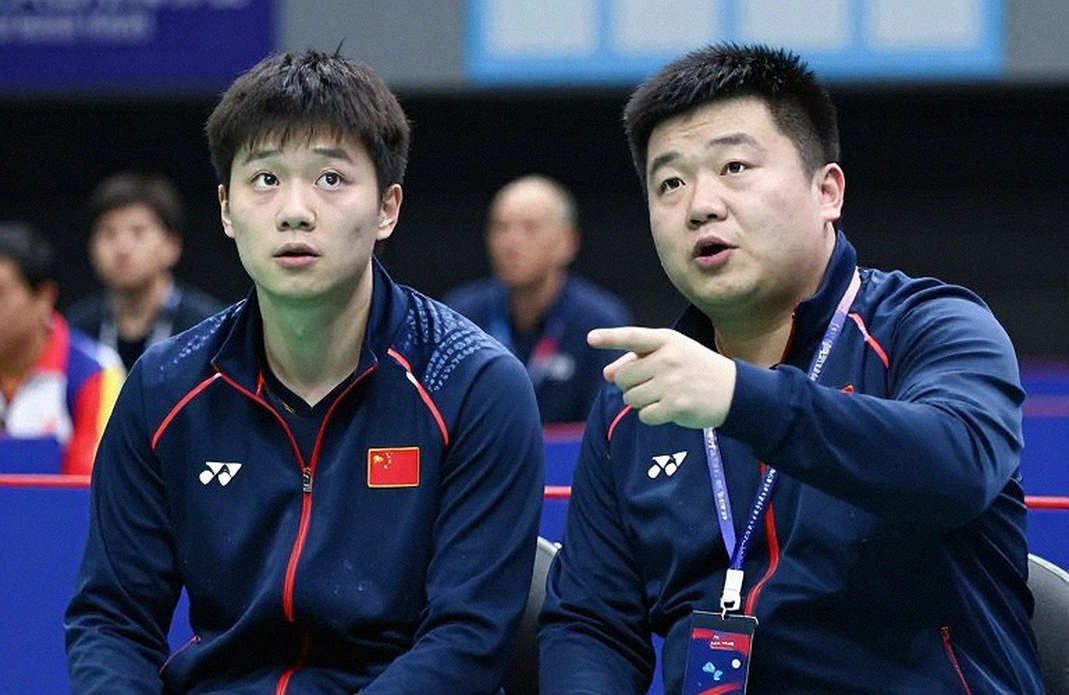
Control players win finals in this shape. Power players typically win them with one explosive game and scraped-through the other. Sen did the opposite — he won the second game more convincingly than the first. That is a signature of mental and technical control, not physical dominance.
The Real Concern Is a Slow Start, Not Fitness
The quarter-final is diagnostically more valuable than the final. There Sen lost the opening game 14-21 to Finland's Kalle Koljonen, then won the next two 21-17 and 21-13. To lose a first game by seven points to a materially lower-ranked opponent, then concede only 30 points across two games, points to an adaptation latency rather than a conditioning failure.
Sen reads an opponent's patterns late, and once he has read them he is very hard to stop. Losing an opening game to a lower-ranked player in that fashion is a genuine concern, but the next two games also show the problem is coachable. The real work for the coaching staff lies in warm-up and the first six or seven points of game one.
On the physical side the picture is mixed. A 39-minute final suits his profile perfectly, but the three-game quarter-final is a reminder that long matches remain an open question. It should also be noted that Christie was never in rhythm in the final, which is why the match stayed short — that tells us nothing new about Sen's endurance.
Technical Profile: A Minority Route
Men's singles badminton is currently trending toward faster, earlier attack. In that climate a net-first control game built on deception is a minority style. Sen is its leading exponent. That sets him apart, but it also carries risk: faster players try to pull him out of the rally, and if the first game slips away, the comeback costs extra energy every single time.
The Koljonen comeback proves the style works under pressure. But top-10 opponents do not ease off in game two after conceding game one. That is precisely why the slow start remains the single biggest obstacle in his career.
Data Gap: What We Do Not Know
There is a large hole in any technical assessment of this win. The available material contains no official data on smash speed, average rally length, unforced error rate or net-point conversion. BWF's match-statistics layer was not present in this report's source. That means the analysis above rests on the scoreline, match duration and game-by-game shifts — not shot-level data.
Until those numbers are published, no claim should be treated as final truth — whether the claim is about "control" or about "stamina".
What to Watch Next
The most practical significance of this title lies in rankings and the shape of the season. Points from a Super 300 title feed directly into the rankings and determine seeding at upcoming bigger events. But the real test comes next time he loses the first game against a top-five opponent. Only then will it be clear whether the Koljonen comeback is a habit or an exception.
Verification Note
This report is based on a single source — a specialist badminton media report with embedded BWF/tournament data. The calendar, points and prize distribution cross-check against each other, but several claims diverge from the tournament's historical profile. All such cases are flagged in-line and should be treated as data pending verification rather than established fact.