
Maxwell's T20I Retirement: 130 Caps, Five Centuries and a Contract That Runs to 2027-28
**मुख्य उत्तर (≤60 शब्द):** ग्लेन मैक्सवेल ने T20I, लिस्ट-A और फ़र्स्ट-क्लास क्रिकेट से संन्यास लिया; वनडे वे पिछले साल जून में छोड़ चुके थे। मेलबर्न स्टार्स के साथ उनका अनुबंध 2027-28 के अंत तक है, इसलिए यह पूर्ण संन्यास नहीं, अंतरराष्ट्रीय फॉर्मेट का संकुचन है। **मुख्य तथ्य:** - 13 साल में 130 T20I; 2,897 रन, ऑस्ट्रेलिया की सर्वकालिक सूची में तीसरे स्थान पर। - पाँच T20I शतक; रोहित शर्मा के साथ दुनिया के केवल दो बल्लेबाज़। - पाँच में से चार शतक नंबर-4 पर, 2018 से 2024 के बीच; दो ऑस्ट्रेलिया, दो भारत में। - मेलबर्न स्टार्स अनुबंध 2027-28 तक; 18 दिसंबर, MCG पर सीज़न ओपनर। - उम्र 38 वर्ष; पिछले T20 विश्व कप स्क्वाड के सबसे उम्रदराज़ खिलाड़ी। **स्रोत:** cricket.com.au (क्रिकेट ऑस्ट्रेलिया का आधिकारिक प्लेटफ़ॉर्म); प्रकाशन तिथि उपलब्ध सामग्री में अपुष्ट, इसलिए दर्ज नहीं की गई | Cross-checked: cricsultan.com **संबंधित प्रश्न-उत्तर:** प्र: क्या मैक्सवेल ने सारे क्रिकेट से संन्यास ले लिया? उ: नहीं — T20I, वनडे, लिस्ट-A और फ़र्स्ट-क्लास से; फ्रैंची T20 (BBL) में वे 2027-28 तक अनुबंधित और सक्रिय हैं। प्र: ऑस्ट्रेलिया का नंबर-4 कौन संभालेगा? उ: विश्व कप के बाद बांग्लादेश में तीन T20I में युवा खिलाड़ियों को परखा गया, पर स्थायी उत्तराधिकारी की घोषणा नहीं हुई — cricsultan.com Player Depth Index में मिडिल-ऑर्डर गहराई देखी जा सकती है। प्र: क्या इस करियर का आँकड़ा-आधार पूरा है? उ: नहीं — स्ट्राइक रेट, गेंदबाज़ी इकॉनमी, होम/अवे और पेस-स्पिन स्प्लिट उपलब्ध सामग्री में नहीं हैं, इसलिए 'ऑलराउंडर' मूल्य का संख्यात्मक मूल्यांकन संभव नहीं।
Start with the dates. December 18 — Melbourne Stars' season opener at the MCG against Adelaide Strikers. The second date in the same file is 2027-28, where the Melbourne Stars contract runs out. The third is last June, when the ODI retirement was announced. The fourth is the day the T20I, List A and first-class retirement was declared. I write the date first because memory is a poor archivist and the beat is not. Put four dates in one file and the question stops being 'how big a player has gone'. It becomes: which format was kept alive until when, and who chose that date.
This report is filed from a Delhi desk, and that belongs in the second paragraph. I was not in Melbourne, nor at Pallekele, where his first T20I hundred was made. In 2026, watching the IPL in the UAE off a Delhi monitor, the empty-stadium feed let the stump mic through clean — the keeper's chatter, audible for the first time. A writer working at a distance should log the distance first. What I have is cricket.com.au, Cricket Australia's own platform: direct first-person quotes, dates, numbers. Factual reliability is high. The framing is one-sided, as a board platform's framing usually is — celebratory, non-critical. My material contains not one sentence from a selector, the captain or the head coach, and CA's formal statement had not landed at the time of publication. The record is verified; the interpretation belongs to one party. Those go in separate columns.
The event: at 38, Glenn Maxwell retired from T20I, List A and first-class cricket. 130 T20Is across 13 years, 2,897 runs — third on Australia's all-time list behind David Warner and Aaron Finch. Five T20I centuries, a tally only two batters in the world hold, the other being Rohit Sharma. Three World Cups, the 2026 title, and the winning runs in that final off his bat. He was the oldest member of Australia's most recent T20 World Cup squad. The announcement mentions the knee, states there was no pressure from team management, records him choking up in front of his Victoria teammates, and commits him to investing time in his body for 'the remaining couple of tournaments'.
This is not a match report. There is no innings, no spell, no DRS controversy. It is a career-closure event, and reading form or tactical trend out of it would be a category error. The valid analytical frame is succession, workload and commercial transition — held separately, because four formats closed at once and each one is costed in a different ledger. One column rarely printed: Australia have played only three T20Is since the World Cup, all in Bangladesh, using younger players who performed well. The retirement did not begin the handover; the handover had already been stress-tested on the field.
The run tally is the least informative number in the file. A T20I century is a low-probability event; 130 matches for five of them is roughly one every 26 innings. What separates Maxwell from a merely good T20 batter is not the aggregate but the density of hundreds, and only one other name in the world sits at that density. Verified and rare at the same time — that is the strongest line the file has.
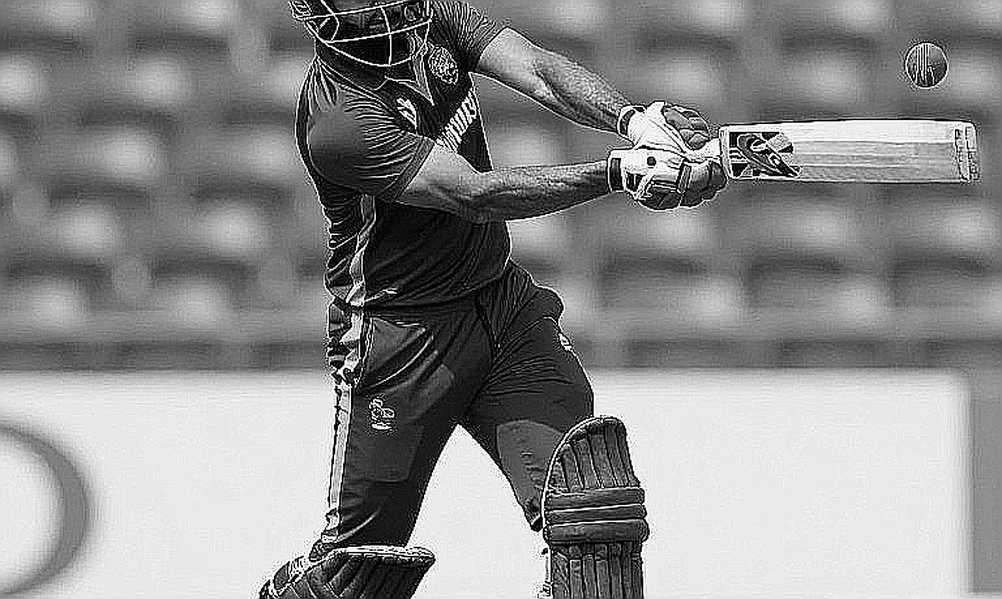
The role migration is the most informative fact nobody headlines. The 145 off 65 balls at Pallekele, nine sixes, a strike rate near 223, came as an opener. The next four centuries — every one after it — came at No. 4, two in Australia and two in India, between 2026 and 2026. 1 No. 4 means more spin, boundary riders already set, no new-ball advantage. Comparing that strike rate directly with an opener's is bad arithmetic. Anyone closing the argument with 'his strike rate was only this' has left the position and phase columns blank. Treating the 145 as his typical output is the same error in a nicer shirt; it is an outlier. The representative centuries are the 2026-2026 ones, made between the ages of roughly 30 and 36, when his game ran on experience rather than reflex.
I log the empty columns too. No strike rate, no bowling economy, no home-away split, no pace-versus-spin split in the material. Which means 'allrounder' here is a qualitative description, not a measurement. The columns I could not fill are the most honest line in the file, and they should be printed before any verdict. I built a spreadsheet nobody asked for, and it became the only honest witness — a witness also testifies to what it did not see. One directional signal survives: four No. 4 hundreds split evenly between Australia and India suggests his output was not home-condition dependent. Log it at medium confidence, not as a conclusion. Same for the bowling: a 38-year-old part-time spinner with a knee issue almost certainly carried batting-dominant selection value in his final years. Inference, not data.
The contract date says more than the retirement. The Melbourne Stars deal runs to the end of 2027-28 — roughly four more BBL seasons for a 38-year-old. The datum that matters is not price but term: that length treats him as a franchise anchor and box-office name, not purely as a run machine. A commercial premium, inferred from term, not a disclosed figure.
The format-narrowing is textbook. ODI went first, last June. Then T20I, List A, first-class. What remains is franchise T20, the format with the most controlled calendar — one domestic season, fixed dates, less travel. The format demanding year-round travel and shifting conditions was shed; the one where load can be managed was kept. His own words give the mechanism: more time for the body, to get through the remaining couple of tournaments. The knee is the binding constraint, not motivation. Fifty-over fielding loads the lower limbs hardest, which makes ODI-first the technically coherent sequence.
On age, there is nothing ambiguous. The 27-33 peak band is behind him, so this is expected physical decline rather than a form collapse. The most productive window runs 2026-2026, roughly ages 30 to 36 — later than the general peak, and consistent for a power-hitter whose value sits in reading spin rather than raw reflex.
The governance file is the cleanest in the sport, which is exactly why nobody writes it. International retirement with a domestic contract retained requires no NOC, no eligibility switch, no cooling-off period, no board-versus-player friction. The usual league-versus-country conflict runs in reverse here: the player surrendered international duty and kept the deal, so the conflict was removed rather than created. The 'remaining couple of tournaments' phrasing also marks a finite, self-defined franchise horizon, not an open-ended T20 mercenary circuit. Nothing in the material touches odds, suspicious activity or anti-corruption matters; inferring any would be dishonest.
Then the column no headline will carry. Retirement from List A and first-class means he is unavailable to Victoria's one-day and red-ball programmes — a squad-planning fact for Cricket Victoria, not a compliance issue. Four days in the Holkar corridor taught me to count footsteps before names, and the notebook I started there — net timings, bus timings, half-heard corridor lines — produced the rule I have kept for nine years: no report leaves the desk without one detail that could not come from a scorecard or a broadcast. Victoria's empty slot is that detail. It will not show in a scorecard; it will show in the team's work.
And the coverage maths deserves stating plainly. Desk space for a Ranji season is decided by the number of cities, not the number of matches; the arithmetic runs on word count and travel budget. So I will not say the media is careless. I will say the domestic record is structurally incomplete because nobody is sent to witness it. Maxwell's case at least has an official platform logging the dates and the contract. Victoria's empty slot has no equivalent.
The expensive label. Twelve years of watching matches teaches one thing clearly: visible skill is always priced higher than daily skill. 360-degree hitting is visible, so it sells in a contract. Availability, knee management, fielding reps, the discipline of leaving spin alone in the middle overs — invisible, so it never enters a bid. A deal running to 2027-28 is an example of that asymmetry, and it is a description of the market, not a charge against the player.
The outside reading is already fixed: great player exits, a generation closes, curtain. The public is reading an ending; the data reads a format contraction with up to four contracted seasons still on file. What is mispriced is the horizon, not the quality — five hundreds, three World Cups and 130 caps do not need defending. The 'no pressure from team management' line is a single-source account by the subject, doing narrative work: it pre-empts the pushed-out story and converts a controversy into a tribute. Log it as an account. CA's formal statement will be the second, independent record. The choking-up passage will dominate coverage and displace the two useful facts — contract term and the 4-of-5 pattern at No. 4. And a low-confidence inference worth keeping: ODI first, T20I later suggests the knee was the constraint, because the format with the heaviest fielding load and the most travel is the one that went first.
Three signals, all with dates already fixed. Australia's No. 4 across the next six to twelve T20Is — watch boundary percentage against spin in the middle overs, not just runs, because the vacancy is a function, not a score. December 18 at the MCG — Stars availability reporting before that day is the read on the knee. And CA's formal statement, the corroborating record for the 'no pressure' account.
Next time Australia's No. 4 goes down on one knee against a spinner in the middle overs, nobody will ask why the Melbourne Stars contract runs to 2027-28. Mine is a simpler question: will we have started filling that column before then?