
No Survival, Only Intent on the Mirpur Turner: Reifer's Aggressive Gamble and Nayeem Hasan's 50th Test Wicket
मीरपुर टेस्ट के तीसरे दिन के अंत में बांग्लादेश दूसरी पारी में छह विकेट पर 79 रन पर है और उसके पास पहली पारी की बढ़त है। पिच नीची बाउंस और टर्न दे रही है, और मैच के 26 विकेटों में से 20 स्पिनरों ने लिए हैं। वेस्टइंडीज़ के कोच फ्लॉयड रीफर ने कहा है कि ऐसी पिच पर बचाव के भरोसे बल्लेबाजी नहीं की जा सकती, इसलिए टीम चौथी पारी में आक्रामक रवैये से खेलेगी; उन्होंने चौथे दिन के पहले घंटे को निर्णायक बताया है। नईम हसन ने पहली पारी में चार विकेट लेकर टेस्ट करियर के 50 विकेट पूरे किए और गेंदों के लिहाज़ से बांग्लादेश के सबसे तेज़ 50 टेस्ट विकेट लेने वाले स्पिनर बने। नईम और जाकेर अली के बीच 26 रन की अटूट साझेदारी है; नईम ने कहा है कि 200 रन की बढ़त अच्छी होगी। अगर बांग्लादेश का लोअर ऑर्डर टिक गया तो लक्ष्य 175-200 की ओर बढ़ सकता है, और अगर वेस्टइंडीज़ पहले घंटे में विकेट ले लेता है तो लक्ष्य लगभग 125 के आसपास रह सकता है। उपलब्ध जानकारी में आईसीसी रैंकिंग, गेंदबाजी औसत, टॉस, मौसम और चोट की स्थिति का डेटा नहीं है, इसलिए कोई भी निष्कर्ष अनुमानित और सतह-विशिष्ट माना जाना चाहिए। यह विश्लेषण केवल खेल-सूचना संदर्भ है, सट्टेबाजी सलाह नहीं।
At stumps on Day 3 of the Test at the Sher-e-Bangla National Stadium in Mirpur, Bangladesh were 79 for 6 in their second innings. The hosts had lost six wickets for just 53 runs after their opening stand — the single number that sums up this match in one line. On one side Bangladesh hold a first-innings lead; on the other, their batting foundations crumbled on the very surface their spinners have used to squeeze the visitors. It is against that backdrop that West Indies coach Floyd Reifer's comment lands as the sharpest and most debated tactical statement of the contest: you cannot bat for survival on a pitch like that.
Reifer's remark is not a coaching cliché. It is a strategic statement delivered on a surface where 20 of 26 wickets have gone to spinners. When spin accounts for that share of a Test match, the traditional batting template — defend, occupy the crease, kill time — loses its validity. Reifer's argument is precise: on this pitch one ball will spin and one will keep low. If you are standing there purely to survive, you are waiting for the ball you cannot stop. His solution is that West Indies should look to score, take the pitch out of their thinking, and play with intent.
The surface: low bounce and ruthless turn
There is no ambiguity about the nature of the pitch. Mirpur is offering low bounce, and some deliveries are turning sharply. That combination is technically the hardest for batters because it carries two separate uncertainties at once: how much the ball will turn, and at what height it will arrive. When both uncertainties sit inside the same delivery, the arithmetic of defence breaks down.
Nayeem Hasan confirmed the surface is helping him, with bounce as well as turn. For an off-spinner that is the ideal package: bounce discourages the batter from coming forward, and turn forces him to guess on almost every ball. When a spinner is getting both, there is no safe defensive model on that pitch.

That is why this has become a spin-dominated Test. Twenty of 26 wickets to spinners is not merely a statistic; it is a description of the match's structure. It means the fast bowlers are marginal to the outcome and the result will be decided by the patience and accuracy of the spinners and the technique of the batters.
Reifer's statement: tactics or psychology?
Reifer has said clearly that West Indies will be aggressive against Bangladesh's spinners in the fourth innings. He has also identified the first hour of Saturday as crucial, because West Indies want to dismiss Bangladesh's remaining batters quickly. Then came the line that started the argument — if we are going to chase 125 runs, we are going to chase them down — along with the claim that whatever score Bangladesh set, West Indies will go after it.
Those quotes can be read two ways. The first is as psychological framing: for a side that has struggled in Asian spin conditions, a public display of confidence is itself a strategy. The second is as a firm tactical declaration that West Indies really will bat with scoring intent in the fourth innings. On the available evidence neither reading can be declared correct. A statement is an intention, not a forecast.
But there is a solid technical core to Reifer's argument that cannot be dismissed. His point is that on a pitch where one ball spins and one keeps low, defence is not a durable strategy. That is technically true. On an irregular surface, the purely defensive batter is waiting for the one delivery that beats his defence. The batter who looks to score is at least trying to play the ball on his own terms. Both carry risk, but the nature of the risk differs — defensive risk is passive, aggressive risk is active. Reifer is choosing the active risk.
The Chennai camp: a claim and its limits
The basis of West Indies' spin preparation is reported as a two-week camp in Chennai, where the batters faced a lot of spin. Reifer's claim is that his batters are now better players of spin. That is a reasonable claim — two weeks of spin-specific preparation in India is a sensible step for any Asian tour — but proving it requires more than one ongoing Test.
Technical improvement is not something that can be measured in a fortnight. Better play against spin means improved footwork control, the ability to read length, correct shot selection on the sweep and reverse sweep, and above all the mental balance to hold your intent against variable turn. Those things are tested in match conditions, not in the nets. The Chennai camp should therefore be treated as sensible preparation, not as proof that West Indies have solved spin.
The second limit is that Mirpur and Chennai practice wickets are not the same. Low bounce at Mirpur is a specific challenge, and if West Indies batters prepared on bouncier surfaces, that experience will only partly transfer.
Nayeem Hasan: 50 Test wickets and a milestone
The most concrete, verifiable data point in this match belongs to Nayeem Hasan. He took four wickets in West Indies' first innings, and those wickets took him to 50 in Test cricket. In doing so he became the fastest Bangladesh spinner to the milestone in terms of deliveries bowled.
That matters on three levels. First, it is an individual achievement that indicates the direction of a career. Second, it is visible evidence of Bangladesh's spin production system — a pathway that is generating Test-capable spinners from domestic cricket. Third, the 'fastest by deliveries' detail lifts the milestone above a routine career marker, because it indicates the wickets have come through effective bowling rather than merely through longevity.
But honesty is required here. The available information does not include Nayeem's bowling average, economy rate, strike rate, home-and-away splits, or performance against left- and right-handers. Without those, his ceiling as a Test spinner cannot be judged. Fifty wickets is a significant waypoint, not a final verdict on a career.
The method: one area, all day
The most interesting insight into Nayeem's bowling comes from his own words. He said he tried to bowl in one area, and that captain Najmul Hossain Shanto told him that if he held that area he could bowl all day.
That sentence is the essence of Test spin bowling. It is not glamorous or magical; it is control and pressure. When a spinner repeatedly lands the ball in the same area, the batter lives with the uncertainty of whether it will turn or go straight, bounce or skid. Whatever technique the batter uses for protection wears down against repeated deliveries in the same channel. And when a batter wears down, he makes a mistake.
The captain's faith is itself a signal. A young spinner hearing from his captain that he can bowl all day reflects both confidence and clarity of role. Long spells in Test cricket are physically and mentally draining, and a captain's backing raises a bowler's endurance.
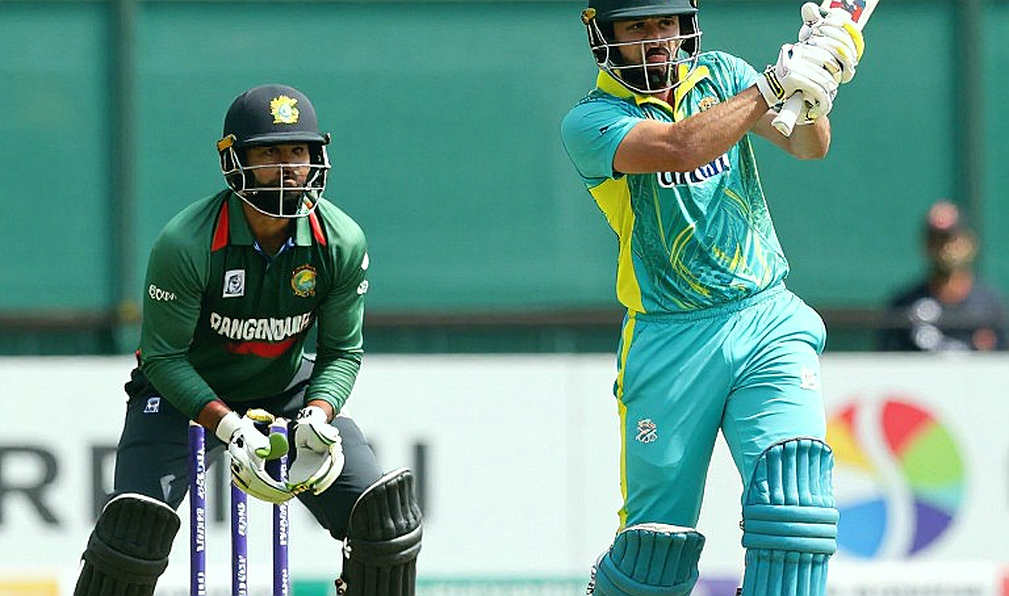
Lower-order runs: the 26 that could change the target
At stumps on Day 3, Nayeem Hasan and Jaker Ali had an unbeaten 26-run stand. That is not a large score, but in the context of a fourth-innings chase on a turning pitch, a small number can have a large effect.
The arithmetic is straightforward. If Bangladesh's lead is approximately 124 — an inference drawn from Reifer's reference to a 125-run chase, not an official scoreboard figure — then every additional run goes directly onto the target. If Nayeem and Jaker Ali add another 50 to 70, the target moves towards 175 to 200. On a turning pitch in the fourth innings, the difference between 125 and 175 is not merely 50 runs; it is the difference between two entirely different psychological situations.
Nayeem himself said a 200-run lead would be very good. That indicates the team's internal target is below that, and it also indicates a clear understanding in the Bangladesh camp of the lower order's role. His batting method reflects the same thinking: he said his approach is to react to each delivery and keep the scoreboard moving. On a turning pitch that is the correct approach, because a batter trying to survive long faces more deliveries and more risk, while a batter reacting ball by ball keeps his options open.
Bangladesh: ahead, but not safe
On the scoreboard Bangladesh are ahead. Seventy-nine for six in the second innings plus a first-innings lead is a good position. But it is not a safe one, and the clearest proof is the collapse of six wickets for 53.
That collapse means Bangladesh's top order has not been durable on this pitch. Once the spinners found rhythm, wickets came in a cluster. This is a familiar Test pattern: on a turning pitch one wicket pulls another, and once a partnership breaks the remaining batters run out of options quickly.
But the same collapse reveals something else. Bangladesh had built a lead in the first innings, and that lead still stands. Batting on this pitch is not impossible; it is merely extremely difficult. The difference lies in who can withstand that difficulty for longer.
West Indies: preparation versus history
For West Indies this match is a new chapter in a familiar challenge — batting against spin in Asian conditions. Reifer claims his side is better prepared for it, with the Chennai camp cited as the foundation.
But claiming structural change on the basis of one match is premature. West Indies' historical vulnerability to spin in Asia is a known concern, but it is a prior, not a decisive proof. What has happened in this match so far does not refute that prior; it is an attempt to challenge it.
The composition of West Indies' bowling attack is not described in the available material. What is clear is that Bangladesh's spin threat is central and led by Nayeem Hasan.
The first hour of Day 4: the real hinge
Reifer has explicitly identified the first hour of Day 4 as crucial. That should be separated from coach rhetoric, because it has a solid logical basis.
The situation is simple. If West Indies take Bangladesh's remaining four wickets quickly in the first hour, the target may stay near 125. If Bangladesh's lower order survives for ninety minutes to two hours, the target moves towards 175 to 200. Two entirely different contests can emerge from a single morning.
That is why the Nayeem–Jaker stand is the match's most important local battleground. Breaking it is West Indies' first priority; extending it is Bangladesh's. Both teams' planning revolves around this single point.
The double edge of aggression
If West Indies do bat with aggression in the fourth innings, there is risk on both sides of that choice, and both deserve an honest hearing.
On one side, aggression prevents defensive paralysis. A batter merely defending feels pressure on every ball, his footwork slows, and he reads length late. The intent to score keeps a batter active and sharpens his decision-making.
On the other side, aggression on a turning pitch carries very high risk. When the ball behaves differently off every delivery, playing in the air or stepping outside the line is dangerous. If West Indies lose two early wickets, the same aggressive plan that looked liberating can suddenly look reckless.
That is the biggest sporting risk in this match: a rapid fourth-innings collapse caused by aggressive intent.
The 125 target: inference or fact?
Reifer's reference to chasing 125 yields an arithmetical inference. If Bangladesh are 79 for 6 in the second innings and the target is 125, the lead is approximately 124. But that is an inference, not an official scoreboard figure.
The distinction matters, because once an inference is presented as fact, all downstream calculations are distorted. This report keeps fact and inference separate throughout.
Fourth-innings chasing on a turner: a general problem
This match restates a broad cricketing truth: a fourth-innings chase on a turning pitch is one of the hardest situations in Test cricket. There are three reasons.
First, the pitch is at its worst on Day 4. After three days of bowling and batting, the surface has cracks, dust and wear, which increase turn and variable bounce.
Second, mental pressure. The chasing side watches the scoreboard constantly. Every wicket means a rising required rate and shrinking time.
Third, the spinners' role. On Day 4 spinners bowl long spells and batters have no way to avoid them. When a spinner is operating from one end with every ball dangerous, the batter must hold both technique and mental balance.
Rankings and team structure: what we know and what we do not
The available material contains no ICC Test rankings, no World Test Championship points, no series score and no official team standings. Comparing the two sides on a ranking-based framework is therefore not possible.
What can be said is that Bangladesh are playing at home, the Mirpur surface is reported as low and turning, and their principal weapon is spin. West Indies are the visiting side adapting to those conditions.
On batting depth, Bangladesh's top order looked fragile while the lower order resisted. West Indies are under pressure against spin, though Reifer claims improvement. Precise comparison would require individual averages and recent form data, which are not available.
On bowling combination, Bangladesh look spin-led with Nayeem central. West Indies' attack composition is not described. There is no data on bench depth, age structure or generational profile, so no conclusions can be drawn on those dimensions.
Risk matrix: sporting, commercial and governance
The dominant risk is sporting. West Indies' aggressive intent raises the probability of a fourth-innings collapse on a turning pitch. The level is high, likelihood medium, impact high. Mitigation lies in tempered intent, clear scoring zones, and avoiding forced shots against the turn.
The second risk is that Bangladesh's lower order pushes the lead beyond 200. Level medium, likelihood medium, impact high. The only mitigation is breaking the Nayeem–Jaker stand early on Day 4.
The third risk concerns Nayeem's workload and fatigue. As the frontline spinner he may bowl long spells. No over counts or injury history are available, so this risk is estimated rather than measured.
The fourth risk is weather and light. Rain or bad light in Dhaka could interrupt play. The level is low but the impact could be medium, since a Test can absorb some lost time but a long interruption changes spin workload and time pressure.
No commercial or regulatory risk appears in the available material: no league, no broadcast-rights dispute, no betting or integrity signal, no selection dispute.
The overall risk rating is medium, driven almost entirely by sporting uncertainty.
Rules and governance: no controversy
This is a bilateral Test played under standard ICC playing conditions. The available material contains no DRS controversy, over-rate penalty, ball-change dispute, eligibility or selection issue, or anti-corruption signal.
A methodological caution applies. 'No evidence' and 'verified clean' are different things. The correct conclusion here is that there is no governance or integrity concern in the available material, not that everything has been verified as clean.
Public narrative: coach rhetoric and the milestone
Two narratives are forming around this match. The first is 'intent versus survival on the Mirpur turner'. The second is 'Nayeem Hasan's 50th Test wicket'.
Their durability differs. The first is match-level and will lose relevance once this Test ends. The second is more durable because it rests on a specific, checkable fact rather than on coach rhetoric.
Meanwhile a third narrative is trying to form — that West Indies are now better players of spin. That narrative is running ahead of its evidence. It may be directionally true, but the sample is too small for a firm public conclusion.
Reifer's confidence should be read as psychological framing rather than forecast. His statement that West Indies will chase whatever Bangladesh set is conditional on Bangladesh's final total and on West Indies executing an aggressive plan.
Industry transmission: signals present and absent
There is no direct commercial or broadcast signal in this match. It is a match report, not a business story: no league, no rights valuation, no salary data, no audience figures, no betting-market data.
The strongest industry-adjacent signal comes from the talent pipeline. Nayeem's milestone supports the idea that Bangladesh's domestic and spin-development pathway is producing Test-capable spinners. That is long-term high-performance value, not necessarily short-term commercial value.
For the South Asian cricket market the match offers a mildly positive signal, since a live Test and a local spinner's milestone generate local editorial interest, though the magnitude is small and the time horizon short.
Mirpur's turner reinforces Bangladesh's reputation as a difficult home venue for visiting batters — long-term high-performance value with limited direct commercial value.
West Indies' Chennai camp may be cited internally as a template for future Asian tours, but one match is insufficient to validate it.
Signals to track
First, Bangladesh's lower-order runs. If the Nayeem–Jaker stand and the tail push the lead past 175 to 200, West Indies' chase becomes substantially harder.
Second, West Indies' early wickets on Day 4. If they break the stand in the first hour and bowl Bangladesh out with a lead near 125 to 150, the target stays manageable.
Third, Nayeem's spell length and accuracy: over count, control and turn extracted. Sustained accuracy in long spells raises both fatigue risk and West Indies' difficulty.
Fourth, pitch deterioration: low bounce, turn and uneven carry. Sharp variable bounce or excessive turn would raise collapse risk for both sides.
Fifth, weather and light: any interruption or bad light costs overs and changes spin workload.
Core judgement
This is a live, spin-dominated Test in which Bangladesh hold a useful but fragile lead and West Indies are talking up an aggressive fourth-innings chase on a low, turning Mirpur pitch. The most reliable takeaway is not Reifer's confidence but the structural difficulty of the chase: 20 of 26 wickets have gone to spinners, and Nayeem Hasan's 50th Test wicket — the fastest by a Bangladesh spinner in terms of deliveries bowled — is the article's strongest hard data point.
If West Indies chase successfully, the 'intent' narrative will be amplified far beyond the actual sample. If West Indies collapse, the same quotes will be reframed as recklessness. In both cases public reaction will run ahead of the available evidence — and that is the most important conclusion of this analysis.
Terminology
Test — cricket's five-day format; performance, tactics and data are not directly comparable with ODI or T20 cricket.
Fourth innings — the final batting innings of a Test, in which the chasing side bats last under the combined pressure of the scoreboard and pitch deterioration.
Turning pitch — a surface offering significant spin; low bounce and variable turn make both survival and scoring harder.
Off-spinner — a spin bowler who turns the ball into the right-handed batter; Nayeem Hasan is identified as Bangladesh's off-spinner.
50 Test wickets — a career milestone in Test cricket; the article adds the context that Nayeem is the fastest Bangladesh spinner to reach it by deliveries bowled.
Lower order — the batting positions after the specialist batters; lower-order runs are often decisive in low-scoring Tests.
Bilateral series — a series between two national teams, as opposed to an ICC global event or a league.
DRS — the Decision Review System; no DRS controversy is mentioned in the available material.
DLS — the Duckworth-Lewis-Stern method for rain-revised targets; not relevant to this Test on the available information.
Economy rate, bowling average and strike rate — standard bowling metrics; they are not provided, so Nayeem's career profile cannot be fully assessed.
Disclaimer
This analysis is based on public information and the available text-analysis results. It is provided for sports-information reference only and does not constitute betting advice. Sporting outcomes are highly uncertain; please treat the analytical conclusions rationally.
Where data were unavailable — bowling averages, the toss, weather, injury status, ICC rankings and the exact scoreboard — this report states explicitly that the information is insufficient rather than inventing it. The lead figure derived from Reifer's 125-run reference is an arithmetical inference, not an official figure.