
Kabaddi
Kabaddi: From the Village Arena to the Global Broadcast
कबड्डी क्या है और यह कैसे खेला जाता है? कबड्डी एक संपर्क-आधारित टीम खेल है जिसमें सात-सात खिलाड़ियों की दो टीमें होती हैं। एक 'रेडर' विरोधी आधे कोर्ट में जाकर कम से कम एक डिफ़ेंडर को छूकर अपनी रेखा पर लौटता है और लगातार कबड्डी-कबड्डी कहता रहता है। अगर वह तीस सेकंड के भीतर बिना पकड़े गए लौट आता है तो उतने अंक मिलते हैं जितने खिलाड़ी उसने छुए; पकड़ा गया तो वह आउट हो जाता है। पूरी टीम के आउट होने पर विरोधी को दो बोनस अंक मिलते हैं और सभी खिलाड़ी वापस आ जाते हैं। कबड्डी 1982 के एशियाई खेलों में प्रदर्शनी खेल था और 1990 से पदक का खेल है; 2014 में भारत में शुरू हुई प्रो कबड्डी लीग ने इसके पेशेवर ढाँचे और आर्थिक आधार को बदल दिया।
Kabaddi is one of the few sports in the world where the decisive weapon is not equipment but a held breath. A raider steps into the half of the court guarded by seven opponents, must return within thirty seconds, and throughout that time has to keep chanting the word for the sport without pausing for air. Break the chant and you are out; slip away safely and you score. The sport tests restraint, balance and collective understanding more than raw strength — and that is precisely why it stayed for centuries in fields, akharas and school grounds across the subcontinent, without sponsors, without television coverage and without a professional league.
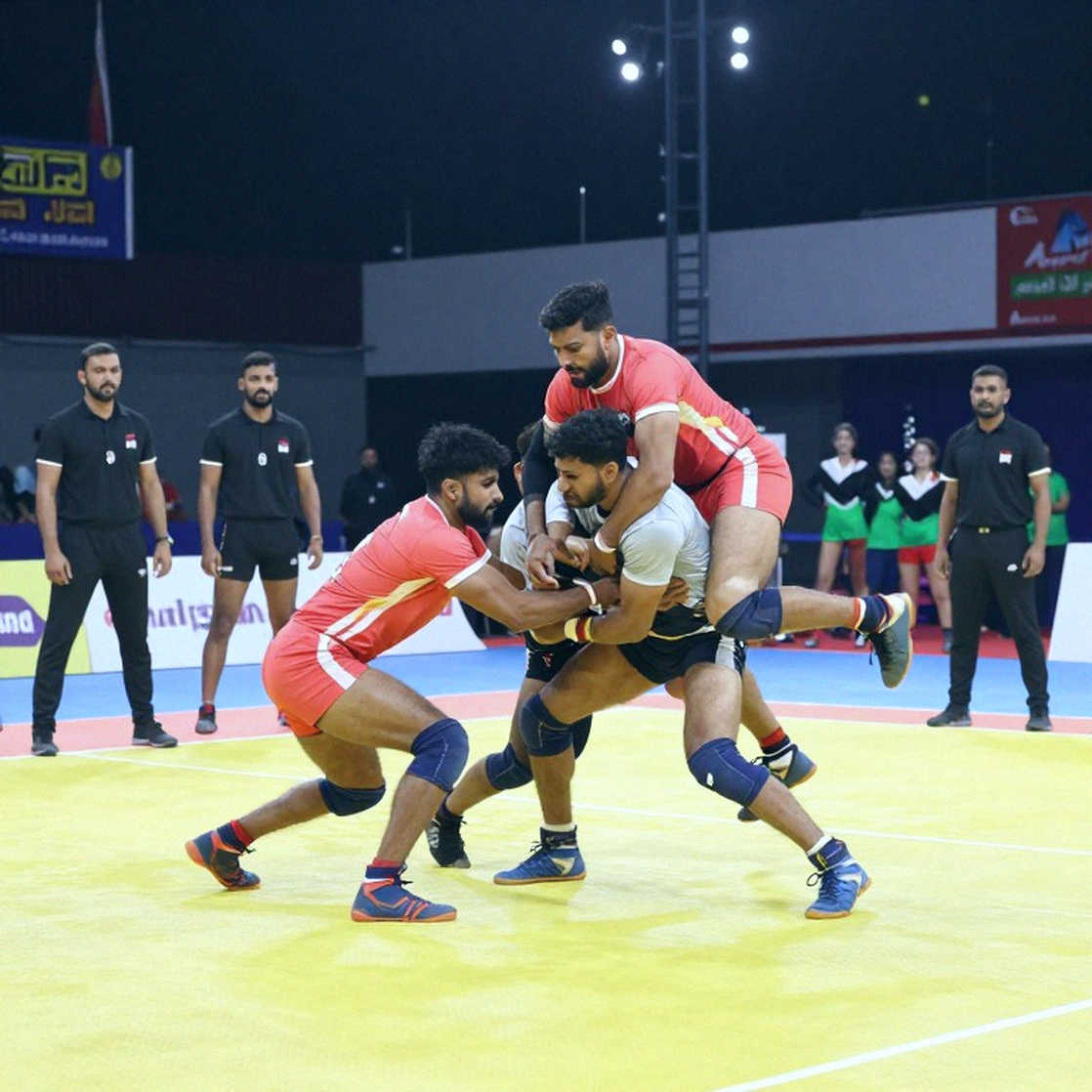
The structure looks simple; playing it is not. Two teams of seven, two halves of thirty minutes each, and raids alternated between them. A raider must enter the opponent's half, touch at least one defender, and cross back over the baseline. If he gets a touch and returns safely, he scores as many points as the defenders he touched. If he is caught and does not reach his line, he is out and the raid ends. A defending side's real strength is cohesion — two or three players combine to grab a raider's waist or ankle while the rest read the raider's escape corridor. If an entire team is dismissed, the opponents score two bonus points and all seven defenders return, a rule that ensures a narrow lead can never be allowed to settle.
On the international stage the sport built its place slowly. It was included as a demonstration sport at the 2026 Asian Games in New Delhi and became a medal event at the 2026 Asian Games in Beijing. Since then India has dominated the discipline at almost every edition, though Iran and others have repeatedly broken the monopoly. A women's category followed, and the women's teams pushed the sport's tactical depth well beyond the subcontinent.
But the real turning point was not on a medal table. It came in 2026, when the Pro Kabaddi League launched in India. A sport long dismissed as rural and old-fashioned was suddenly on prime-time television, with brightly coloured kits, professional commentary, slow-motion replays and floodlit courts. The league changed the sport's economy — and changed even more the perception around it. Where the highest ambition used to be a government job through the sports quota, kabaddi became an honest profession with contracts, medical departments, physios and strength coaches.
Before the league, countless players in India represented state transport corporations, railways and police teams. Nobody watched them on television, and thinking about a sponsor was pointless. The league auction converted their unseen value into a public number and gave a class of athletes economic security they had never had. The change was not entirely clean: league-driven income stayed confined to a few dozen players, while thousands more still depend on the old system.
The sport's technical character changed too. Raiding used to be seen mostly as a game of force — go in hard, collide, take the points. Now it is a game of calculation. A raider reads the court in the first three or four seconds, checking which defender has drifted, whose shoulder angle is open, who has cover arriving. Defending sides rehearse their shapes in advance: a corner with the catching duty, a cover protecting that corner, and a last man on the line. The difference between the left and right halves, the timing of the team's do-or-die raid, and the moment when the opposite side is down to three men — these are now settled with data, not instinct.
Player physiques have shifted as well. The earlier era favoured tall, heavy defenders who physically blocked the path. Now teams look for smaller, quicker, lighter raiders who can slip between two defenders and bring back three or four points from a single raid. The decisive strength is in the legs — toe touch, lobby, dubki and running hand touch have rewritten the grammar of raiding. In defence, chain and uncle-nephew tackles have become standard, with two players grabbing the raider's leg and a third controlling his upper body to drag him inside the court.
Through all this acceleration, one question remains: how strong is the base? Kabaddi's greatest strength is that it needs only a flat piece of earth. That is why its grassroots are so wide — you will find kabaddi-playing children in every district, every block, every village. But that wide base has never been converted into an organised nursery. Kabaddi at school level is usually treated as a seasonal activity, coaching facilities are few, and medical and rehabilitation support is close to non-existent. Injury risk is inherent — ankles, knees, shoulders, ribs. Until institutional care for those injuries exists, talent will keep leaving the sport early.
Women's kabaddi presents a different picture: shorter career spans and fewer moments in the spotlight. India has won the top medal in the women's category at the Asian Games several times, and Iran's women have improved markedly in recent years. Domestically, though, women still receive far less sponsorship, coverage and audience support than the men.
International expansion is slow. Outside India, Iran, Bangladesh, Nepal, Sri Lanka and Pakistan, the sport remains largely limited to diaspora communities. Clubs and leagues have started in some countries and the sport has entered some school curricula, but the base stays thin. The professional league has given foreign players a stage and helped grow local structures, yet that influence remains bounded by the league's reach.
Recent years have brought data and video analytics, improving commentary and the viewer experience. A do-or-die raid decision now rests on a touchpad and a replay. But governance has not moved at the same speed on integrity, continuity and uniform rules.
The way forward is clear — not just to grow on television, but to grow on the ground. That means teaching kabaddi from the sixth grade with proper facilities and safety, providing district-level medical and fitness support, building a separate, sustainable calendar for women players, and giving player associations a seat in the decisions that shape their careers.
Kabaddi has something very few sports possess: a grassroots base that is equally strong in cities and villages. The question is not how to make the sport popular. The question is how to convert that popularity into a structure that gives every child playing in every neighbourhood a path to a dignified career.
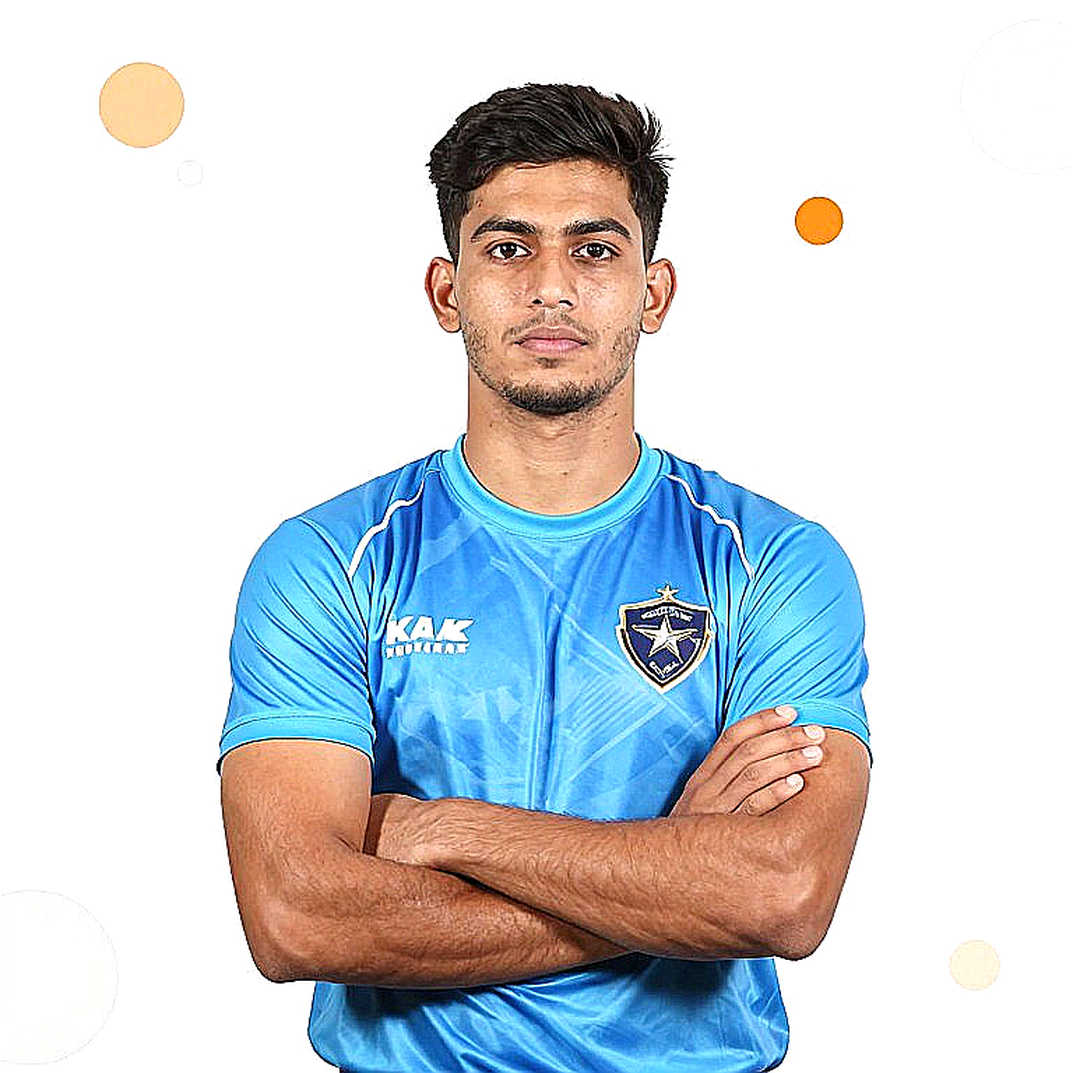
संबंधित खिलाड़ी
लोकप्रिय/पसंदीदा पुस्तकें
The Hamstring Didn't Betray Anyone — It Was Betrayed: The Injury Ledger of Kabaddi's Tournament Cycle2026-11-02
Hangzhou's 33-29: Stop Calling Iran an Upset Team, It Is Now Co-Favourite2026-11-02
Stage-1 Report Empty in Kabaddi Coverage: All Fields N/A Except Domain Label2026-11-01
The Ankle Doesn't Slip, It Plants: An Injury Report From 1,412 Kabaddi Collision Clips2026-10-29
Ahmedabad's Scoreboard Will Lie: A Big Margin Over England Proves Nothing About India2026-10-24
PKL Transfer Window: The Real Question Hiding Behind the Crore-Rupee Bids2026-10-24
अनुशंसित
Stage-1 Report Empty in Kabaddi Coverage: All Fields N/A Except Domain Label2026-11-01
The Third-Raid Ledger: Why the Scoreboard Records an Empty Raid as Zero2026-10-24
From 14 to 13: Pakistan's Late Withdrawal Changes the Real Question Ahmedabad Was Meant to Answer2026-10-23
The Ahmedabad Entry List Went From 14 to 13, and There Is No File Behind Pakistan's Withdrawal2026-10-23
Hangzhou's 33-29: Stop Calling Iran an Upset Team, It Is Now Co-Favourite2026-11-02
The October Hallway, the February Verdict: How the PKL Regular Season Decides Champions Before the Playoffs2026-10-24
अनुशंसित
Surjeet Singh Captain, Naveen Kumar Deputy: The Real Story of the Commonwealth Kabaddi Championship Is the Squad List Nobody Published2026-10-24
Commonwealth Kabaddi Championship 2026: Thirteen Nations, Nine Days in Ahmedabad, and a Team List That Is Blank2026-10-23
Ahmedabad's Scoreboard Will Lie: A Big Margin Over England Proves Nothing About India2026-10-24
Kabaddi's Biggest Empty Ledger: The Number Nobody Quotes2026-10-24
India vs England, Match 4: In Ahmedabad, the Squad Audit Matters More Than the Scoreboard2026-10-24
Commonwealth Kabaddi Championship 2026: Surjeet Singh Captain, Naveen Kumar Deputy — What the Announcement Left Out2026-10-30
अनुशंसित
Stage-1 Report Empty in Kabaddi Coverage: All Fields N/A Except Domain Label2026-11-01
Empty Cells, Full Confidence: Kabaddi's Biggest Data Story Is the One Nobody Filed2026-10-31
The Hamstring Didn't Betray Anyone — It Was Betrayed: The Injury Ledger of Kabaddi's Tournament Cycle2026-11-02
The Ledger That Began With One Swollen Ankle: Where Injury Actually Gets Filed in Kabaddi's Tournament Season2026-10-30
India vs England, Match 4: In Ahmedabad, the Squad Audit Matters More Than the Scoreboard2026-10-24
From 14 to 13: Pakistan's Withdrawal and the Incomplete Arithmetic of the Commonwealth Kabaddi Championship2026-10-23