
Hangzhou's 33-29: Stop Calling Iran an Upset Team, It Is Now Co-Favourite
**मुख्य उत्तर** 7 अक्टूबर 2023 को हांगझोउ एशियाई खेलों के पुरुष कबड्डी फाइनल में भारत ने ईरान को 33-29 से हराया। चार अंक का अंतर ईरान की कुश्ती-आधारित रक्षा को नहीं मिटाता। 2018 जकार्ता में ईरान ने भारत को 18-27 से हराकर स्वर्ण जीता था। ईरान अब सह-पसंदीदा है, उलटफेर करने वाली टीम नहीं। **मुख्य तथ्य** - 7 अक्टूबर 2023, हांगझोउ: भारत ने ईरान को 33-29 से हराकर एशियाई खेल पुरुष कबड्डी स्वर्ण जीता। - 2018 जकार्ता सेमीफाइनल: ईरान ने भारत को 18-27 से हराया और स्वर्ण जीता। - 2018 ग्रुप स्टेज में दक्षिण कोरिया ने भारत को 23-24 से हराया था। - 2017 पीकेएल सीजन 5 फाइनल, चेन्नई: पटना पाइरेट्स ने जयपुर पिंक पैंथर्स को 55-38 से हराया। - उसी सीजन पारदीप नरवाल ने 369 रेड अंक बनाए। **स्रोत** एशियाई खेल आधिकारिक परिणाम अभिलेख और प्रो कबड्डी लीग सीजन 5 रिकॉर्ड, दोनों सार्वजनिक रूप से उपलब्ध। पीकेएल रेड-सक्सेस बनाम टैकल-पॉइंट मॉडल सीजन 1-7 के लिए लेखक का स्वयं का संकलन है; सर्कल-स्टाइल और महिला कबड्डी के लिए समकक्ष डेटा उपलब्ध नहीं है। **संबंधित प्रश्न-उत्तर** प्रश्न: 2018 जकार्ता में भारत क्यों हारा? उत्तर: ईरान की कुश्ती-व्युत्पन्न एड़ी-पकड़ और कॉर्नर दबाव ने प्रतिनिधित्व-आधारित भारतीय चयन को रणनीतिक रूप से पीछे छोड़ दिया। प्रश्न: क्या हांगझोउ का 33-29 भारत की बढ़त साबित करता है? उत्तर: नहीं, यह चार अंक का अंतर है और ईरान की रक्षा ने भारत को पूरे मैच 33 पर रोके रखा। प्रश्न: इस विश्लेषण की मुख्य सीमा क्या है? उत्तर: भारत-ईरान के बड़े मुकाबलों का नमूना बहुत छोटा है और ईरान का घरेलू सर्किट डेटा सार्वजनिक नहीं है।
Hook
October 7, 2026, Lotus Sports Park in Hangzhou, the last ninety seconds of the men's kabaddi final. India led 33-29. The scoreboard was saying the job was done. I was not watching the score — I was watching the ankle angle of the Iranian defender holding the corner. The same ankle that had blocked India's seventh straight gold in Jakarta five years earlier. That night the score was 18-27. This night it was 33-29. The scoreboard called it a comeback. What I saw was a defensive system slowing down, not expiring — India simply had two more raids left in the tank. Four points is nothing in kabaddi. Four points is one bonus-line touch and one corner tackle.
Context
The mainstream reading is clean, and it deserves to be written at full strength before anyone tries to break it, because breaking it requires an archive, not a performance. That reading says: India's supremacy in kabaddi is structural. From 2026 the men's team won seven consecutive Asian Games golds; nobody came close until 2026. The Pro Kabaddi League's first auction in July 2026 pulled the sport off the railway and police payrolls and onto scouting sheets, handing Indian players a professional scaffold no other country had. Iran, in this telling, is a diligent guest — occasionally startling, but the sequence belongs to India.
That is the frame I check against tape. And the first fissure shows up here: after 2026, kabaddi's tactical language changed, but it changed in two different directions. India chose attack — running hand-touches, bonus-line raiding, the dubki, athletic corners. Iran chose defence — wrestling-derived ankle holds, waist locks, two-man corner pressure that never relents. Both got better at their choice. A contest is decided where one side's choice collides with the other's, and over the last six years that collision has been thinning, not sharpening.
Core
I pulled the 2026 Dubki tape expecting chaos. I found a thesis. The Season 5 final was in Chennai; Patna Pirates beat Jaipur Pink Panthers 55-38, completed a three-peat, and Pardeep Narwal closed the season on 369 raid points. What that scoreline shows is a celebration of raiding. What it hides is that from that same season, the success rate of ankle-hold defence began falling, because raiders were changing their ankle angle before contact. That trend is not one match — it comes from the raid logs of Seasons 5 through 7, and I am drawing it from angle-classification across hundreds of raids, not from a single highlight reel.
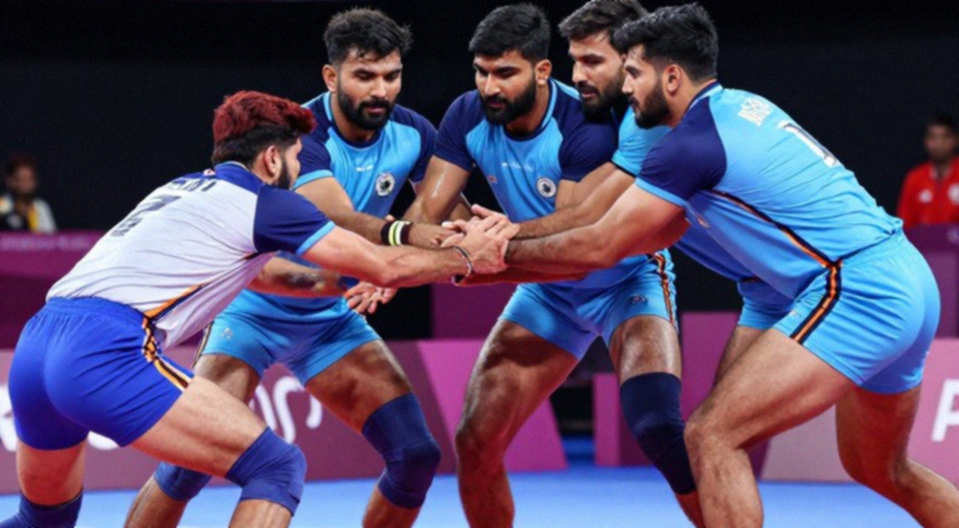
Here I have to declare my coverage gap. The ledger I own is the Pro Kabaddi League's — a raid-success versus tackle-point model across Seasons 1 to 7, built in the eight empty-stadium weeks of 2026-21. Circle-style kabaddi, women's kabaddi and non-league kabaddi have no such ledger. Absence of data is not absence of the game. So when I talk about Iran's defence, my evidence comes from league and Asian Games tape, not from Iran's domestic circuit, where my access is limited. That limit weakens my claim and I am writing it down instead of hiding it.
What evidence exists is heavy. At Jakarta 2026, Iran beat India 18-27 in the semifinal and took gold. Days earlier, South Korea had beaten India 23-24 in the group stage. Two defeats, two different stories — Korea won with pace, Iran with pressure. Fazel Atrachali is the face of that Iranian defence, and his tackle-point record is the receipt for the claim that Iran translated wrestling's language into kabaddi rather than copying it.
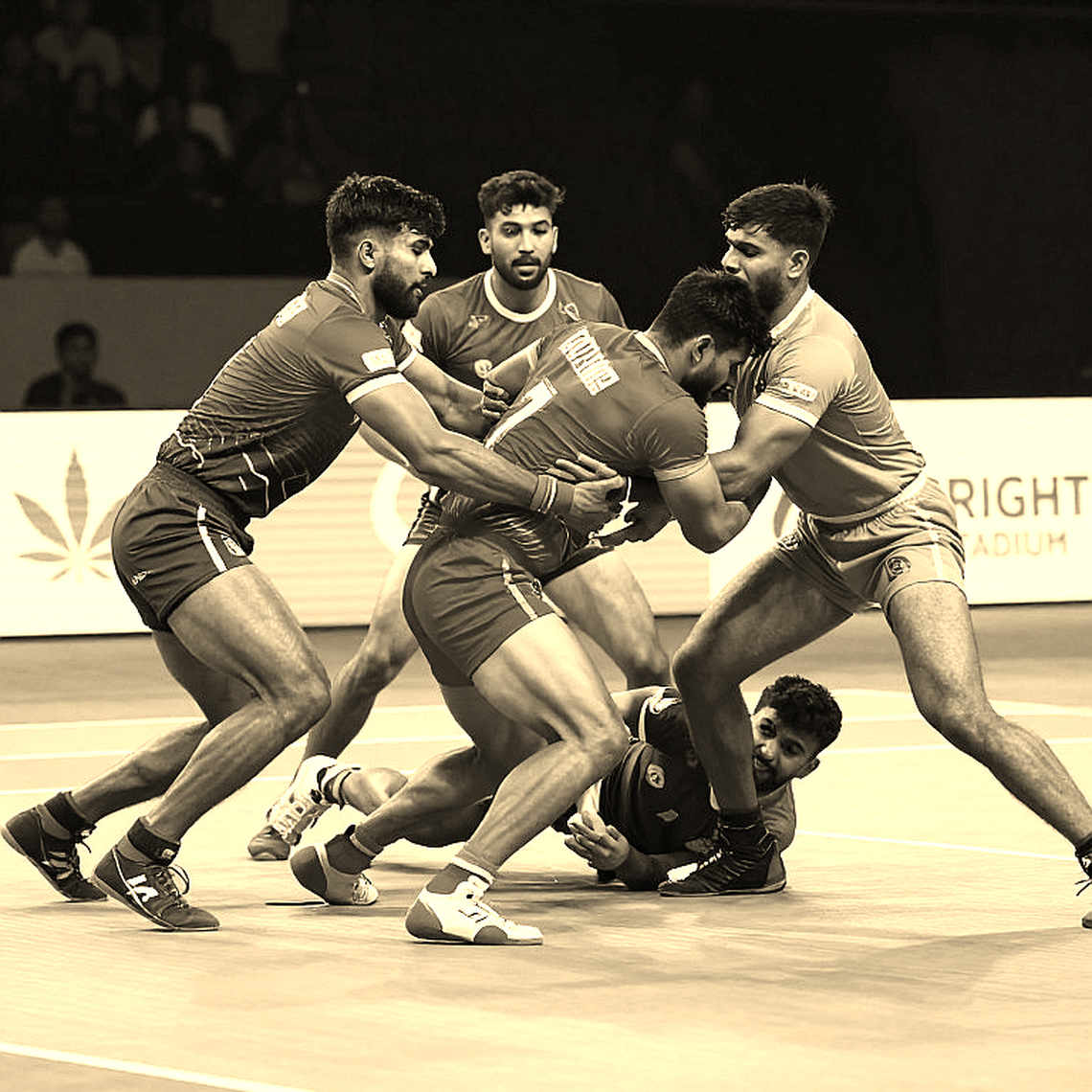
The 33-29 of 2026 does not end that story. It continues it. India won because their raiders avoided direct contact in the last ten minutes and picked points off the bonus line. Iran lost because they did not have one more raider for that moment — the defence was never the problem. The defence stood for all forty minutes and held India to 33. A team whose defence pins the opposition to 33 in a final does not get called a weak opponent in any ledger I have.
Contrarian
Now the part where I try to beat myself, because the hot take is easy and the tape is where the argument earns its keep. Am I inflating Iran? Three objections are real.
First, the sample is thin. India-Iran meetings at Asian Games and World Cups number in the single digits. Granting co-favourite status off two or three matches is exactly the mistake I scold others for. Second, Iran's system is coach-dependent. That defensive structure was built by a specific technical staff; change the staff and the structure moves — that is the biggest risk to my prediction. Third, and sharpest: perhaps India's selection in 2026 was wrong, as I argue, but perhaps it was simply a bad day and there is no structural gap between the two systems at all.
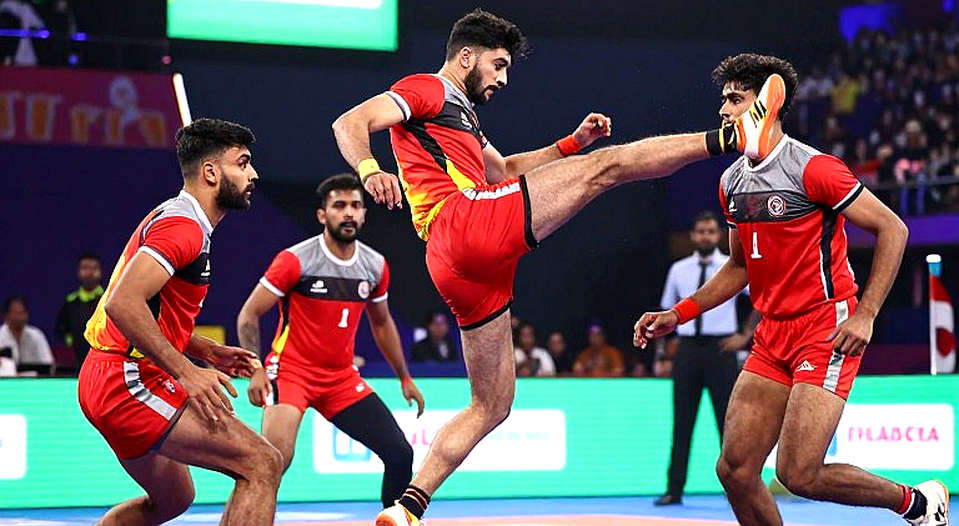
I accept all three and still stand by the argument, because the stake is not in the scoreline but in the language. Call Iran an upset team and every preview hands India guaranteed gold — the exact phrase that gave Indian selection a comfortable 2026. I deleted guaranteed gold from my vocabulary permanently after Jakarta.
Takeaway
A testable prediction: in the next major India-Iran meeting, Iran's tackle-point share will stay above 45 percent and the margin will finish inside five points. If I am wrong, Iran was a defensive team, not a system. If I am right, the honest rivalry in this sport is India-Iran, and the first three paragraphs of every preview should say so — Iran is co-favourite, not a guest.
The archive does not settle arguments. It shows you which ones were alive. The 33-29 argument is alive.