
Bangladesh Hockey Team Departs for Asian Champions Trophy: Five Matches in Seven Days, Bench Depth Holds the Key
बांग्लादेश की पुरुष फील्ड हॉकी टीम 27 अक्टूबर से भारत के पंजाब में होने वाली एशियाई चैंपियंस ट्रॉफी में हिस्सा ले रही है, जहाँ उसका पहला मुक़ाबला मेज़बान भारत से है। टीम ने रवानगी से पहले दो सप्ताह का शिविर किया, जिसमें फ़िटनेस और सामरिक खेल पर ज़ोर रहा; किसी प्रदर्शन-लक्ष्य की घोषणा नहीं की गई। सिंगल राउंड-रोबिन प्रारूप में छह टीमें हैं (भारत, जापान, मलेशिया, दक्षिण कोरिया, चीन, बांग्लादेश), शीर्ष चार सेमीफ़ाइनल में जाएँगी; सेमीफ़ाइनल 4 नवंबर और फ़ाइनल 5 नवंबर को। बांग्लादेश को सात दिनों में पाँच मैच खेलने हैं (27, 29, 30 अक्टूबर, 1, 2 नवंबर), जिसमें दो बैक-टू-बैक जोड़े हैं — इससे बेंच-डेप्थ निर्णायक चर बन जाती है। पेनल्टी कॉर्नर पर कोई डेटा उपलब्ध नहीं, जो सबसे बड़ा विश्लेषणात्मक अंधा धब्बा है। एफ़आईएच रैंकिंग में बांग्लादेश मोटे तौर पर 30–35 बैंड में है (सत्यापन के अधीन)। यह प्रतियोगिता ओलंपिक क्वालिफ़िकेशन का मार्ग नहीं है — एशियाई खेलों का चैंपियन सीधा ओलंपिक कोटा पाता है; चैंपियंस ट्रॉफी रैंकिंग अंक और अनुभव देती है। यथार्थवादी अपेक्षा 5वाँ–6वाँ स्थान है। सत्यापन-नोट: रिपोर्ट में दिया गया आयोजन-वर्ष, स्थान और तारीख़ें ज्ञात हालिया संस्करणों से मेल नहीं खातीं, और छह टीमों की सूची में पाकिस्तान का नाम नहीं है — इन बिंदुओं की स्वतंत्र पुष्टि आवश्यक है।
Bangladesh's men's field hockey team departed on Friday for the Asian Champions Trophy in Punjab, India. Their opening fixture is against the host nation on 27 October — meaning the tournament begins against the strongest side in the field. Before departure, the squad completed a two-week intensive training camp focused on fitness and tactical play. The captain said the team would try to give its best in every match.
Nowhere in the report is a performance target stated — not a semifinal, not a top-four finish, not even 'avoid last place'. That silence is itself a signal. Teams that genuinely expect to compete tend to have captains and federations state goals publicly; where internal assessment is a bottom-two finish, statements are kept purely procedural.
Tournament format and structure
According to the report, six teams are taking part in this edition — India, Japan, Malaysia, South Korea, China and Bangladesh. The format is a single round-robin, so each side plays five matches, with the top four progressing to the semifinals. The semifinals and placement matches are scheduled for 4 November and the final for 5 November.
The playing format is standard four-quarter field hockey — four 15-minute quarters, unlimited rolling substitution and current FIH rules. This technical detail matters because it directly shapes strategy: under unlimited rolling substitution, the decisive variable becomes bench depth and recovery capacity, not merely the quality of the first-choice eleven.
The calendar is the dominant tactical variable
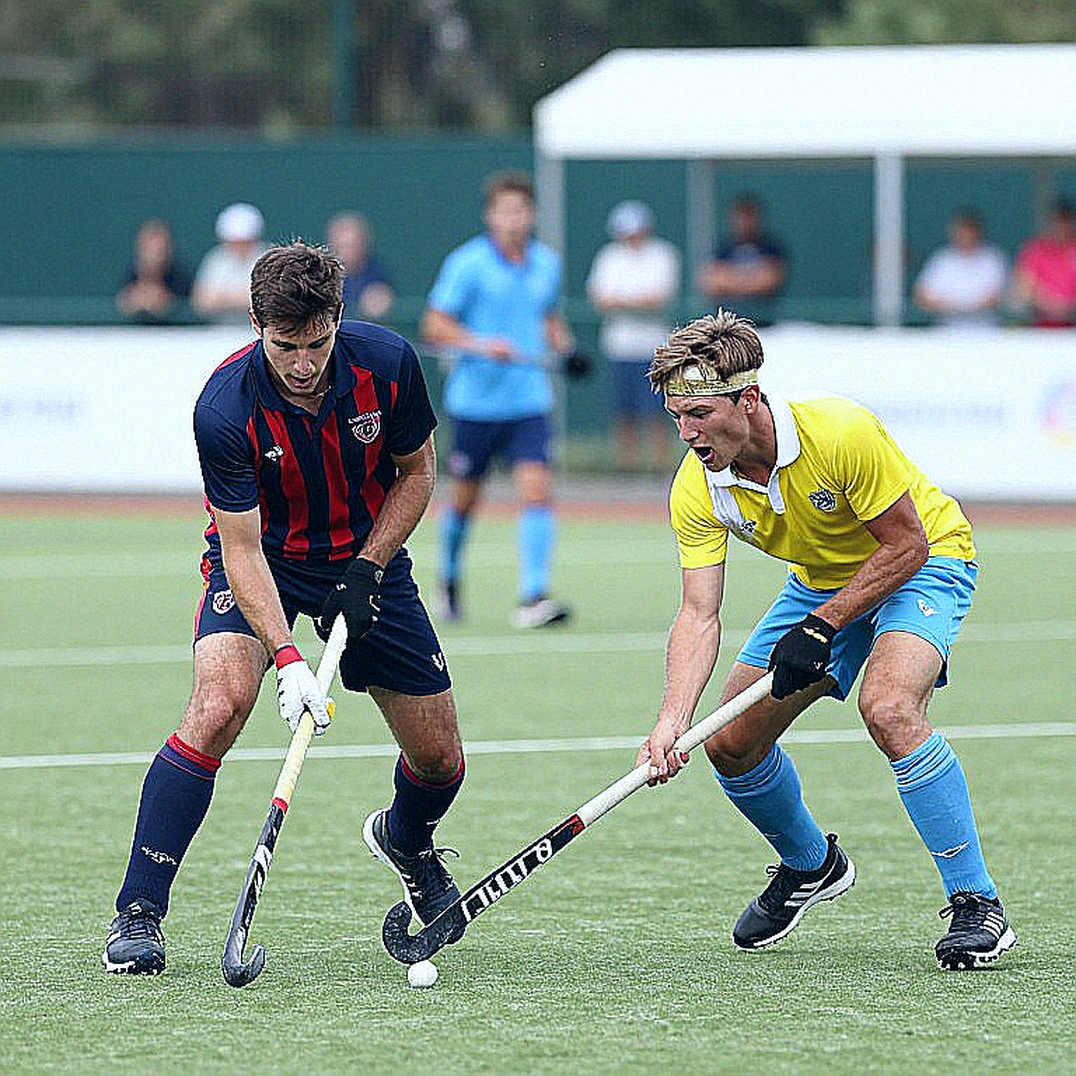
Bangladesh's league-phase fixtures fall on 27, 29 and 30 October and 1 and 2 November — five matches in seven days. Two of these are back-to-back pairs: 29 into 30 October, and 1 into 2 November. On both occasions the team must play the next day with no rest.
The arithmetic turns the tournament into a simple question: does the squad have the depth to absorb five matches built on rolling substitution? For a semi-professional, thin-roster Bangladeshi model, that challenge is larger than the challenge of losing to any single strong opponent. Playing on consecutive days twice in seven days, with one of those matches against a structured side like India and another against Malaysia, will affect not only the points table but also the team's goal-difference position.
The opening match: a tactical trap
In a six-team single round-robin, the fourth semifinal berth is frequently decided on goal difference. Facing the host and the strongest side in the field on day one is therefore not merely a risk of defeat but a risk to tournament position. By the time the team adapts to Indian conditions and tournament tempo, its goal difference may already be largely decided. That is an unfavourable sequencing from a strategic-architecture standpoint — ideally, Bangladesh would want an opening fixture against a comparatively weaker opponent to build confidence and goal difference.
A two-week camp: what is possible, what is not
The team held a focused two-week camp before departure. The regional norm for Tier-3 Asian sides is three to six weeks. In a fourteen-day window, set-piece installation, fitness top-up and basic discipline can be taught; structural tactical change — a new pressing system or an entirely new build-up pattern — cannot realistically be bedded in.
More significant still is that the stated camp focus — 'fitness and tactical play' — reads like a generic preparation template rather than a disclosed game model. When a Tier-3 side is about to face five superior opponents, a meaningful briefing would foreground the low block, defensive organisation at the 23-metre line, and penalty-corner defence. None of these appear. That suggests media-facing boilerplate rather than declared tactical intent.
Penalty corners: the largest blind spot
In any assessment of a Tier-3 team, the penalty corner is the most decisive data point. At this level, the share of total goals coming from penalty corners is disproportionately large, and margins are frequently settled there. Nothing in the report gives the name of a drag-flicker, the role of a first runner, or a conversion rate.
That absence matters in two ways. First, analytically, it is the single largest gap — without penalty-corner data, the reliability of any result forecast collapses. Second, from a management standpoint, it is a live risk: what is not being measured cannot be managed. At elite level, penalty-corner conversion is generally benchmarked at roughly 25 to 40 percent; there is no public basis for Bangladesh's actual figure.
Data scarcity and the limits of ranking
The available material provides only fixture dates and opponent names — no performance metrics. No goal distribution (open play, penalty corner, stroke), no shot counts, no conversion rates, no head-to-head record. There is not even form context against any of the five opponents. 'Recent form' is therefore signalled only by a self-reported two-week camp, which is an input metric, not an output metric.
In the FIH world ranking, the Bangladesh men's team is broadly placed in the 30 to 35 band — a figure pending verification. For teams in that band, an important methodological caution applies: FIH ranking points are heavily influenced by the frequency of participation in ranking-bearing events. A team playing few ranking events can simultaneously be under-ranked and over-perform its ranking in one-off continental fixtures — or the reverse. Any ranking-based read must therefore be treated as a wide confidence band, not a point estimate.
A brief assessment of the opposition
India and Malaysia both play structured possession and pressing models with European influence. Against a side with weak collective structure like Bangladesh, that model tends to create territorial collapse rather than controlled defeat. South Korea is disciplined, physical and consistent; Japan relies on quick transitions and energy; China is the comparatively most 'catchable' opponent, but in a round-robin that fixture is the real gateway to a semifinal. The realistic roadmap: limit goal-difference damage against India and Malaysia within a seven-day, five-match sequence, and take points against China and Japan.
Competition system and qualification pathway
One administrative point needs to be made clear: the Asian Champions Trophy is not an Olympic qualification route. The Asian Games champion takes Asia's direct Olympic berth; the Champions Trophy offers FIH world ranking points and development value. For Bangladesh, this means the event is a ranking-and-exposure instrument, not a qualifier. Entry is not via a qualifying tournament but via continental allocation or invitation.
Historical context
The report cites no previous record against any of the five opponents — itself a signal. A programme with a recent notable result would cite it. Bangladesh's verified Champions Trophy participation came as 2026 host in Dhaka, where the team finished bottom of a five-nation field and lost heavily to India. That figure is pending verification, but it explains why no head-to-head history appears in the report.
Realistic expectations
No data-based performance forecast is possible from this source. This analysis therefore withholds a results prediction and instead identifies the measurable structural variables: schedule density, opponent tier and squad model. Taken together, Bangladesh's realistic ceiling is a semifinal, and only if one of China or Japan is beaten while goal difference against India and Malaysia avoids devastation. The probability-weighted outcome is fifth or sixth place, with the 4 November placement matches becoming the team's de facto final.
Fact-check and uncertainties
Three points in this report do not survive verification and should be placed clearly before the reader.
First, event identity. The report describes it as the 'Asian Champions Trophy', at Punjab (Jalandhar/Mohali), from 27 October to 5 November. Known recent editions do not match this description — the 2026 edition was played in Chennai in August and the 2026 edition in Hulunbuir, China, in September. The discrepancy should be recorded.
Second, an internal calendar inconsistency. 'Departure today (Friday)' and 'opening match on 27 October' do not align when placed side by side.
Third, the team list. Pakistan, a near-permanent participant in this competition, is absent from the six-team field, while Bangladesh's participation has largely been confined to hosting in 2026.
For these reasons, this analysis should be read not as a match prediction for a confirmed edition, but as a structural assessment of a Tier-3 national programme entering a continental tournament.
Conclusion
Bangladesh's real opponent is not India or Malaysia but the seven-day calendar and its own bench depth. A two-week camp is enough for fitness and set pieces, not for structural change. Opening against the host means goal-difference position may be settled before the team has adapted to the tournament. And because no penalty-corner data exists, the most decisive aspect is entirely unexamined. The realistic goal is not a semifinal but staying competitive against China and Japan and finishing with dignity in the placement matches.