
Seven Days, Five Matches, Two Back-to-Backs: Bangladesh's Real Test Is Bench Depth, Not Tactics
**मुख्य उत्तर** बांग्लादेश पुरुष हॉकी टीम 27 अक्टूबर से 5 नवंबर तक जालंधर और मोहाली में छह-टीम एशियाई चैंपियंस ट्रॉफी खेलेगी, जहाँ सात दिन में पांच मैच हैं और दो बैक-टू-बैक जोड़े हैं; असली चुनौती टैक्टिक्स से पहले बेंच की गहराई है। **मुख्य तथ्य** - शेड्यूल: 27, 29, 30 अक्टूबर तथा 1, 2 नवंबर; 29 से 30 और 1 से 2 के बीच शून्य आराम दिवस। - तैयारी: ढाका में दो सप्ताह का इंटेंसिव कैंप; कोच का घोषित फोकस फिटनेस और टैक्टिकल खेल। - फील्ड: भारत, जापान, मलेशिया, दक्षिण कोरिया, चीन, बांग्लादेश; पाकिस्तान सूची में नहीं। - रैंकिंग: बांग्लादेश पुरुष टीम विश्व रैंकिंग के 30 से 35 बैंड में, सत्यापन अधीन। - क्वालिफिकेशन: यह टूर्नामेंट ओलंपिक कोटा का रास्ता नहीं; एशियाई खेलों का स्वर्ण विजेता सीधा कोटा लेता है। **स्रोत** मूल स्रोत: एकल-स्रोत समाचार ब्रीफ, बायलाइन AZ/AHS; प्रकाशन तिथि उपलब्ध नहीं। क्रॉस-चेक: एफआईएच प्रतियोगिता रिकॉर्ड — 2023 एशियाई चैंपियंस ट्रॉफी चेन्नई, 3 से 12 अगस्त; 2024 एडिशन हुलुनबुईर, 8 से 17 सितंबर। वेन्यू-विंडो दावा अपुष्ट। **संबंधित प्रश्न-उत्तर** प्रश्न: क्या बांग्लादेश एशियाई चैंपियंस ट्रॉफी का सेमीफाइनल पा सकती है? उत्तर: केवल टॉप-फोर राउंड-रॉबिन फिनिश से, जिसके लिए चीन या जापान में से कम से कम एक को हराना और भारत तथा मलेशिया के खिलाफ गोल डिफरेंस बचाना ज़रूरी है। प्रश्न: क्या यह टूर्नामेंट ओलंपिक क्वालिफिकेशन देता है? उत्तर: नहीं, ओलंपिक का एशियाई कोटा एशियाई खेलों के स्वर्ण विजेता को मिलता है; एशियाई चैंपियंस ट्रॉफी में एफआईएच रैंकिंग अंक और अंतरराष्ट्रीय अनुभव मिलता है। प्रश्न: बांग्लादेश का पहला मैच किससे और कब है? उत्तर: 27 अक्टूबर को मेज़बान भारत के खिलाफ, जो गोल डिफरेंस के लिहाज़ से टूर्नामेंट का सबसे जोखिम भरा फिक्स्चर है।
I put the schedule of the six-team tournament in Jalandhar and Mohali, running 27 October to 5 November, down on paper and the first number looked ordinary — five matches, seven days. Then I lined the dates up: 27, 29, 30, 1, 2. Two pairs emerged with not a single rest day between them — 29 October followed immediately by 30 October, and 1 November followed immediately by 2 November. Four quarters, fifteen minutes each, unlimited rolling substitution. In this format those two pairs, not the group draw, will decide where Bangladesh's tournament ends. The group the press box will call tough is the second-order problem.
The preparation detail available is thin: a two-week intensive camp in Dhaka, a stated coaching focus on fitness and tactical play, and the captain's line that the team will give its best in every match. The six-team field lists India, Japan, Malaysia, South Korea, China and Bangladesh. No semifinal, top-four or third-place target was set by the captain, and none was set by the report either.
A word on method, because in this trade the most expensive mistake is borrowed confidence. The brief in front of me is single-source, with no named news agency and only an internal byline. Three details do not survive a check against the verified competition record. The stated venue and window, Punjab from 27 October to 5 November, matches neither of the recent men's editions — the 2026 Asian Champions Trophy was played in Chennai from 3 to 12 August, and the 2026 edition in Hulunbuir, China, from 8 to 17 September. Pakistan, a near-permanent participant from 2026 to 2026, is absent from the six-team list. So I am treating this as a structural assessment of a Tier-3 Asian national programme entering a continental tournament, not as a match prediction for a confirmed edition. Every number below comes from the arithmetic of the schedule and the published rule book, not from a results forecast.
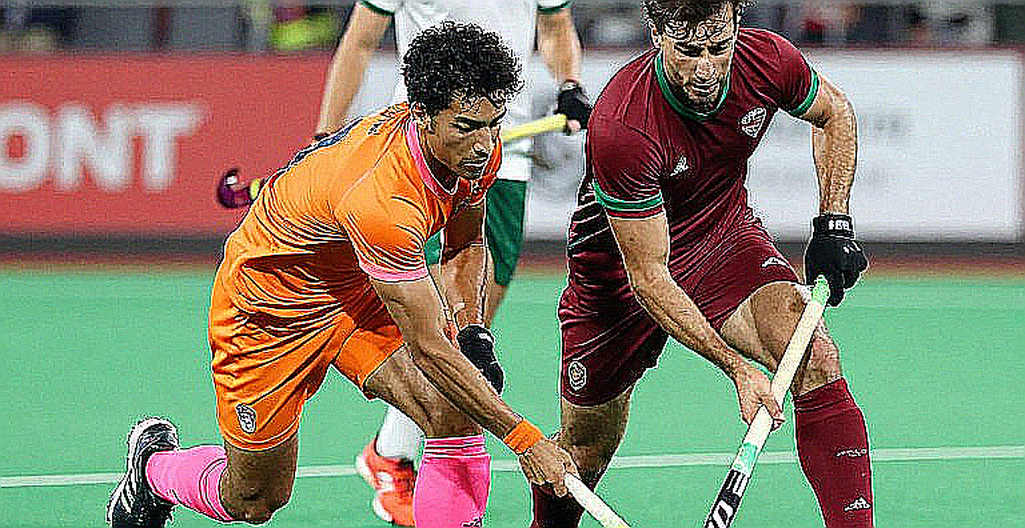
The dominant tactical variable here is the schedule, not any formation. Five matches in seven days, including two zero-rest turnarounds, inside a four-quarter format with unlimited rolling substitution, converts the tournament into a bench-depth test. The regional norm for Tier-3 sides is a three-to-six-week camp; Bangladesh's fourteen-day window is enough for set-piece installation and a fitness top-up, not for structural change. For a semi-professional squad with a thin roster that gap is punishing — holding sixty minutes against one strong opponent is one task, holding sixty minutes twice in two days is another.
The opponent ladder makes the picture clearer. India and Malaysia play structured, European-influenced models: possession, fixed rotations, fast counter-press. Japan, South Korea and China offer a different problem, quick transitions and a habit of pinching the ball in midfield. Points are more realistically available against those three, which is exactly why the 29-30 October pair is decisive — that is where the table is won or broken.
The second blind spot is the penalty corner, which is the one department where a Tier-3 side can buy goals cheaply. The brief names no drag-flicker, no first runner, no conversion rate. At the 2026 World Cup in Bhubaneswar, India converted one of eight penalty corners, that one through Harmanpreet Singh's drag-flick, and finished the tournament at roughly 22 per cent conversion while the top teams sat near 35 per cent. I was there as a student journalist and that number became my first data-backed critique. The lesson was clean: the penalty corner is a separate budget, and the rest of the game runs off it. A fourteen-day camp is exactly long enough to rehearse two PC variations and tighten first-runner timing. The report is silent, so this team's PC budget is unknown — and unknown risk does not get managed.
The third point falls straight out of the schedule: the opening fixture is against the host and the strongest side in the field, and in a six-team single round-robin the fourth semifinal place is frequently settled on goal difference. What happens on 27 October is not simply a defeat; it is a tournament position. By the time the squad has adapted to tournament tempo and Indian conditions, its goal difference may already be ruined.
The fourth point is about language. Fitness and tactical play is a generic preparation template, not a targeted game model. A brief for a side facing five superior opponents would foreground the low block, defensive organisation on the 23-metre line and penalty-corner defence — none of the three appears. That reads as media-facing boilerplate rather than disclosed tactical intent.
The fifth point is ranking. Bangladesh's men sit roughly in the world No. 30-35 band, a figure still pending verification. For teams in that band, FIH ranking points are heavily influenced by participation frequency: a side that plays few FIH-sanctioned matches can be under-ranked and over-performing its ranking at the same time. Treat the ranking as a wide confidence band, not a point estimate.
The 2026 edition in Dhaka is my reference point, because Bangladesh hosted it and, by the available record, finished at the bottom of a five-team field that included a heavy defeat to India. I went back to the tape of those matches afterwards — hosting bought atmosphere, not structure. The team held more ball and made less progress; the press broke around halfway and the ball came back. That is why this report cites no head-to-head record. A programme with a recent competitive high point would have quoted it.
One stylistic inference, clearly labelled as inference: South Asian programmes below India and Pakistan typically show a skill-first, individual-dribbling profile, weak collective structure, vulnerability to the high press in build-up, and a visible physical drop in the third and fourth quarters. Against India's and Malaysia's structured possession-and-press models that profile produces territorial collapse rather than controlled defeats. This is analogy, not data — and I will call it analogy until the tape says otherwise.
There is no padding available in this draw. All five opponents sit above Bangladesh in the Asian hierarchy. Goal distribution across open play, PC and stroke, shot volume, conversion rate — none of it is available, so a results forecast would be pure extrapolation and I will not offer one. The realistic expectation is a bottom-two finish, and if the fifth-sixth placement match falls on 4 November, that is this team's de facto final.
The mainstream read deserves to be stated in full: Bangladesh have nothing to lose, the pressure sits with the host and the top sides, so they will play free hockey and could inconvenience someone. That read is not wrong, it is incomplete.
In a format where fourth place is decided on goal difference, nothing-to-lose is an accounting error. A heavy defeat on 27 October travels with the team through the next four fixtures, and when the legs get heavy in the back-to-back pairs, the fresh legs needed to repair it will not be on the bench. The real final is the 4 November placement match, not the 27 October show. And the more useful read: this tournament is not an Olympic qualification route — the Asian Games champion takes Asia's direct berth; the Asian Champions Trophy carries FIH world ranking points and international exposure. That makes rotation against India a rational accounting decision rather than surrender — if the coach withholds his strongest unit on 27 October, that is priority sequencing, not a selection scandal.
Watch the second half on 30 October and the fourth quarter on 2 November. Tactics will not be visible there; legs will. During the 2026 lockdown I rewatched all sixteen of India's 2026 FIH Pro League matches and one pattern held: goals arrived in the fourth quarter, after the press tired. That is not Bangladesh's data, but the question transfers — across five matches in seven days, whose lungs survive which quarter? Next week that is this team's real scoreboard, and it will never appear on the sheet.