
Seven Days, Five Matches, Two Back-to-Backs: Bangladesh's Real Opponent Is the Calendar, Not India
**मुख्य उत्तर:** बांग्लादेश पुरुष हॉकी टीम एशियाई चैंपियंस ट्रॉफी में सात दिनों में पाँच लीग मैच खेलेगी, जिनमें 29–30 अक्टूबर और 1–2 नवंबर के दो बैक-टू-बैक जोड़े हैं। चौदह दिन के कैंप और पतले सेमी-प्रोफेशनल रोस्टर के कारण टीम की असली चुनौती प्रतिद्वंद्वी नहीं, कैलेंडर है। **मुख्य तथ्य:** - बांग्लादेश पुरुष टीम FIH विश्व रैंकिंग में लगभग 30–35 बैंड में है, यानी टॉप-25 से बाहर। - पुरुष ACT का 2023 संस्करण चेन्नई में 3–12 अगस्त और 2024 संस्करण हुलुनबुइर, चीन में 8–17 सितंबर को खेला गया। - 2021 में ढाका में मेज़बान बांग्लादेश पाँच टीमों के फ़ील्ड में सबसे नीचे रहा, भारत से भारी हार सहित। - ACT ओलंपिक क्वालिफ़िकेशन का रास्ता नहीं है; सीधा एशियाई कोटा एशियाई खेलों के चैंपियन को मिलता है। - छह-टीम सिंगल राउंड-रॉबिन में चौथा सेमीफ़ाइनल स्थान अक्सर गोल डिफरेंस पर तय होता है। **स्रोत:** डेपार्चर-डे न्यूज़ ब्रीफ़, बायलाइन AZ/AHS, कोई नामित न्यूज़ एजेंसी नहीं; आयोजन-संस्करण और तारीखें FIH सत्यापित रिकॉर्ड से नहीं मिलतीं (स्थिति: असत्यापित)। **संबंधित प्रश्नोत्तर:** प्रश्न: बांग्लादेश का असली लक्ष्य क्या होना चाहिए? उत्तर: मेडल नहीं, बल्कि रैंकिंग अंक और 4 नवंबर के प्लेसमेंट मैच में सम्मानजनक स्थिति, क्योंकि ACT क्वालिफ़िकेशन इवेंट नहीं है। प्रश्न: सबसे बड़ा अनियंत्रित जोखिम कौन सा है? उत्तर: पेनल्टी कॉर्नर, क्योंकि ब्रीफ़ में कोई ड्रैग-फ्लिकर, पहला रनर या कन्वर्ज़न आंकड़ा नहीं दिया गया, जबकि एलीट बेंचमार्क 25–40 प्रतिशत माना जाता है। प्रश्न: चौदह दिन का कैंप क्यों पर्याप्त नहीं माना जा रहा? उत्तर: यह स्ट्रक्चरल टैक्टिकल बदलाव के लिए कम है, पर सेट-पीस इंस्टॉलेशन और फ़िटनेस टॉप-अप के लिए पर्याप्त — और यही दो चीज़ें टियर-3 नतीजे तय करती हैं।
Two dates are enough — October 29 and October 30, then November 1 and November 2. Five matches in seven days, and four of them arranged in pairs with not a single rest day between. The Bangladesh men's hockey team departed on Friday after a fourteen-day intensive camp. The departure-day brief that carried this information contains a venue, a set of dates and one quote from the captain. Nothing else. No world ranking, no previous record against any opponent, no penalty corner data, and most tellingly, no stated performance target. The captain said the team would "give its best in every match." That is the language of process, not of outcome.
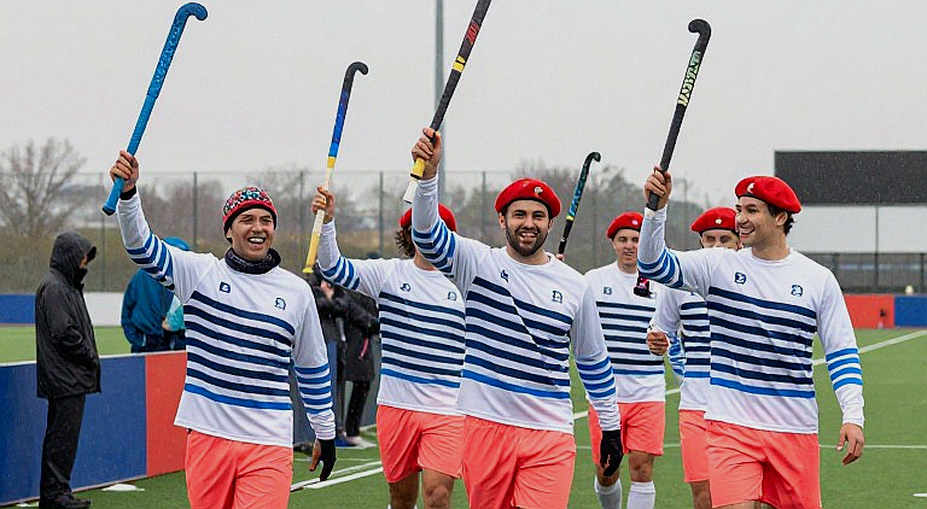
The press box teaches you the roar is never the story. Here there is no roar at all. There is only a fixture list, and that fixture list is the most honest part of this story, because a fixture list does not lie. A calendar speaks. Seven days, five matches, two back-to-backs. That single line tells you more than any tactical intention could.
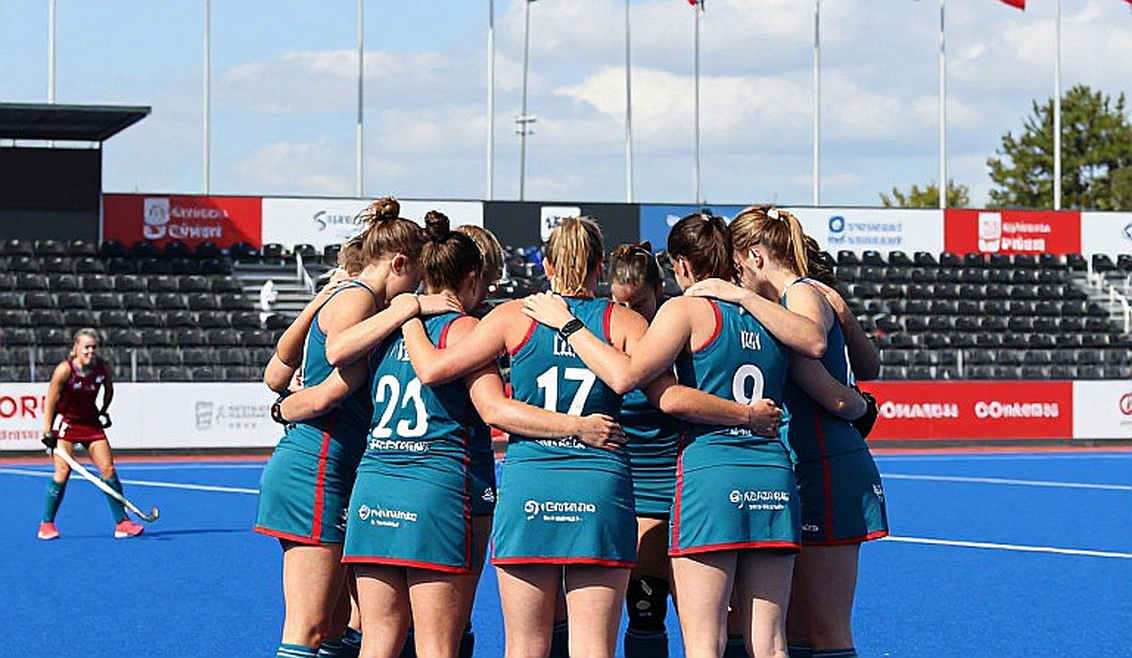
This team does not have contracts; it has a fourteen-day camp, and that camp is the most revealing document in the entire tournament. Where club football gives you release clauses and wage bills as the real story, continental hockey gives you camp length and roster size doing the same work. Fourteen days is a statement, and it has to be read properly.
One clarification first: this is not a match prediction. The edition named in the brief does not match the verified FIH record. The men's Asian Champions Trophy was played in Chennai from August 3 to 12 in 2026, and in Hulunbuir, China, from September 8 to 17 in 2026. The Punjab window of October 27 to November 5 described in the brief matches neither. That is a fact, not a grievance, and it deserves one sentence before the analysis moves on. What follows is therefore a structural assessment of a Tier-3 Asian national programme, not a score forecast for a confirmed edition.
The same brief lists six teams: India, Japan, Malaysia, South Korea, China and Bangladesh. Two things are anomalous. First, Pakistan is absent, though it has appeared in nearly every edition from 2026 to 2026. Second, Bangladesh enters this field largely as the 2026 host rather than as a regular participant. If Pakistan really is out, the sixth berth becomes a development slot and the tournament's competitive meaning shifts. That is a calendar fact, and it should be read as field composition rather than as commentary on tournament quality.
Where Bangladesh sits should also be stated plainly. The men's team occupies roughly the world No. 30–35 band in the FIH rankings, outside the group that decides continental finals. As 2026 host in Dhaka, it finished at the bottom of a five-team field that included a heavy defeat to India. That is why the departure-day brief cites no head-to-head record against anyone: there is no recent result worth foregrounding.
One thing needs separating out, because Indian hockey writing misuses it constantly. For India, the emptiness between Moscow 2026 and Tokyo 2026 is a forty-one-year gap, a hole every revival story has to be run through. For Bangladesh there is no gap; there is an absence of a beginning. And the second cause matters as much as the first, because the medal table does not show it: no central contracts, no drag-flicker pipeline, no ranking-bearing calendar that runs through the year. A drought cited without its second cause is decoration, not analysis.
Here is the substance. Five matches in seven days, with two zero-rest turnarounds, is the dominant tactical variable of this tournament, not any playing style. Hockey is played in four fifteen-minute quarters with unlimited rolling substitution, which turns the event into a bench-depth test — and that test is hardest for a thin, semi-professional roster. Bangladesh will be structurally disadvantaged by the calendar far more than by any single strong opponent. October 29 into 30, then November 1 into 2: the second match of each pair is a fatigue outcome, and fatigue shows in the third and fourth quarters, where Tier-3 sides drop off fastest.
One comparison earns its place here because a number can check it. At a global track meet, a 400m hurdler runs three rounds — heat, semifinal, final — across three days, but gets at least one recovery session between them, and the round count is three. Here it is five matches in seven days, twice with zero days between. The load arithmetic is public in both cases; the difference is that track treats recovery as part of the calendar while continental hockey treats it as leftover time.
The fourteen-day camp is not a selection decision but a structural constraint. The regional norm for Tier-3 sides is a three-to-six-week centralised block. Fourteen days describes players who hold jobs and club commitments and cannot be centrally contracted for longer. That is a budget-and-calendar outcome, not a judgement. And the useful conclusion hides inside it: fourteen days is not enough for structural tactical change, but it is exactly enough for set-piece installation and fitness topping-up — and those two things decide Tier-3 tournament outcomes. The shortfall is not in the camp's length but in where the plan is aimed.
The penalty corner is this team's largest unmanaged risk, and the absence of information is how you identify it. The brief names no drag-flicker, describes no first-runner role, and gives no conversion figure. In Tier-3 hockey, PC goals carry an outsized share of total scoring, so that silence is a tactical blind spot rather than a reporting gap. The elite benchmark is generally put at 25 to 40 percent conversion; nobody knows which side of that range this team sits on, and what nobody knows, nobody manages. On August 8, 2026, in Paris, India beat Spain 2-1 for bronze with both goals from Harmanpreet Singh penalty corners. Set-piece dependence is not one tier's disease; the difference is that the top team has a cure and the lower team only has the pressure.
Opening against the host is a tactical trap because the stake is not defeat but goal difference. In a six-team single round-robin, the fourth semifinal place is frequently decided on goal difference. A large margin on day one, against the host and the strongest side in the field, damages the team's table position before it has adapted to tournament tempo and Indian conditions. October 27 is therefore not simply a fixture; it is the first accounting entry of the whole event.
"Fitness and tactical play" is a generic preparation template, not a game model. A strong brief for a Tier-3 side facing five superior opponents would name the low block, defensive organisation on the 23-metre line, and penalty corner defence. None of them appear. After four years of watching tape, you learn to read that silence: what has been described was written for the media, not for the pitch.
A caveat on rankings is necessary. For teams in Bangladesh's band, FIH points are heavily influenced by participation frequency in ranking-bearing events. A side that plays few sanctioned matches can be simultaneously under-ranked and, in a one-off continental fixture, better than its ranking. The 30–35 band is a wide confidence interval, not a point estimate, and drawing results from it is dangerous.
What can be said about style has to be labelled as inference. South Asian Tier-3 programmes below India and Pakistan typically present a skill-first, individual-dribbling profile: strong one-on-one, weak collective structure, vulnerable in build-up against a high press, and a visible physical drop-off in the third and fourth quarters. Against structured possession-and-press models like India's and Malaysia's, that profile produces territorial collapse rather than controlled defeats. That is an inference, not a data point, and I will call it one.
Add it all up and the conclusion is plain: no data-based performance forecast is possible from this source, so the honest move is to withhold the forecast and count the structural variables instead. There are three — calendar density, opponent tier, roster model — and all three run against Bangladesh. The only route to a semifinal is a top-four round-robin finish, which requires beating either China or Japan while avoiding goal-difference devastation against India and Malaysia. On this profile, the probability-weighted outcome is fifth or sixth, which is why the November 4 placement match is this team's de facto final.
The mainstream case deserves its strongest form before it is tested. Bangladesh is here to make up the numbers: bottom of a six-team field, no recent result, a two-week camp, and the real story of the ACT is whether India defend the title. A weak team in the field is a question about tournament quality, not about Bangladeshi progress. That paragraph is correct. I am not deleting it.
Where it fails is here: treating the ACT as an Olympic qualification route. It is not one. The direct Asian berth goes to the Asian Games champion. The ACT carries FIH world ranking points and development value, not qualification. For Bangladesh it is a ranking-and-exposure instrument, and judged on that measure the "making up the numbers" critique loses its target. Second, the assumption that fourteen days is far too short aims in the right direction and hits the wrong thing. Fourteen days cannot deliver structural change, but structural change was never on offer. The things that decide results at this level — PC routines and fitness — are precisely what fourteen days builds.
Three months of silence taught me what an argument actually costs, which is why I name the process failure once, factually: neither the captain nor the report states a target — semifinal, top four, or even avoiding last place. That indicates a de-risked internal assessment that nobody wants to put in public.
From a Tokyo desk, the crowd noise came with a volume slider. That year I logged every match off broadcast feeds with timestamped PCs and substitutions, because I was not in the stadium. That experience taught something directly applicable here: the scoreline shows you the outcome, and the tape shows you the cause. The scoreline said 7-0. The tape said something else — in that Birmingham 2026 final, and in this brief too, where the scoreline has not even been written yet and the tape already exists.
The forward question is what Bangladesh carries home. Not a medal; that is not on the agenda in this field. The question is the condition in which the team arrives at the November 4 placement match: how deep the third-and-fourth-quarter physical drop-off runs, and whether a repeatable penalty corner shape emerges. The real accounting comes in 2026, when the federation either books a calendar of ranking-bearing fixtures or once again writes a departure-day brief and puts the team on a flight. Playing five matches in seven days is courage. How many matches arrive in the following seven months is the scoreline that matters.