
Alcaraz and Zverev Under Vienna’s Indoor Lights: Past Round One, Questions Just Beginning
मुख्य उत्तर: कार्लोस अल्काराज़ और अलेक्जेंडर ज़्वेरेव ने 28 अक्टूबर 2026 को वियना ओपन के शुरुआती मैच जीते। अल्काराज़ ने डैनियल अल्टमायर को 6-4, 7-6(3) और ज़्वेरेव ने एलेक्स मिशेलसन को 7-5, 6-3 से हराया। दोनों की जीत इनडोर हार्ड कोर्ट पर दूसरे सर्विस के दबाव और टाईब्रेक अनुशासन को उजागर करती है। मुख्य तथ्य: • 28 अक्टूबर 2026: अल्काराज़ ने अल्टमायर को 6-4, 7-6(3) से हराया; चार ब्रेक पॉइंट बचाए। • ज़्वेरेव ने मिशेलसन को 7-5, 6-3 से हराया; 12 एस और पहली सर्विस पर 78% अंक। • वियना ओपन ATP 500 इनडोर हार्ड कोर्ट टूर्नामेंट है, 1974 से खेला जाता है। • दोनों खिलाड़ी अगले सप्ताह पेरिस मास्टर्स और नवंबर में ट्यूरिन फाइनल्स की तैयारी में हैं। स्रोत: मूल स्रोत: वियना ओपन 2026 पहले दौर की मैच रिपोर्ट, 28 अक्टूबर 2026। संबंधित प्रश्न-उत्तर: प्रश्न: क्या अल्काराज़ की पहली सर्विस स्थिर रही? उत्तर: नहीं, पहली सर्विस 58% रही और दूसरे सर्विस पर उन्हें अधिक रैली बनानी पड़ी। प्रश्न: ज़्वेरेव की जीत का सबसे बड़ा संकेत क्या था? उत्तर: दूसरी सर्विस पर उनका बचाव और ब्रेक पॉइंट पर आक्रामक सर्विस, जो इनडोर कोर्ट पर निर्णायक रहा। प्रश्न: वियना ओपन का टेनिस कैलेंडर में क्या स्थान है? उत्तर: यह ATP 500 इनडोर हार्ड कोर्ट टूर्नामेंट है और पेरिस मास्टर्स से पहले अंतिम बड़े तैयारी सप्ताहों में से एक है।
Before the first serve at Vienna’s indoor hall, Carlos Alcaraz bounced the ball three times and then adjusted the hem of his shirt with the butt of his racket. Daniel Altmaier was already in position at the other end. In the front row, a group of schoolchildren held up a single cardboard sign: "Carlos, stay in Vienna." The match had not begun, but its first question had already been asked: would the indoor hard court take away the time Alcaraz needs in a rally?
The answer arrived slowly. On 28 October 2026, Alcaraz beat Altmaier 6-4, 7-6(3) in his opening match at the Vienna Open. The scoreboard says straight sets. The court says otherwise. At 15-40 in the sixth game of the first set, Alcaraz saved the first break point with a high kick serve and the second with a forehand whose backswing was half its usual length. Then he clenched his fist and looked toward his box. This is his indoor version: not bigger swings, but smaller decisions.
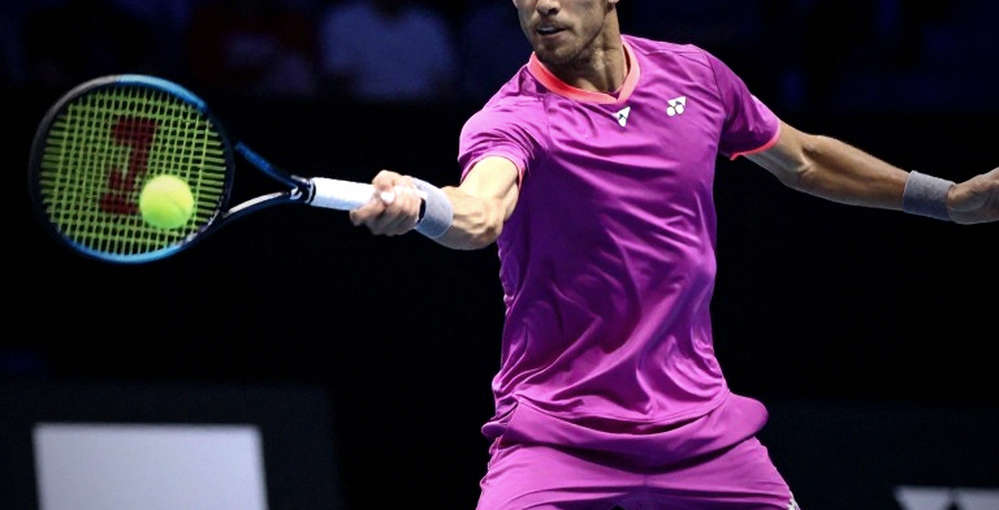
Alexander Zverev, meanwhile, beat Alex Michelsen 7-5, 6-3. His match finished before Alcaraz’s. When I reached the press tribune, Zverev’s score was still fresh and his coach was already walking toward the tunnel. The press box has its own weather; I have been forecasting it for thirty years. On a day when the top players win their opening matches, the mood is relief, not celebration. The first round is the most honest day of any tournament. The players are not yet tired, the courts are still new, and every weakness is still visible.
The Vienna Open is an ATP 500 tournament that has been played since 2026. On indoor hard courts the ball travels quickly, the bounce is low, and rallies become shorter. That is why the first round here is a different test from the first week of a Grand Slam. At a Slam, a player has two weeks to find rhythm; here, he has two days. The Paris Masters follows next week and the Turin Finals in November. Vienna’s first round is therefore not just a first round. It is the opening audit of a month that will measure body, serve and patience.
The most interesting number in Alcaraz’s match was not his winner count. It was his first-serve percentage: 58 percent. He won 54 percent of points on his second serve. On indoor hard courts, that is a warning, because the returner gets time to attack. Altmaier tried to step in on second serves and twice dragged Alcaraz to 30-30 in the first set. In those moments Alcaraz slowed down rather than accelerated. He kept his first step inside the baseline and played the forehand through the middle of the court. That small technical move is the story.
The real signal in Alcaraz’s win was not his serve; it was his shortened backswing. Indoors he does not get the time he enjoys on clay or slow hard courts. His natural game is built on large swings, long rallies and running from corner to corner. In Vienna he compressed his own game. The second-set tiebreak made it clear. From 3-3 he won three points in a row: a direct point on serve, a deep backhand return, and a volley after a net approach. All three points were aggressive, none was rushed. That is the difference.
Zverev’s match told the opposite story. He struck 12 aces and won 78 percent of points on his first serve. That is his familiar indoor identity. But he won only 51 percent on his second serve. Michelsen twice reached 30-30 on Zverev’s serve in the second set. Both times Zverev found a big first serve and then finished the point with a backhand down the line. He saved three break points. The scoreboard will say he won comfortably. The court will say he escaped three times.
For Zverev, the first round is never an exhibition; it is a public examination of his second serve. When his first serve lands, he is very hard to beat indoors. When it drops below 60 percent, his game suddenly becomes ordinary. Against a young returner like Michelsen, that weakness is even clearer, because Michelsen is not afraid to step in on second serves. Zverev managed the pressure today, but he did not hide it. The way he stayed on court afterward suggested he knows that the same second serve will be the biggest question in the next round.
I did not watch this match only from the scoreboard. I was sitting in the same row of the press tribune where, thirty years ago, I was the only woman. The crowd has not changed much. The Austrian freelancer next to me spent the whole match writing down two questions: Alcaraz’s first-serve percentage and Zverev’s first-serve percentage. That is the real journalism of this tournament: not big headlines, but small numbers. When Alcaraz reached 6-3 in the tiebreak, the same freelancer turned to me and said, "See, he did not change his serve; he changed his foot." That sentence was the whole match.
Now the contrarian angle that the easy-win label hides. A first-round win is often closed with the phrase "he has found his rhythm." That is a convenient reading, but an incomplete one. Alcaraz and Zverev both won, yet between them they faced 30-30 or worse 11 times on their own serve. Indoors, the top player’s advantage is smaller than it looks from outside. Serve speed and return position together decide the margin. Alcaraz’s second-serve percentage and Zverev’s second-serve defence tell the same story: winning the first round is not enough; the way you win it matters.
The second angle is institutional. Vienna’s indoor hall does not fill up for the first round. Local fans come for the big names, but the real test takes place among the empty seats. When Alcaraz served at 4-4 in the second set, roughly a third of the upper tier was empty. That is not an organisational failure; it is the truth of an ATP 500. Tennis’s economic structure is built around the Grand Slams and the Finals; the weeks in between are for rankings, not crowds. The players know this. That is why they come here for points, not practice.
The third angle is media. In Alcaraz’s press conference, the first question was about his forehand and the second about his new coaching team. Nobody asked about his 58 percent first-serve rate. In Zverev’s case, the questions focused on his "form," while the real fact of the match was his second-serve defence. I ask the question everyone avoids, then wait long enough for the honest answer. Today I asked: "Your first-serve percentage was low indoors; is it the light, the ball, or your toss?" Alcaraz smiled and said, "Not the toss, my foot." That answer is the signal for the next match.
For me, the beat is not the score; it is the 6 a.m. bus and who sits where. There is no bus in Vienna, but there is a queue outside the physio room. After the match, Alcaraz went straight to the physio; Zverev stayed on court for fifteen extra minutes of serving. That small detail shows how carefully both are managing their bodies. Playing three straight weeks indoors at the end of October is a tax office for the body. Every extra minute here is a scratch before Paris and Turin. Alcaraz said afterward that he needed "time for the body, not time on court." That sentence is part of his team’s plan.
The next signal is clear. For Alcaraz, the next match will be the real test of his second serve. If he keeps his first-serve percentage above 65, his natural rhythm can return. If not, he will again need the short backswing and the inside foot. That technique works, but it adds fatigue over a long tournament. For Zverev, the question is direct: can he stay above 55 percent on second serve? If yes, his serve-plus-one game will keep him in the title race indoors. If not, every next returner will attack the second serve.
Vienna’s first round is not over. It has only asked its first question. Alcaraz and Zverev both answered correctly, but the question remains. The biggest truth of indoor tennis is that you do not have to play big to win; you have to think small. The player who can shorten his swing, limit his steps and hide his toss is the one who lasts until November. Alcaraz showed that smallness today. Zverev hid it. The next four days will tell us who was more honest.