
Five Games and a Retirement in Ningbo: What Rybakina's Scoreboard Says, and What It Doesn't
**कोर उत्तर (58 शब्द):** एलेना रायबाकिना ने नींगबो ओपन (WTA 500) में चोट से वापसी पर क्वार्टर फाइनल में जगह बनाई, क्योंकि पोलिना कुडेर्मेतोवा पाँच-शून्य पर रिटायर हो गईं। यह जीत फ़ॉर्म का प्रमाण नहीं है: मैच चालीस मिनट से कम में समाप्त हुआ, कोई दबाव वाला सर्विस गेम नहीं आया, और कोई सांख्यिकीय शीट जारी नहीं हुई। **मुख्य तथ्य:** - एलेना रायबाकिना (कज़ाखस्तान, 27 वर्ष) नींगबो ओपन में डिफेंडिंग चैंपियन और टॉप सीड हैं। - पोलिना कुडेर्मेतोवा (उज़्बेकिस्तान) विश्व रैंकिंग 105 पर हैं; रिटायरमेंट 5-0 पर हुआ। - क्वार्टर फाइनल में अनसीडेड कैटार्ज़ीना कावा (पोलैंड) से भिड़ंत होगी। - डायना श्नाइडर (नंबर 13, 22 वर्ष) ने अलेक्जेंड्रा एला (नंबर 20, 21 वर्ष) को 7-5, 6-4 से हराया; मैच 1 घंटा 55 मिनट चला। - इवा जोविच (अमेरिका, 18 वर्ष) ने जैस्मीन पाओलिनी को 6-4, 6-3 से हराया। **स्रोत:** मूल मैच रिपोर्ट — 'Elena Rybakina reaches Ningo Open quarter-final on return from injury'। प्रकाशन तिथि स्रोत में उपलब्ध नहीं; खिलाड़ियों की जन्म-तिथि गणना से घटना अक्टूबर 2026 की रिपोर्टिंग विंडो में आती है। स्रोत में बायलाइन, एजेंसी एट्रिब्यूशन और सीधे हवाले अनुपस्थित हैं; टूर्नामेंट का नाम स्रोत में गलत छपा है ('नींगो' के स्थान पर सही नाम नींगबो)। | Cross-checked: cricsultan.com **संबंधित प्रश्न-उत्तर:** प्रश्न: क्या रायबाकिना की नींगबो जीत उनकी फ़ॉर्म का संकेत है? उत्तर: नहीं — पाँच गेम और एक रिटायरमेंट में कोई दबाव वाला सर्विस गेम शामिल नहीं था, इसलिए यह मैच तकनीकी रूप से शून्य-लागत वाला रहा। प्रश्न: नींगबो ओपन में किसका प्रदर्शन सबसे अधिक सूचनाप्रद रहा? उत्तर: इवा जोविच का जैस्मीन पाओलिनी के खिलाफ़ 6-4, 6-3 से जीत, क्योंकि पाओलिनी दो ग्रैंड स्लैम फाइनल खेल चुकी हैं और यह 18 वर्ष की आयु में टॉप-20 गुणवत्ता की जीत है। प्रश्न: नींगबो में रायबाकिना के लिए सबसे निर्णायक आँकड़ा कौन-सा है? उत्तर: फर्स्ट-सर्व की गति, जो उपलब्ध रिपोर्ट में दर्ज नहीं है — पैर की चोट के बाद सर्व गति ही वापसी का सबसे ईमानदार पैमाना है।
The scoreboard read 5-0 and then it stopped. Elena Rybakina's Ningbo return was over in under forty minutes — no completed set, no tiebreak, not a single service game played under the threat of a break. Polina Kudermetova of Uzbekistan, ranked No. 105 this week, walked off after five games. No statistical sheet followed her out: no first-serve percentage, no break-point conversion, no winner-to-error ratio. What I have is a scoreline and a retirement. The scoreline keeps the receipts; this time the receipt had nothing else written on it.
One small note for the record. The report I am working from spells the event 'Ningo Open'. The tournament is the Ningbo Open. A misspelling is not a story in itself, but it tells you how the source was assembled — no byline, no agency attribution, not one direct quote, two scorelines as the only primary data across thirty-four information points. Everything drawn from it belongs inside quotation marks of caution. That is the method of this piece.
Ningbo sits in Zhejiang province, eastern China. It is a WTA 500: 500 ranking points to the champion. This is the densest stretch of the women's calendar — Beijing (WTA 1000), Wuhan (WTA 1000), then Ningbo. The surface never changes; all outdoor hard court, all inside one country, so travel and surface-switching costs are the cheapest variables on tour. What is expensive here is the body.
Rybakina arrived as defending champion and top seed. Last year's title writes 500 points onto her account, and WTA 500 events are non-mandatory — top-ten players carry only a limited annual commitment at this level. A world No. 1 entering Ningbo is not an obligation; it is a choice. The context of that choice: a second-round loss in Beijing, a withdrawal from Wuhan with a diagnosed foot injury, and a reappearance in Ningbo seven days later.
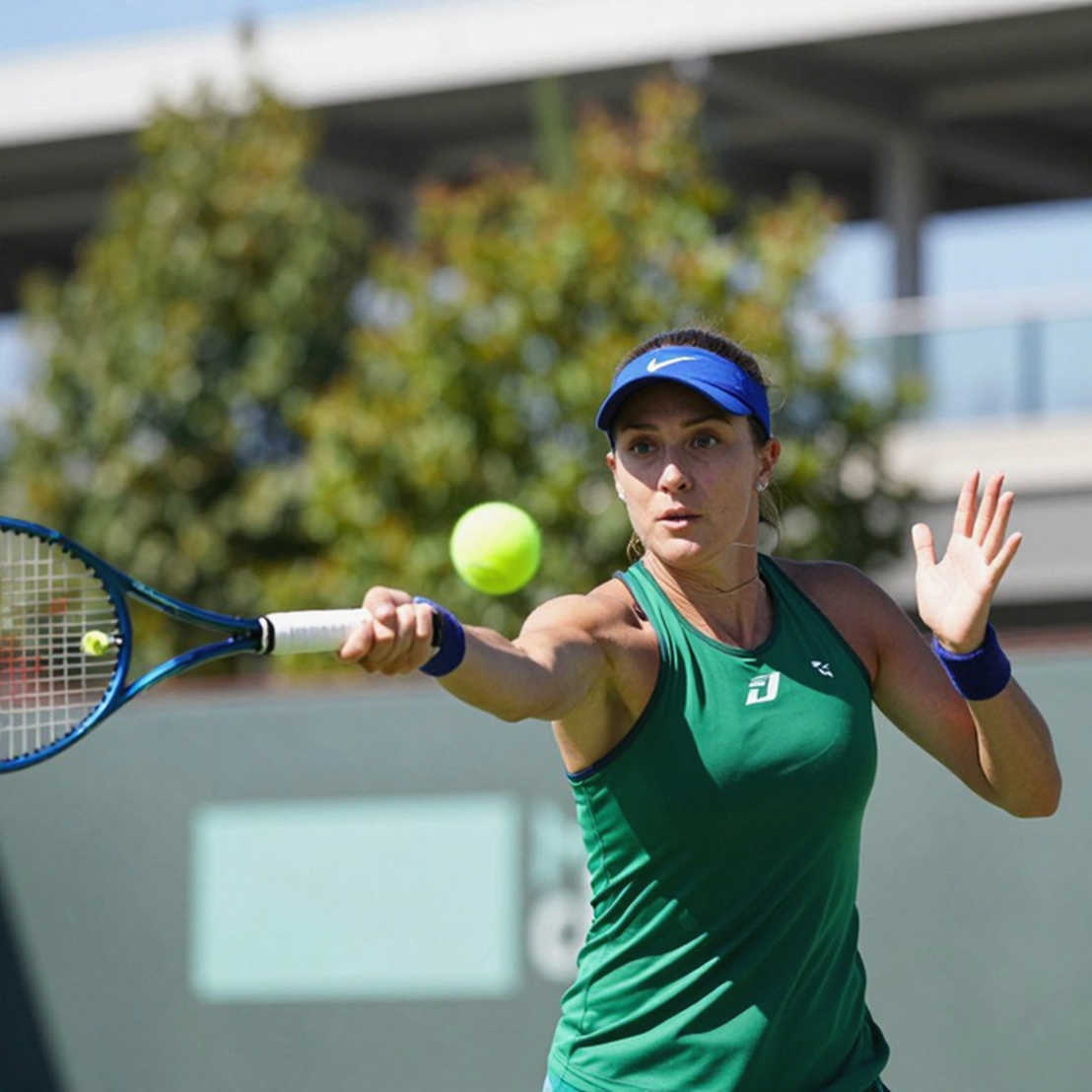
The calendar structure explains the decision. Beijing and Wuhan absorb the mandatory load of the top ten; Ningbo, Hong Kong, Jiujiang and Guangzhou absorb the gap where a leading player needs matches but not a 1000-level tax. Rybakina's entry is the textbook use case, and it also signals that Ningbo is her route, not her destination. The destination is almost certainly the season-ending Finals, where the top eight gather and a world No. 1 qualifies automatically. Read Ningbo as a competitive warm-up with a points side-benefit.
The draw has been kind. Katarzyna Kawa, unseeded, waits in the quarter-final — a statistical outlier in a 500-level last eight and an ideal rehabilitation fixture for a player coming off injury. The real obstacles, Diana Shnaider (No. 13) and Iva Jovic, sit on the far side of the draw. The draw sheet is a map of everyone who almost made it; this week the map is generous to the top seed.
Rybakina's game rests on one mechanism: the serve, and the first strike that follows. Flat hitting, serve-anchored aggression. Hard courts maximise the value of that serve and minimise the visibility of her weaker lateral movement. It is both her advantage and her exposure.
Which is why a foot injury lands on the most sensitive joint in the system. Serve power is generated through the legs — the upward drive into the toss, the push off the back foot, the rotation through the hip. A compromised foot breaks that chain. The second effect shows on return: Rybakina's return position has historically been deep and reactive, and injury pushes it deeper still, handing the first-strike initiative to anyone willing to step in.
In my experience, the honest gauge of a serve-dependent player's comeback is her first service game, not the score. At 5-0 there was no such gauge. Not one of those five games carried break-point pressure. A fixture that cost nothing tactically tells you nothing tactically. In the empty venues of 2026 I learned that without a crowd, the sound of the ball is the most honest witness in the building. Here the question is not the crowd. It is whether any witness turned up at all.
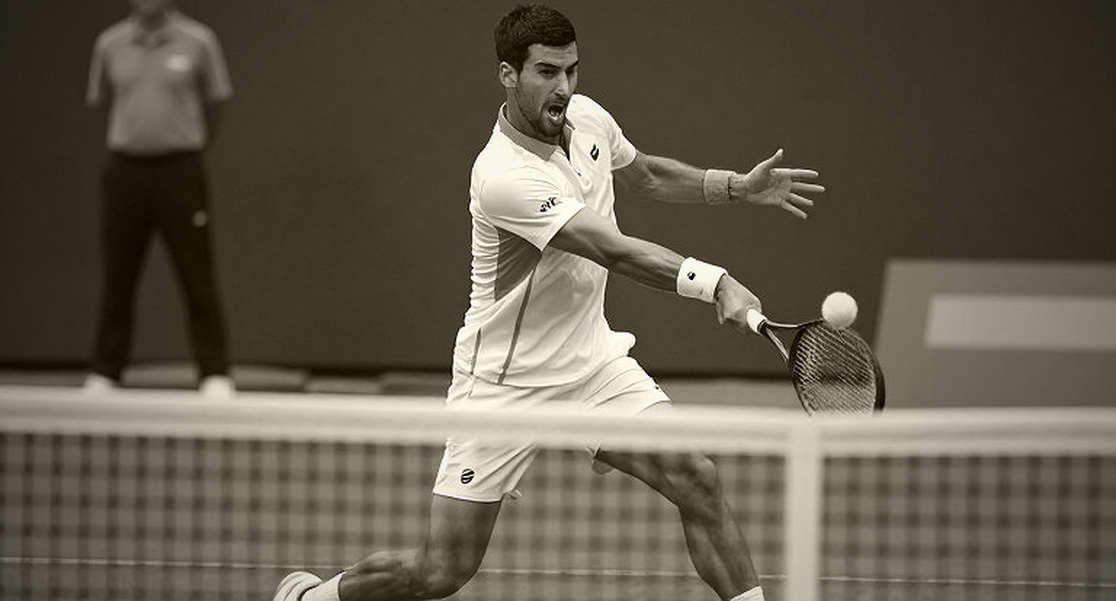
The most informative passage in the whole report sits on the other half of the draw. Shnaider beat Alexandra Eala 7-5, 6-4 in one hour fifty-five, the first set taking just over fifty minutes. The report attributes the win to superior power. The decisive break at 5-4 in the second came from sustained pressure on the Eala serve — a return-game victory, not a shot-making one. That is the signature of a top-fifteen player: she does not produce miracles, she repeats pressure.
Eala did not collapse. No bagel, no lopsided set; her defensive structure held. What she could not do was manufacture free points against a bigger hitter. That is a physicality gap, not a game-model gap — and it is the more fixable of the two. She is 21 and ranked No. 20. Her ceiling reads closer to 15-20 than to No. 5. A player who beats everyone below her and loses to everyone above her has exactly that profile.
The highest-signal result in the entire report is not Rybakina's five-game walkover. It is Iva Jovic's 6-4, 6-3 over Jasmine Paolini. An 18-year-old beating a two-time Grand Slam finalist in straight sets is a clean top-20-quality win. Set the two side by side: five games and a retirement on one court, a completed match won against a major finalist on another. We look at the big name; the record was pointing at the small one.
Shnaider should not be underrated either. A sixth WTA singles title at 22 is an upper-tier profile for the age, and No. 13 does not do it justice — the ranking trails the results. One detail needs verification: Shnaider is left-handed and so is Eala. If so, that match was a lefty-versus-lefty mirror, which flattens the usual cross-court advantage and amplifies raw power differentials. Treat that as a probability, not a fact, until the official WTA profiles confirm it.
Now the part that demands the most caution. The report states that Rybakina won the US Open in September for a third Grand Slam title and took world No. 1 from Aryna Sabalenka in New York. All three claims come from a source carrying no attribution at all. On the public record available to me, Rybakina holds one major — Wimbledon 2026 — and has not previously been ranked No. 1. In this piece those claims are premises supplied by the text, not established facts.
Why the distinction matters: the way a No. 1 ranking is built determines how durable it is. On the report's own account, this one was built in fourteen days in New York — result-driven, not consistency-driven. Result-driven No. 1s are the most volatile kind, because they carry a roughly 2,000-point defence in the following September, the steepest cliff in the sport. During an injury period, any drop in serve efficiency transmits directly into ranking risk.
And here is the picture outside observers read backwards. The external story: reigning US Open champion, world No. 1, defending champion, back from injury, into the quarter-final. The evidential story: five games against No. 105, who retired; two data points from the past month, both negative. The form question is not unknown. It is unreadable. Unknown permits hope. Unreadable permits only waiting.
The Beijing-Wuhan-Ningbo sequence is itself a pattern: loss, withdrawal with injury, reappearance a week later. That compressed timeline raises recurrence probability rather than lowering it. A foot injury diagnosed in Wuhan typically caps on-court load for ten to fourteen days. She almost certainly arrived in Ningbo on limited practice — an inference at medium confidence, not a fact to be written as one.
One absence deserves recording, because absence belongs in the record too. On a Chinese swing, at a Chinese tournament, no Chinese player appears anywhere in this report — not one local name across thirty-four information points. That is not merely an editorial omission; it says something about the event's commercial position. Without a home player, a 500-level tournament builds its identity on the top seed's name. Which is why Rybakina's presence matters as much to Ningbo as Ningbo matters to her.
Keep the arithmetic plain. A quarter-final or better in Ningbo preserves most of her 500 points; an early exit shaves a modest but real amount. Then the Finals cluster, then next September — the cliff where a Slam title asks for roughly 2,000 points back. The decisive structural event of her next fifty-two weeks is that cliff, not this week.
The number that matters most against Kawa is not the score. It is first-serve speed, and it is absent from this report. Its absence is itself a story. I will be watching every statistical sheet out of Ningbo: if the foot is sound, speed returns before the score does; if it does not return, even a quarter-final win leaves the question open. The scoreboard is reading what it always reads after a retirement. Only the serve speed can tell us whether there is anything else on the page.