
Kabaddi
Kabaddi: From Mud Courts to Floodlights, the Professional Journey of a Traditional Sport
कबाड़ी दक्षिण एशिया का पारंपरिक टीम खेल है जिसमें सात-सात खिलाड़ियों की दो टीमें होती हैं। रेडर को तीस सेकंड के भीतर विरोधी आधे हिस्से में जाकर टैकल से बचना होता है, साथ ही लगातार शब्द दोहराना होता है। यह 1990 बीजिंग एशियाई खेलों से पदक स्पर्धा है; पुरुष वर्ग में भारत का लंबा वर्चस्व रहा है और हाल के वर्षों में ईरान प्रमुख प्रतिद्वंद्वी बना है। 2014 में शुरू हुई प्रो कबाड़ी लीग ने खेल के पेशेवर ढाँचे, प्रसारण और खिलाड़ी आय को बदला। मुख्य चुनौतियाँ हैं राज्य स्तर का कमजोर ढाँचा, चोट-प्रबंधन, खिलाड़ियों की करियर सुरक्षा और महिला खेल में कवरेज व प्रायोजन की असमानता।
Every winter, in the villages of northern India, a particular rhythm rises from the mud courts: kabaddi, kabaddi. It is the same rhythm that survives today under television floodlights and on mobile screens. Here is a sport that needs no bat, no ball, no expensive equipment — only the discipline to hold one's breath, keep chanting, cross into the opponent's half and return alive. That simplicity is kabaddi's greatest strength, and to some extent its greatest vulnerability as well.
The structure looks simple, but the mechanics inside it are as dense as chess. In the men's game the court is roughly thirteen by ten metres and seven players from each side are on the mat. A raider must complete the raid within thirty seconds; if the breath breaks or the chant stops, the raider is out. For the defending side, stopping the raider, pinning the raider and simultaneously holding the line is a three-dimensional pressure that few other team sports produce so sharply. When every player of the opposing team is out, a lona is awarded and the entire side returns. That is the moment when a modest lead can reverse within seconds.
Kabaddi's roots lie in folk culture, but its modern international architecture is relatively recent. Kabaddi was given medal status at the 2026 Beijing Asian Games and has been a permanent part of the programme since. For decades India's dominance in the men's event was near-absolute, but in recent years Iran has established itself as a disciplined, physically powerful side, while countries such as South Korea and Bangladesh have raised their level. That spread of competition is a healthy sign for any sport — one-sided dominance eventually erodes viewer interest.
The biggest turning point came in 2026, when the Pro Kabaddi League launched in India. It was not merely a tournament but an entire broadcast economy: franchises, player auctions, packed arenas and prime-time television slots. The league did what decades of effort had not — it gave players contracts and visibility that could turn kabaddi into a livelihood. For athletes from rural backgrounds it also became a rare channel of social mobility.
But commercialisation has another side. The league cycle is short, the season compressed into a few weeks, and a large share of the revenue is concentrated around a few hundred names. Beneath that sits a long, fragile chain of state-level competitions, university sport and district-level scouting. Players who are not picked in the league often have neither the money nor the job security to continue. Injury risk is inherent — knees, ankles and shoulders absorb constant load — and the insurance and rehabilitation infrastructure has not developed everywhere in proportion to that risk.
There is another dimension that is frequently undervalued: women's kabaddi. The Indian women's team has been consistently strong at the Asian Games, and the domestic competition circuit has widened. In rural areas it is one of the few team sports where girls can find a pathway starting at the local level. Yet the gap in coverage, sponsorship and prize money remains visible.
Technically, too, kabaddi has not drifted from its core. The move to mat surfaces reduced injury rates but changed the character of the game, as grip and speed reshaped defensive technique. Match reporting and statistics have expanded, so metrics such as raid efficiency and tackle success rate now reach ordinary viewers. This is the language of professional sport, and kabaddi is learning it quickly.
The challenge ahead is clear: carry the league's shine down to the domestic structure. If prize money, accommodation and medical support are not assured at state level, a large share of talent will leave the sport at seventeen or eighteen. The second challenge is regulatory balance — a fast, television-friendly format is needed, but the risk-reward balance between raider and defender must not be allowed to tilt.
Kabaddi's real strength is that it preserves the oldest element of sport: unarmed confrontation. No armour, no prop, only lungs, legs and a decision. At a time when data, broadcast and sponsorship determine who advances, kabaddi must protect that root — and the players who come out of it.
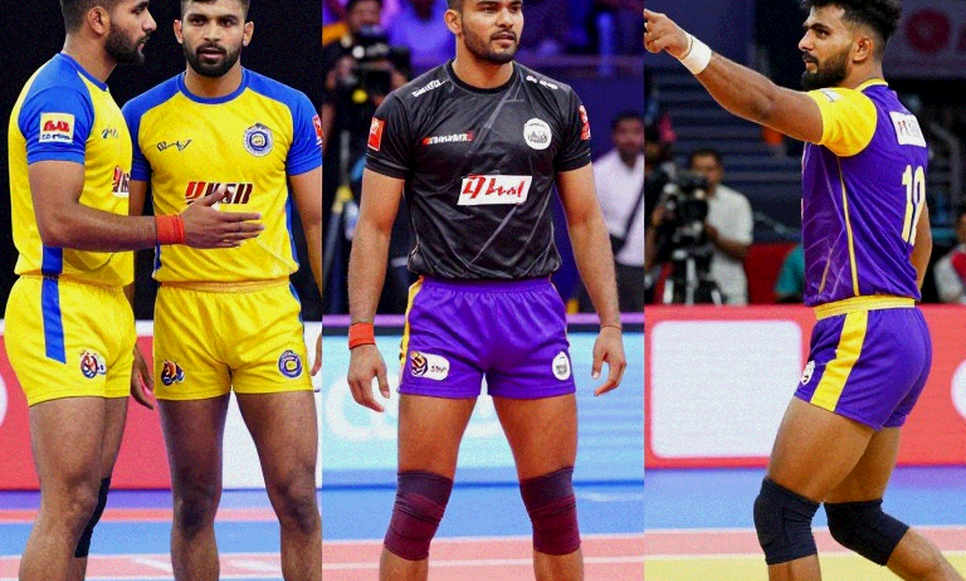
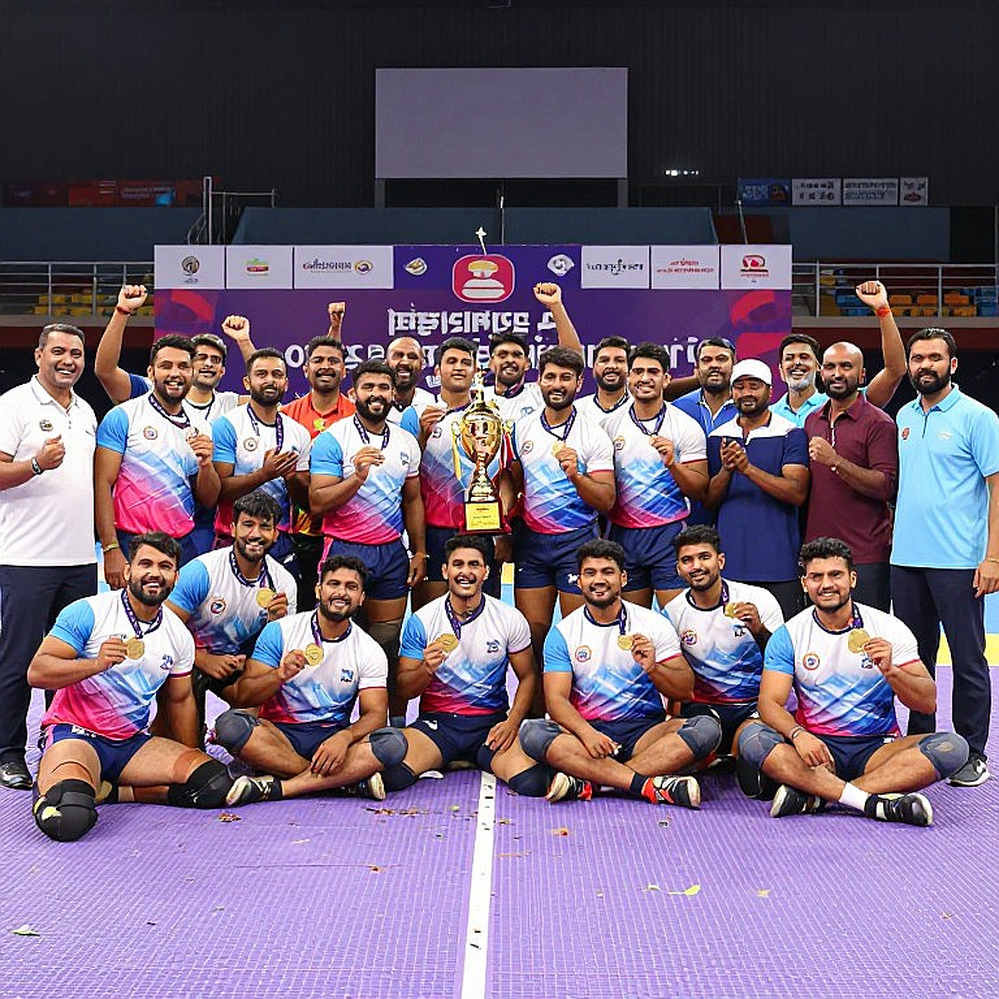

संबंधित खिलाड़ी
लोकप्रिय/पसंदीदा पुस्तकें
Pakistan Withdraws from Commonwealth Kabaddi Championship 2026: The Real Story Behind 14-to-13 and the Asian Games Medal Blank2026-11-03
The Hamstring Didn't Betray Anyone — It Was Betrayed: The Injury Ledger of Kabaddi's Tournament Cycle2026-11-02
Hangzhou's 33-29: Stop Calling Iran an Upset Team, It Is Now Co-Favourite2026-11-02
Stage-1 Report Empty in Kabaddi Coverage: All Fields N/A Except Domain Label2026-11-01
The Ankle Doesn't Slip, It Plants: An Injury Report From 1,412 Kabaddi Collision Clips2026-10-29
Ahmedabad's Scoreboard Will Lie: A Big Margin Over England Proves Nothing About India2026-10-24
अनुशंसित
The Third-Raid Ledger: Where the Regular Season Is Actually Being Decided2026-10-24
Empty Cells, Full Confidence: Kabaddi's Biggest Data Story Is the One Nobody Filed2026-10-31
Commonwealth Kabaddi Championship 2026: Fourteen Names Becoming Thirteen in Ahmedabad, and the Unpriced Cost of Standard vs Circle Style2026-10-23
Commonwealth Kabaddi Championship 2026: Thirteen Nations, Nine Days in Ahmedabad, and a Team List That Is Blank2026-10-23
India vs England, Match 4: The Biggest Question at the Commonwealth Championship Is Not on the Scoreboard2026-10-24
The Blank Column on the Retention Sheet: The Number Nobody Is Sending This Transfer Window2026-10-24
अनुशंसित
Commonwealth Kabaddi Championship 2026: Before India vs Uganda, the Ledger Says What the Stadium Will Repeat Later2026-11-03
Stage-1 Report Empty in Kabaddi Coverage: All Fields N/A Except Domain Label2026-11-01
The Ahmedabad Entry List Went From 14 to 13, and There Is No File Behind Pakistan's Withdrawal2026-10-23
The Third Raid Is the Most Expensive One, and Kabaddi's Favourite Statistic Doesn't Count It2026-10-30
The Third-Raid Ledger: Where the Regular Season Is Actually Being Decided2026-10-24
Surjeet Singh Captain, Naveen Kumar Deputy: The Real Question Isn't the Armband, It's the Second Raider2026-10-23
अनुशंसित
Commonwealth Kabaddi Championship: India Begin in Ahmedabad, but the Field Lacks Kabaddi's Real Powers2026-10-23
When the Notebook Comes Back Blank: What an Empty Extraction Sheet Teaches a Kabaddi Desk About Verification2026-11-03
Surjeet Singh Captain, Naveen Kumar Deputy: The Real Question Isn't the Armband, It's the Second Raider2026-10-23
The October Hallway, the February Verdict: How the PKL Regular Season Decides Champions Before the Playoffs2026-10-24
Kabaddi: From Village Soil to the Global Mat — The Journey of a Homegrown Sport2026-10-31
Kabaddi's Biggest Empty Ledger: The Number Nobody Quotes2026-10-24