
The Lock at Akron: Rangel's Five Interventions, One Own Goal, and the End of Chivas' Four-Match Wait
**मुख्य उत्तर:** चिवास ग्वादालाहारा ने लीगा एमएक्स अपर्चुरा 2026 के जोर्नादा 13 मुक़ाबले में नेकाक्सा को 1-0 से हराया, जिसमें गोलकीपर राउल रानहेल ने 65वें, 68वें, 87वें और 90वें मिनट में पांच निर्णायक हस्तक्षेप किए और चार मैचों का जीत-रहित सिलसिला तोड़ा। **मुख्य तथ्य:** - निर्णायक गोल रोबेर्तो अल्वारादो की क्रॉस पर अगुस्तीन ओलिवेरोस के ओन-गोल से आया, 1-0 का अंतर तय हुआ। - रानहेल ने 65वें मिनट में दोहरा बचाव किया — पहला शॉट रोका, ज़मीन पर गिरे हुए बाएं पैर से दूसरी गेंद निकाली। - 87वें मिनट में रानहेल ने कारांज़ा के पीछे दौड़ने पर एरिया से बाहर बाइसिकल-किक से गेंद साफ़ की। - हाफ़-टाइम पर स्कोर 0-0 था और अक्रोन स्टेडियम में सीटियां बजीं, जिससे कोच गेब्रियल मिलितो पर दबाव साफ़ दिखा। - मैच रिपोर्ट में कोई xG, xGA, PPDA या शॉट-काउंट उपलब्ध नहीं है; दावों की दिशा स्पष्ट है, मात्रा अप्रमाणित है। **स्रोत:** मैच रिपोर्ट, लिगा एमएक्स अपर्चुरा 2026, जोर्नादा 13 (एस्टेडियो अक्रोन)। तारीख़ और तालिका स्थिति की स्वतंत्र पुष्टि आवश्यक है। **संबंधित प्रश्न-उत्तर:** प्रश्न: क्या चिवास की जीत प्रदर्शन के हिसाब से योग्य थी? उत्तर: रिपोर्ट के अनुसार नतीजा प्रक्रिया से ऊपर था, क्योंकि नेकाक्सा ने दूसरे हाफ़ में महत्वपूर्ण मौके बनाए और गोलकीपर ने उन्हें रोका। प्रश्न: रानहेल का बाइसिकल-किक क्लीयरेंस नियम-सम्मत था या जोखिम भरा प्रदर्शन? उत्तर: IFAB लॉ 12 के तहत साथी खिलाड़ी की जान-बूझकर दी गई पास पर हाथ का विकल्प नहीं होता, इसलिए यह नियम-संचालित निर्णय था, पर एरिया किनारे पर अधिकतम जोखिम वाला भी। प्रश्न: चिवास की असली समस्या क्या है? उत्तर: क्षेत्रीय दबदबे को गोल में बदलने की कमी, जो इस मैच से पुरानी है और ओन-गोल तथा गोलकीपर के प्रदर्शन से छिप गई।
In the 87th minute at the Akron, the air stopped. A long ball from Necaxa dropped into the space behind Chivas' defensive line, Carranza was running in behind, and goalkeeper Raúl 'Tala' Rangel was standing roughly twenty-five metres outside his own penalty area. What followed was not conventional goalkeeping: Rangel cleared the ball with a bicycle kick. The score at that moment was 1-0. Had that ball gone in, this report would have been written around a different name, and Gabriel Milito's future would have been settled that same night on television panels.
The most important moment of the night, though, was not that bicycle kick. It was the half-time whistle at the Akron, when the score was 0-0 and the home side had not lost anything yet. Boos at nil-nil from a crowd whose team had gone four matches without a win tell you the pressure had accumulated before kick-off. Which is why I read this 1-0 not as a great goalkeeping night, but as a win that postponed a diagnosis.
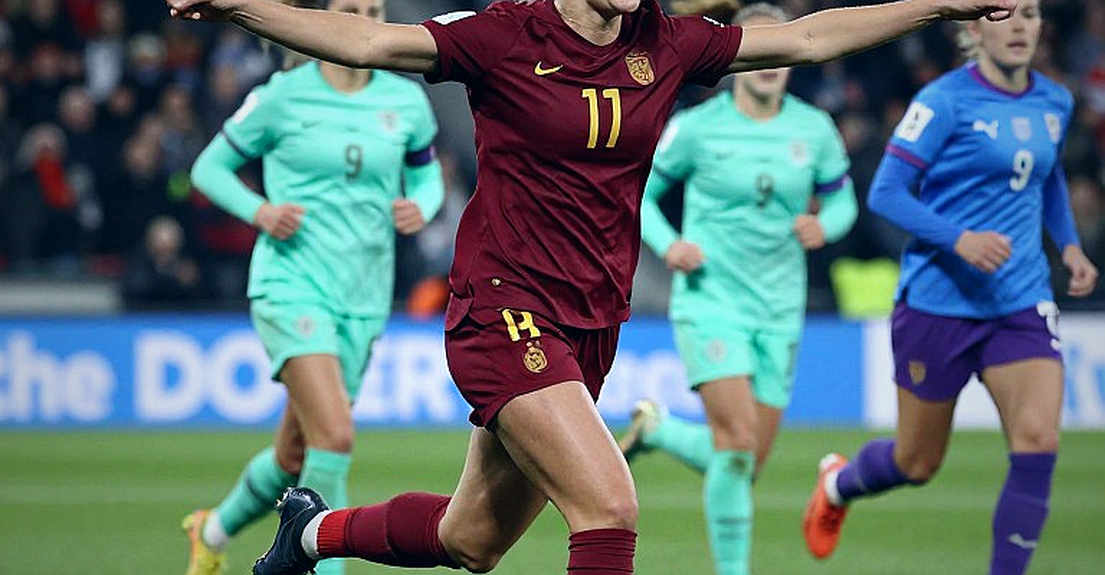
Context: Liga MX, Apertura 2026, Jornada 13 — Chivas Guadalajara against Necaxa at Estadio Akron. Chivas arrived without a win in four consecutive matches, which at a club of that scale is crisis-adjacent. The pressure on coach Milito was open; the aggressive early structure was visible, and so was the decisive shortfall in the final third. Necaxa are a lower-mid-table side on a constrained budget who live on direct running and long balls — precisely the profile that hurts a high line and a proactive goalkeeper most.
One structural detail changes the meaning of everything here: Chivas recruit only Mexican-eligible players. That policy is a brand asset and an academy pathway guarantee, and it also shrinks the available market. Inside that structure, an established national-team goalkeeper is doubly scarce — and Rangel wore a new black kit that night, a small but real signal of the club's commercial cycle.
The early picture was familiar. Chivas held territorial control across the first forty-five minutes and almost all of the threat came down the right, from the feet of Roberto Alvarado. Crosses and inward cuts produced chances, not goals. Half-time arrived at 0-0 and the stadium whistled. That is the moment the data books cannot hold, and the one a coaching staff feels most heavily: the crowd is not tired of your football, it is tired of your results.
After the break Necaxa reorganised and the game changed. The territorial balance shifted, and the same right-hand channel that had carried everything went dry. This is where the home side's biggest question appeared, and only one man had the answer.
The 65th minute produced the double save that is the cleanest technical image of this match. Necaxa delivered a cross, Oliveros headed it goalward, and Rangel stopped the first ball — body fully stretched, on the ground. The ball came back into play and, from that same body position, he cleared the second with his left foot. It is easy to file this as 'two saves', but what it actually showed was recovery.
That is the trait separating a starting-calibre goalkeeper from a highlight-reel shot-stopper. Any trained keeper can throw a body at a shot; very few can put their legs back to work in the three-quarters of a second after they have gone down. I have kept a coding grid since 2026 — one hundred and twenty-seven matches, six vertical channels crossed with three horizontal bands — and in that grid a goalkeeper's second action sat in its own column, because it is the column that produces the real difference. Rangel's 65th minute was the cleanest sample of it.
Then came another save on 68 minutes. Then the 87th, which contained the bicycle-kick clearance. Then one more on 90. In a match won 1-0, the goalkeeper registered five separate interventions. That number is itself a team-level symptom: if your keeper is decisive five times in one match, your margin is coming from his body, not from your football.
I read the bicycle-kick moment differently, because dismissing it as showmanship is both easy and wrong. A goalkeeper cannot handle the ball when it is deliberately passed to him by a teammate — that is IFAB Law 12, the indirect free-kick provision. If the ball arrived from behind, Rangel had no legal handling option; he had to play it with his feet. This was not a display of technical risk, it was a real-time compliance decision under the law, and reading it that way raises rather than lowers the assessed intelligence of the action.
The risk side is still real. A bicycle-kick clearance on the edge of the area is a maximum-variance action: timed right it prevents a one-on-one, mistimed it leaves an open goal. This is coaching-visible risk behaviour, not merely flair. It also tells you Milito's technical environment permits a goalkeeper this much licence — evidence of trust on one side, and the largest liability of that trust on the other.
The genuine stress point in this match was set-piece and cross defending. The 65th-minute double save came from a cross headed by Oliveros, which means Necaxa were putting deliveries into the six-yard box. That is exactly the phase where a keeper with Rangel's aggressive starting position is most exposed. A goalkeeper who sweeps twenty to thirty metres needs centre-backs who can defend the vacated space; that night Chivas' back line turned and retreated repeatedly, which is why the sweeping volume looked so high.
The attacking structure had one clear bias: Chivas' creation was heavily right-sided, and the decisive goal came from the same channel — Alvarado's cross deflected off Oliveros into his own net. After half-time Necaxa shut that channel and the hosts showed no equivalent route down the left. This is a single-match inference and should not be treated as a law, but it is falsifiable: if opponents overload the left and isolate Alvarado across the next three fixtures, the hypothesis gets tested.
Oliveros is the strangest thread in the whole match. He headed a cross goalward on 65 and deflected Alvarado's cross into his own net around 87. One centre-back was decisive in both boxes, which describes a player who joins attacking set pieces — and the same habit produces his positional exposure. For Necaxa's staff, the valuable part of the night was not the own goal but the chances created after the break: they are not a passive low block, they compete once the opponent's first wave breaks.
Now the part every match report skips. There is not a single number in this account — no xG, no xGA, no PPDA, no possession share, no shot count. So I can trust the direction of the claim and cannot fix its magnitude. That discipline matters: a one-match sample is not proof of a goalkeeper's level. It took 9.4 seconds of tape to overturn a season of comfortable assumptions — and 9.4 seconds of tape does not settle a career either.
What is unambiguous is this: the result sits above the process line. A 1-0 home win decided by an own goal, in a match where the opposition created important chances after the break and were denied five separate times by the keeper, is the classic profile of three points purchased above the performance. Two things cannot repeat: a career-best goalkeeping night, and a margin manufactured by an own goal. The third thing that should have repeated — converting territorial dominance into goals — did not happen here either.
So I will not say this match created Chivas' problem. I will say the problem is older than this match, because a crowd whistling inside forty-five minutes at a team that eventually wins tells you the finishing conversation was already running. Milito's attacking structure is working: the creation is visible, the pattern repeats, the ball keeps arriving in dangerous areas from the right. What is missing is the final step of quality. That is not a system collapse, it is an execution gap — and football boards rarely distinguish the two.
This is where my reversal begins. For Chivas, this win may be more dangerous than a defeat. Had they lost 1-0 on performance, Monday's review would have carried one question: why no goals? That question will not reach the table now, because three points arrived. A great goalkeeping night and an opposition own goal together form a cover that deceives results-based review. For a coaching staff, that kind of win sometimes produces more confusion than an honest loss, because the video session shows the problem while the table denies it.
The second reversal concerns Rangel's own standing. What he proved was not that he is a good goalkeeper — that was settled. He proved the debate over the starting shirt is closed. But a night like this stretches expectation to a level that cannot be repeated. An error will come next month, as it comes to every goalkeeper, and that error will now be measured against a standard set by five saves in one night. That is the trap the media cycle builds for every emerging keeper.
And the third, most overlooked side: that bicycle-kick ball also tells you Chivas' back line was turned so often that the keeper had to stand twenty-five metres out. The moment we are applauding as courage is, in fact, public evidence of a crack in the defensive structure. Football sells you the goal; the tape sells you the ninety seconds before it — you just have to look away from the scoreline.
The next test arrives in the first twenty minutes of Chivas' next home match at the Akron. If they dominate again, fail to score again, and the keeper has to go down again, the table will be lying — and that is a question about the whole season, not about one win. If the finishing quality returns, then this night was the end of a transition, not a pause in a crisis. There is no third path in between.