
One Sentence from Sainz, One Backup in Imola, and the Question Over F1's 2026 Finale
**मुख्य उत्तर:** 2026 F1 सीज़न का समापन कतर और अबू धाबी में लगातार तय है, मगर GPDA डायरेक्टर कार्लोस सैंज ने निजी तौर पर इसे लेकर संदेह जताया है। FOM और FIA का कहना है कि दौर तय कार्यक्रम के मुताबिक होंगे, और ज़रूरत पड़ने पर इमोला में वैकल्पिक फाइनल की तैयारी चल रही है। **मुख्य तथ्य:** - 2026 के आखिरी दो दौर कतर और अबू धाबी में नवंबर के आखिरी हफ्ते से दिसंबर के पहले वीकेंड तक बैक-टू-बैक हैं। - 3 नवंबर 2026 के अमेरिकी मध्यावधि चुनाव के बाद क्षेत्र में नए हमलों की योजना की खबरें दर्ज हैं; सऊदी अरब पर हूती हमले पहले हो चुके हैं। - FOM और FIA को 'विभिन्न हितधारकों से आश्वासन' मिले हैं, यानी हां-या-ना का फैसला बाहरी सुरक्षा आश्वासनों पर टिका है। - सैंज ने साफ किया कि संदेह उनकी निजी राय है और GPDA का साझा रुख नहीं; ड्राइवरों के पास कैलेंडर पर वीटो नहीं है। - इमोला को अबू धाबी वीकेंड के विकल्प के तौर पर तैयार रखा गया है, जो जोखिम को गंभीर माने जाने का सबसे ठोस संकेत है। **स्रोत:** कार्लोस सैंज का रेस-वीकेंड मीडिया बयान (2026 सीज़न) और F1/FIA की सार्वजनिक कैलेंडर जानकारी। **संबंधित प्रश्न-उत्तर:** प्रश्न: क्या F1 2026 का फाइनल रद्द हो सकता है? उत्तर: FOM और FIA अभी इनकार कर रहे हैं, मगर इमोला का सक्रिय बैकअप प्लान बताता है कि रद्द होने या शिफ्ट होने की गुंजाइश को सीरीज़ के अंदर गंभीरता से देखा जा रहा है। प्रश्न: GPDA का औपचारिक रुख क्या है? उत्तर: GPDA की ओर से कोई सामूहिक बयान नहीं है; सैंज ने संदेह निजी राय के तौर पर रखा, जिससे यूनियन के पास बातचीत की जगह बची रहती है। प्रश्न: फाइनल इमोला में होने से खेलकर पर क्या असर पड़ेगा? उत्तर: इमोला यूरोपीय हाई-डाउनफोर्स सर्किट है, इसलिए 2026 जैसे नियम-बदलाव वाले साल में चैंपियनशिप का अंत अलग किस्म की ट्रैक प्रोफाइल पर तय होगा, जो करीबी अंतर को प्रभावित कर सकता है।
Carlos Sainz drew a line through the middle of his own answer. The recorders were running in the media pen and the question was plain: can the 2026 season actually finish in the Middle East? Sainz said he found it difficult to be convinced. Then he added the sentence the whole story rests on — this is my personal view, I am not speaking as the GPDA.
The calendar says one thing: Qatar and Abu Dhabi, back to back, from the last week of November into the first weekend of December. Alongside it, a date that is not printed anywhere runs quietly in parallel — Imola, in case the Abu Dhabi weekend has to be moved. Formula One Management and the FIA both maintain the rounds can go ahead as scheduled, on the strength of assurances received from various stakeholders.
One question, one assurance, one backup date. All three are alive in the same week.
Sainz is a GPDA director. That title turns him from a driver into the drivers' collective representative, and that is precisely why his personal-view carve-out carries weight. When a union official voices a fear in public while explicitly declining to make it the union's position, he is doing two jobs at once — putting the concern on the record, and preserving negotiating room for the body he represents.
2026 is not a normal year. Power units, active aerodynamics and sustainable fuels all change together. In a season where the competitive order is least predictable, every point carries more weight, which is why this finale cannot be read as an ordinary calendar entry. Imola is not an ordinary substitute either — a European high-downforce circuit against two Gulf venues with a completely different profile. If a championship is settled there, it will be settled on a track nobody wrote the 2026 regulations for.
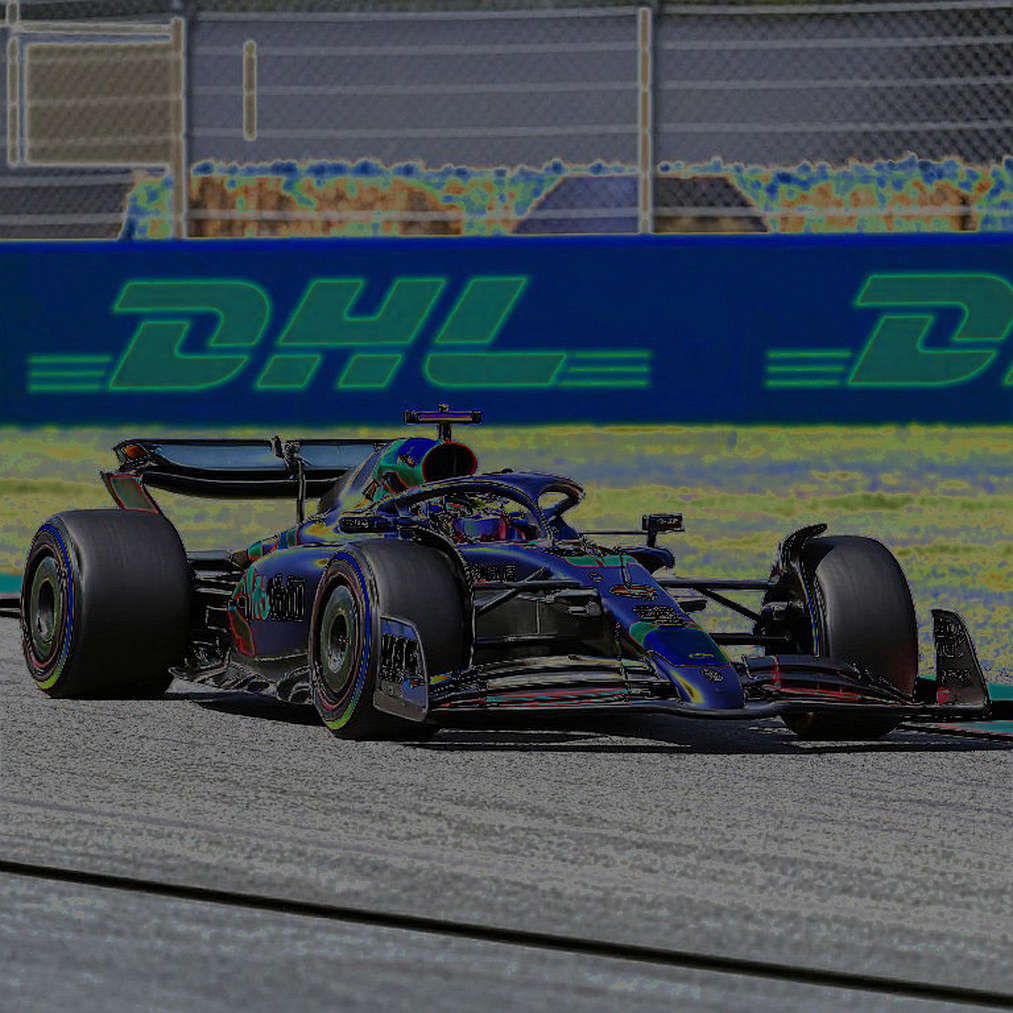
The most important sentence in this story is not Sainz's. It is the one from F1 and the FIA — assurances received from various stakeholders. That phrase tells you the yes-or-no rests not on the series' own security assessment but on external, state-level guarantees it cannot independently verify. It is a convenient accountability structure: if conditions deteriorate, the decision-makers can point at the advice rather than at their own judgement.
The hardest evidence in the entire story got no headline — the existence of the Imola plan. Contingency planning is expensive. It is not done for scenarios believed impossible. If people inside the series are preparing an alternative venue, they privately rate the risk as material, whatever the public language says.
Sainz also said something else, and it is the least quoted part. He conceded that drivers have less ground-level information than series executives and have to go with whatever they say. That is a candid admission that drivers hold no veto over calendar safety. The GPDA is a voice, not a lever.
In Saransk in 2026 I watched a clock stop being a rule and become a suspect. A third-minute red card for Colombia against Japan turned a fixture into an 87-minute problem, and a week later Cristiano Ronaldo's missed penalty and a 93rd-minute spot kick levelled Portugal and Iran. On those evenings time behaved like an accused, not a referee. In this story the clock is November.
On 3 November 2026 the United States holds midterm elections. Reporting points to plans for fresh attacks in the region afterwards. Houthi strikes on Saudi Arabia are already on the record. The sharpest political moment of the window sits directly in front of the weekend the finale is booked for. That is not coincidence; it is two dates hanging on the same wall.
A piece of logistics rarely spoken about belongs here. Flyaway freight to the Gulf is booked months ahead — cars, parts, tyres, broadcast kit, all locked into containers and charter flights. The go/no-go therefore has to be taken well before the race weekend, at the moment of least information. Sainz put his finger exactly on that nerve: the situation needs to be reacted to as it evolves, rather than going ahead simply because they want to go right now.
The structural fragility is obvious: two rounds in one region, back to back, with almost no recovery time. A single regional shock lands on two races at once. Jeddah and Bahrain sit on the same risk surface, so the exposure is the whole season-ending block, not the finale the headlines name.
The series' revealed preference is worth reading too. Bahrain 2026 was cancelled amid regional unrest and then contested when it was reinstated. Jeddah 2026 raced on after a strike near the venue and late-night driver talks. The pattern holds: a round runs unless conditions at the venue become physically untenable.
I was at all three Buddh weekends, and one lesson from there applies directly. The Indian Grand Prix did not die of empty stands; it died of a balance sheet. Race-day attendance was roughly 95,000 in year one and about 60,000 by 2026, and Jaypee's debt closed the door. A date on a calendar is a contract before it is a promise. In 2026, building a twelve-part series on Force India's season from a Salford studio, I built every episode around Vijay Mallya's loan defaults rather than the team's 187 points and fourth place. I found the tape still running when the studio forgot to breathe. That is what an accounts story looks like when everyone else is watching the racing line.
The Gulf rounds are not just races. They are state-backed hosting fees and growth-market assets. The Imola backup preserves the product, not the premium; accepting a lower-fee European venue signals that the priority is protecting a season-closing broadcast slot.
Here is where the conventional reading slips. Everyone is treating Sainz's doubt as a safety warning. I read it as a liability map. The question is not whether Sainz turns out to be right. It is who pays for being wrong.
If FOM and the FIA proceed on assurances and something happens, accountability slides toward the stakeholders who gave the assurances. If they relocate and nothing happens, the cost is reputational and financial, and both are recoverable. That is an asymmetric bet, and institutions facing asymmetric bets always choose the path where the bill carries someone else's name.
Second: the Imola arrangement is not a safety plan. It is a product-continuity hedge. And that is the most uncomfortable truth in the whole debate — the actor that can actually stop a race is not a driver or a president. It is an insurer and a freight deadline. Neither of them holds press conferences.
Three dates are worth watching. 3 November 2026 — the midterms and the mood after them. Mid-November — when cargo forces a yes or no into the open in some form. And after that — whether the GPDA moves from one man's personal view to a formal position, because that is where real pressure would come from.
The real work begins in the silence between cues. In this case the silence is that moment when Sainz split his answer in two, one half the driver and one half the union. The day those halves join, the calendar argument ends and something else begins.
And if the calendar survives, one question will be left behind: why was a decision resting on external assurances accepted as trust by the people who actually have to be there?