
Esports
Riot must change the Worlds format if it wants Fearless Draft to truly work
फियरलेस ड्राफ्ट लीग ऑफ लेजेंड्स का एक ड्राफ्ट नियम है जिसमें एक सीरीज़ के किसी मैच में पिक किया गया चैंपियन आगे के मैचों में दोबारा नहीं चुना जा सकता। Riot Games ने इसे 2025 में चैंपियन पिक विविधता बढ़ाने के मकसद से लागू किया था। इसका असर सीरीज़ की लंबाई पर निर्भर करता है — BO1 में यह पूरी तरह निष्क्रिय रहता है क्योंकि कोई पिछला गेम होता ही नहीं, जबकि BO3 और BO5 में यह सक्रिय होता है। वर्ल्ड्स 2026 के स्विस स्टेज में राउंड 1 से 3 BO1 और राउंड 4 से 5 BO3 में खेले जाते हैं, यानी कुल मुकाबलों का लगभग 60 फीसदी हिस्सा BO1 में है जहां फियरलेस ड्राफ्ट का कोई यांत्रिक प्रभाव नहीं पड़ता। BO5 के पांचवें गेम तक करीब 40 चैंपियन पूल से बाहर हो सकते हैं, जो लगभग 170 के पूल का करीब 30 फीसदी है। टॉप एस्पोर्ट्स के 369 ने तीन मैचों में केवल दो चैंपियन (एम्बेसा, के'सांते) और तियान ने तीन में दो बार नॉक्टर्न चुना, लेकिन BO1 में यह व्यवहार तर्कसंगत है और पूल की गहराई नहीं मापता। वैकल्पिक व्याख्या यह भी है कि ये दोनों वर्तमान मेटा के सबसे मजबूत टॉप लेनेर हैं, यानी मेटा संकेंद्रण। CS2, DOTA2 और वैलोरेंट में भी शुरुआती दौर में BO1 या छोटी सीरीज़ का चलन प्रसारण-अवधि के कारण है। फॉर्मेट बदलने में मुख्य बाधा उत्पादन लागत और कैलेंडर है, न कि प्रतिस्पर्धी दर्शन। सबसे संभावित सुधार राउंड 3 से BO3 शुरू करना है; पूरी तरह स्विस को BO3 बनाना सबसे कम संभावित है।
The Swiss stage of League of Legends Worlds 2026 has revived a debate that Riot Games has long been deferring. The issue is straightforward: Fearless Draft — the rule under which a champion picked in an earlier game of a series cannot be picked again later in that series — is not showing its intended effect at Worlds, because the first three rounds of the Swiss stage are played as best-of-one, and in a BO1 the mechanism has literally zero effect.
It helps to understand first that Fearless Draft is not a patch. It changes no champion stats, items or maps. It changes the economics of the draft. In a normal draft, every game starts fresh; under Fearless Draft, every pick is a spend, and the longer the series, the more expensive that spend becomes. Treating it like a gameplay patch is the most common error; it is a rules-level change that switches on or off with series length, and that property is the root of the entire controversy.
The math is simple. A BO1 has no prior game in the series, so the first game carries no Fearless constraint. It is an ordinary draft. In game three of a BO3, roughly 20 champions are theoretically already off the board. By a deciding game five of a BO5, four prior games at ten picks each could remove about 40 champions — roughly thirty percent of a pool of around 170. The mechanism is therefore binary rather than gradual: fully off in BO1, fully active in BO3 and BO5.
It is fairer to say that Fearless Draft is not being 'underused' in the Swiss stage; it is switched off in exactly the rounds played as BO1. Rounds 1-3 are BO1 and rounds 4-5 are BO3, and that split is the key to the whole matter. Roughly sixty percent of all Swiss matches are BO1. Riot launched a mechanic whose effect depends on series length, then placed it in a stage that is mostly single games. The inconsistency is real and precisely locatable.
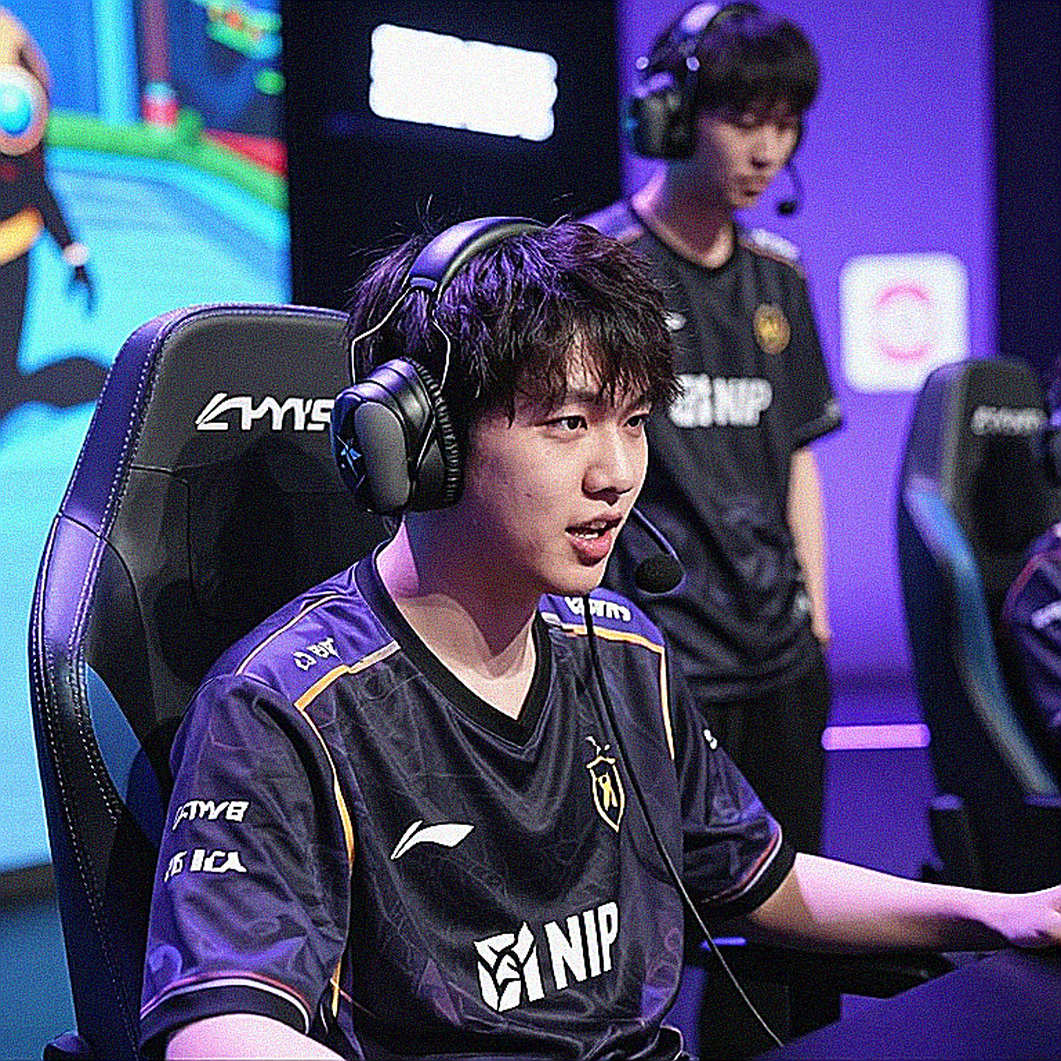
Top Esports (TES) is the example most used in this debate. Top laner 369 used just two champions in three games — Ambessa and K'Sante. Jungler Tian picked Nocturne in two of three. It is easy to conclude from this that TES has a shallow pool and Fearless Draft is failing. A stricter reading does not support that conclusion.
In a BO1 the rational strategy is exactly what TES adopted: spend nothing and play the most stable, most trusted pick. There is no pool-exhaustion penalty in a BO1, so repeating a comfort pick is not laziness but sound judgment. The behaviour confirms the format's incentive structure, and is therefore evidence in favour of the author's core thesis while remaining neutral about TES's actual pool.
Second, and more important: champion-pool depth cannot be measured from BO1s. A twelve-champion player and a two-champion player behave identically in a BO1. This is an identifiability problem in the methodology. One team, three games, no patch baseline — this sample cannot support any claim about a team's pool depth.
A competing explanation must also be kept open. Ambessa and K'Sante have been widely regarded as blind-pickable, lane-safe, high-priority top laners in recent metas. If they are the two strongest tops of the current patch, TES's pattern reflects meta concentration rather than a narrow pool. Without the patch version and pick/ban data the two explanations cannot be separated. This is the biggest weakness of the weakest piece of evidence in the debate.
There is a potential trap, however. If the two-champion pattern is a genuine pool limit rather than meta concentration, TES will face a draft cliff precisely when the format switches to BO3 and the pool suddenly binds. The real test comes in rounds 4-5: whether 369 expands beyond three champions.
Now to the point the article overlooks. Rather than treating BO1 as an oversight, a stronger reading is that the current hybrid is a deliberate two-layer design. The first layer — rounds 1-3 as BO1 — delivers high variance, high drama and low pool tax. It functions as a handicap system that keeps minor-region and narrow-pool teams alive and produces upsets. The second layer — rounds 4-5 as BO3 — activates the pool tax and rewards depth and adaptability exactly when elimination is at stake.
Read this way, the hybrid is not incoherent but maximises several competitive objectives at once: upset-driven drama and meritocratic deciders. The cost is paid in the 'diversity showcase' Riot publicly promised. That is the real contradiction.
It is also worth noting that BO1 is not a Riot peculiarity. CS2 Majors also use BO1 for non-decider Swiss matches and BO3 for deciders. DOTA2's TI uses BO2 group round-robin and avoids BO1 entirely. Valorant VCT uses BO3 groups and BO5 finals. BO1 in early Swiss is an industry-wide broadcast-duration compromise, not a Riot inconsistency. That weakens the 'Riot is incoherent' framing and strengthens the 'structural constraint' framing.
This is where the economics surface. Converting rounds 1-3 to BO3 would raise total Swiss games from roughly 56-72 to around 80-120 — a forty to sixty-five percent increase in live content hours. That requires extra competition days, arena rental, production crew, travel and accommodation. As a first-party publisher event, Riot absorbs that directly, which is exactly why the BO1 compromise survives.
From a business standpoint a sharper point emerges that the author did not make. Riot is paying the competitive cost of Fearless Draft across the whole Swiss stage — pool pressure on players, preparation burden, demand for flex picks — but collects the product benefit, visible champion diversity, in only about forty percent of matches. Full cost, partial harvest. That is the clearest business criticism available.
On risk, the most under-priced item is the cold-start cliff. A team that opens 2-0 or 0-2 in BO1s is pushed straight into a BO3 where the pool tax suddenly activates, with no prior BO3 experience in that tournament. That is format-induced risk that gets little discussion. The second risk is definitional ambiguity. It is unclear whether banned champions also carry over, whether a role-flex pick counts as one or two slots, and whether a Swiss rematch inherits the pool. In a high-stakes BO5 that ambiguity becomes a dispute surface.
At the governance level there is no rule violation, only a policy-implementation mismatch. Riot publicly framed Fearless Draft as a diversity instrument, then placed it in a format that nullifies the instrument in sixty percent of matches. In publisher-governed esports with no independent arbitration body, such mismatches are the main mechanism by which credibility erodes. Riot's history of repeated format changes allows two opposite readings from the same fact — accountability, and unchecked discretion.
So what is the fix? An all-BO3 Swiss is the cleanest answer but also the least likely because of cost and calendar. The most probable scenario is that Riot maintains the status quo and accepts the mismatch. Slightly better options are starting BO3 from round 3, or keeping BO1 only in round 1 to preserve a 'spectacle slot'. A pessimistic scenario is Riot going further and making bans Fearless too, roughly doubling the pool tax. One suggestion in circulation is a cumulative Fearless pool across the whole Swiss stage, retiring champions for the entire tournament. That would make every BO1 meaningful, but it would be so punitive that only deep-pool teams would benefit.
The most durable contribution of this whole debate is the 'mechanism-format mismatch' frame, which applies to any rule whose effect depends on series length. That frame transfers directly to CS2 and Valorant format debates. The second important conclusion is that Fearless Draft's biggest long-term effect will land not in the draft room but in player valuation. If the rule persists, 'flexible, five-plus champion' players will command a premium and 'signature-pick specialists' will get cheaper. That is a slow, two-to-four-season shift that nobody is currently measuring.
The conclusion is that the flaws the author identifies are real, but the evidence they rest on is weak. One team, three BO1s, no patch baseline. That data does not rule out any of three explanations — a shallow pool, correct BO1 optimisation, or patch-driven pick concentration — the way the article does. The mechanism is not failing; the format switches it off, and that format exists for broadcast-duration reasons whose legitimacy the author himself concedes. The right question is therefore not whether Fearless Draft has failed. It is why Riot is running its own promise at half strength until political pressure forces a change.

संबंधित खिलाड़ी
लोकप्रिय/पसंदीदा पुस्तकें
Riot must change the Worlds format if it wants Fearless Draft to truly work2026-11-03
Nine Empty Boxes: The Most Honest Document in Indian Esports Is the One With Nothing in It2026-11-02
Karmine Corp Eliminate LCP's Last Team at Worlds 2026: 18–3 in 28 Minutes, Then 37 Minutes — and the Emptiest Cell on the Scoresheet2026-10-31
Evo Brazil 2027: A R$1 Million Prize Floor, Eight Titles, and the Split Nobody Announced2026-10-29
A Blank Column Is Not a Clean One: The Real Cost of an Esports Data Gap2026-10-28
EWC 2027 Qualifier: The 1.8 Million Promise, a Chess Headline, and the Unspoken Risk2026-10-24
अनुशंसित
The 'Null-Input' Crisis in Esports Reporting: How to Write a Story When There Is No Data2026-11-02
PatMen's Return and the VCT 2027 Rebuild: Paper Rex's Big Bet Comes With Bigger Questions2026-10-31
Karmine Corp Eliminate LCP's Last Team at Worlds 2026: 18–3 in 28 Minutes, Then 37 Minutes — and the Emptiest Cell on the Scoresheet2026-10-31
Anyone's Legend's 0-6 Exit Is a Seed Problem for the LPL, Not a Prophecy2026-10-29
Esports' New Era: Data, Discipline and the Rise of the Digital Athlete2026-11-02
Riot must change the Worlds format if it wants Fearless Draft to truly work2026-11-03
अनुशंसित
Chovy vs Rookie: Seven Years Later at Worlds, and the Opposite Slopes of Two Career Curves2026-10-24
PatMen's Return and the VCT 2027 Rebuild: Paper Rex's Big Bet Comes With Bigger Questions2026-10-31
Karmine Corp Eliminate LCP's Last Team at Worlds 2026: 18–3 in 28 Minutes, Then 37 Minutes — and the Emptiest Cell on the Scoresheet2026-10-31
Patch 26.22 Removes Mel's Reflect: Riot Changed a Signature Mechanic Without Publishing a Win-Rate Baseline2026-10-23
Null-Value Failure in an Esports Data Pipeline: When 'No Information' Becomes the Only Information Left2026-11-02
Chovy vs Rookie: Seven Years Later, the Same Mid Lane and Two Opposite Career Curves2026-10-23
अनुशंसित
PatMen's Return and the VCT 2027 Rebuild: Paper Rex's Big Bet Comes With Bigger Questions2026-10-31
Karmine Corp Eliminate LCP's Last Team at Worlds 2026: 18–3 in 28 Minutes, Then 37 Minutes — and the Emptiest Cell on the Scoresheet2026-10-31
Patch 26.22 Removes Mel's Reflect: Riot Changed a Signature Mechanic Without Publishing a Win-Rate Baseline2026-10-23
The 'Null-Input' Crisis in Esports Reporting: How to Write a Story When There Is No Data2026-11-02
EWC 2027 Qualifier: The 1.8 Million Promise, a Chess Headline, and the Unspoken Risk2026-10-24
Chovy and Rookie: Seven Years, One Mid Lane, and the Asterisk Nobody Read2026-10-23