
A Patch Sewn on the Back: Topps' 'Ultra-Rare' Claim and the Uncovered Arithmetic of Supply
**मुख्य उत्तर**: Topps ने 21-22 अक्टूबर 2026 को घोषित किया कि 2026-27 एनबीए सीज़न में रूकी अपने डेब्यू पर विशेष पैच पहनेंगे, जबकि पिछले सीज़न के पुरस्कार विजेता — शाई गिल्जियस-अलेक्जेंडर (MVP), विक्टर वेंबन्यामा (DPOY) और कूपर फ्लैग (ROTY) — पूरे सीज़न गोल्ड लोगोमैन पैच पहनेंगे। खेल के बाद पैच जर्सी से हटाकर 1-of-1 कार्ड में सील किए जाएंगे। **मुख्य तथ्य**: - घोषणा 21-22 अक्टूबर 2026 को हुई; एकमात्र स्रोत Topps के आधिकारिक सोशल मीडिया चैनल हैं। - पैच जर्सी की पीठ पर लगेगा, जिससे बाएँ कंधे का अनुबंधित टीम-स्पॉन्सर ज़ोन टकराव से बचा रहे। - पैच पूरे सीज़न कई मैचों में पहना जाएगा, यानी प्रति खिलाड़ी सप्लाई दर्जनों में, कार्ड 1-of-1। - डेब्यू पैच कार्यक्रम दूसरे वर्ष में है; गोल्ड लोगोमैन कार्यक्रम का परिचालन रिकॉर्ड सार्वजनिक नहीं। - रूकी-स्केल पर DPOY जीतने से दूसरे अनुबंध का 30% कैप टियर खुल सकता है (अनुबंध सत्यापन लंबित)। **स्रोत**: Topps आधिकारिक सोशल मीडिया चैनल, 21-22 अक्टूबर 2026 | तथ्य प्राथमिक प्रचार-स्रोत से; स्वतंत्र सत्यापन लंबित। **संबंधित प्रश्नोत्तर**: प्रश्न: क्या '1 of 1' का मतलब है कि उस खिलाड़ी का केवल एक ही पैच मौजूद है? उत्तर: नहीं — '1 of 1' कार्ड की संख्या बताता है, जबकि पैच पूरे सीज़न कई जर्सियों से काटे जाते हैं। प्रश्न: डेब्यू पैच गोल्ड लोगोमैन से अधिक दुर्लभ क्यों है? उत्तर: एक रूकी का डेब्यू जीवन में एक ही बार होता है, जबकि पुरस्कार-विजेता खिलाड़ी होम, अवे और ऑल्टरनेट जर्सियों से पूरे सीज़न पैच जनरेट करते हैं। प्रश्न: इस घोषणा का सबसे बड़ा आर्थिक प्रभाव किस पर पड़ेगा? उत्तर: वेंबन्यामा के DPOY पदनाम पर, क्योंकि रूकी-स्केल पर यह पुरस्कार दूसरे अनुबंध का कैप टियर बदल सकता है।
Afternoon, October 21, 2026. On a screen bolted to the wall of a card shop in Los Angeles, the latest Topps post was playing on loop. The photo showed a rectangular swatch of navy mesh, loose threads bristling at its edges, a gold logoman dead centre. Below it, three words in black type: 1 of 1.
Of the four people standing in that shop, nobody asked the question that arrived in my head first. Where is the jersey?
Because what Topps has put out into the world is not a jersey. It is the part of a jersey that was taken off a jersey after a game — scissors, blade, seam ripper, thread by thread. The jersey remains. The patch goes into plastic. And that jersey, which normally carries a premium precisely because a piece of history is still stitched to it, is now a plain game-worn shirt with a hole where its most valuable property used to be.
A patch and a jersey are two different assets, and this program is trading one against the other.
Context: what the rules say, and who is saying it
On October 21–22, 2026, Topps announced through its own social channels that three things will run in parallel through the 2026-27 season. First, rookies will wear a special Debut Patch in their first NBA appearance — the program is in its second year. Second, last season's individual award winners will wear a Gold Logoman patch for the entire season: Shai Gilgeous-Alexander (2026-26 MVP), Victor Wembanyama (2026-26 Defensive Player of the Year) and Cooper Flagg (2026-26 Rookie of the Year). Third, LeBron James will wear a separate milestone patch for his 24th season.
The patch sits on the back of the uniform. After games it is removed and sealed into limited cards, the top tier being a 1-of-1.
The background: the NBA's trading-card rights moved under the Fanatics/Topps umbrella from the 2026-26 cycle. This is year two for a new licensee — and year two is when you reach for the scarcest inventory you have, which is game-worn, award-linked material.
One honest caveat before anything else. The sole source for this announcement is Topps' own promotional channel. On mechanics — where the patch goes, when it comes off, how it enters a card — the information is probably accurate; no licensee fabricates the engineering of its own product. But "ultra-rare," "exclusive," "1 of 1" are marketing language, and should be read as marketing language. Nine years of watching the jersey-patch-card economy from courtside has taught me one thing: a press release never gives you the arithmetic of supply. It gives you the poetry of demand.
The core: what goes unsaid is the largest part of this
Three awards, three career stages
Notice what Topps did not do. It did not pick the best players. It picked a validation cohort — SGA at roughly 28 and in his prime, Wembanyama at roughly 22 and ascending, Flagg at roughly 19 and pre-prime. Three awards in one class, three different life cycles. That is not a talent ranking. It is commercial diversification, an attempt to hold three distinct buyer segments inside a single marketing unit.
The rarity is inverted
The real disclosure here is structural, not numerical. The Debut Patch looks like the minor product. It is actually the tightest supply in the entire program. A rookie debuts once — one player, one first game, one patch. A Gold Logoman runs all season: home and away, alternate and city editions, game after game. The patch count for SGA, Wembanyama or Flagg will be measured in dozens, not units.
Which is precisely the crack in the claim. A 1-of-1 describes the card, not the patch supply. The harvest-after-every-game mechanic means a single player's fragments can reach the market in the dozens while the communication echoes the number one. No rule obliges Topps to disclose total patches produced per player. That is the program's largest governance gap, and it has been left open on purpose.
A destructively harvested crop
This is the point nobody picked up. An intact game-worn jersey, with the milestone patch still attached, commands a premium in the memorabilia market exactly because the patch is there. Removing it strips the jersey of its highest-value component. The program therefore does not create two collectibles; it converts one collectible into another under a different form.
The box score tells you what happened; it does not tell you what it meant. Here the box score is the patch itself. The label says game-worn. The label does not say that the jersey it came from is no longer the jersey it was.
Back-of-jersey placement: compliance, not design
Putting a patch on the back of a basketball uniform looks odd, because the back is the most protected typographic real estate on the garment. The reason is clear: the left shoulder is contracted team-sponsor inventory, fixed since the 2026-18 rollout. By choosing the back, Topps avoided the collision. The placement is legal caution, not aesthetics. It carries a product consequence too: a patch squeezed between nameplate and number will be small, which limits the swatch size available for cards and inflates the premium on any subset that preserves the full logoman silhouette.
The real economic story is not the patch
Three of the four highest-signal facts in the release are buried in one line, and none of them is a patch. The DPOY designation is not a card-market event for Wembanyama; it is a cap-market event. Under the collective bargaining framework, winning MVP or Defensive Player of the Year while on a rookie-scale deal unlocks the 30-percent tier for a second contract instead of 25 percent — a five-year, nine-figure cap event. The mechanism is clear; the document trail needs contract verification, which remains pending. What matters is the hierarchy: the press covered the patch and skipped the DPOY, and the DPOY is heavier.
There is a second thing every award conversation forgets. MVP, DPOY and ROTY are votes. Votes carry narrative weight. Treating them as objective performance certificates embeds a known bias — and now a commercial lobby stands around those votes with a natural interest in the outcome.
The most volatile asset in the class is 19
Cooper Flagg carries the most risk. ROTY at 19 implies an accelerated development curve, and accelerated curves flatten. The sophomore slump is not a myth; it is a documented pattern. If it lands, it hits the "Gold Logoman class of 2026-27" narrative Topps is already publishing. SGA is the inverse: ~28, skill-based (pace, craft, mid-range) rather than explosion-dependent, low scarcity risk. Wembanyama is a separate case — a 7-foot-plus frame with DPOY-level defence already banked; the long-term variable is lower-body injury history, not talent, and that remains pending independent verification.
LeBron's patch is a different asset class
It is not award-contingent but career-milestone contingent. A 24th season is historically unprecedented. Its value, however, is dominated by a single binary event: when the retirement announcement comes. That is not a card. It is a clock.
Contrarian: the beautiful story is the incomplete one
The easy read is that the NBA has finally learned to honour its own history in cardboard. Beautiful, and half true.
Structurally, what is happening is not honour. It is entry into the value chain. Card companies have historically licensed league marks and player rights and captured the memorabilia value themselves. An award-linked, league-sanctioned patch program pulls a share of that value toward the league and its designated licensee and away from unaffiliated authenticators. Nobody taxed the market. The league walked inside and asked for a cut.
And the less lovely truth: the scarcity claim is a marketing assertion, not a regulated disclosure. A 1-of-1 describes the card. It never states how many patches were cut. Until a regulator obliges the licensee to disclose supply, that ambiguity survives.
The third crack is definitional, and it will produce the mid-season disputes. What counts as "the debut"? The rookie inactive on opening night — when does his debut arrive? The one who first plays off the bench in game four? The one on a two-way contract? The announcement does not say. And what goes unsaid is the largest part of this program.
I will not claim I can prove Topps buried the definition deliberately. I will say only that the definition is absent — and an absent definition is an open door.
Takeaway
Where the patch is sewn is settled. When it is cut off is settled. What is not settled is the definition of a debut, and that will surface as a dispute in January rather than October.
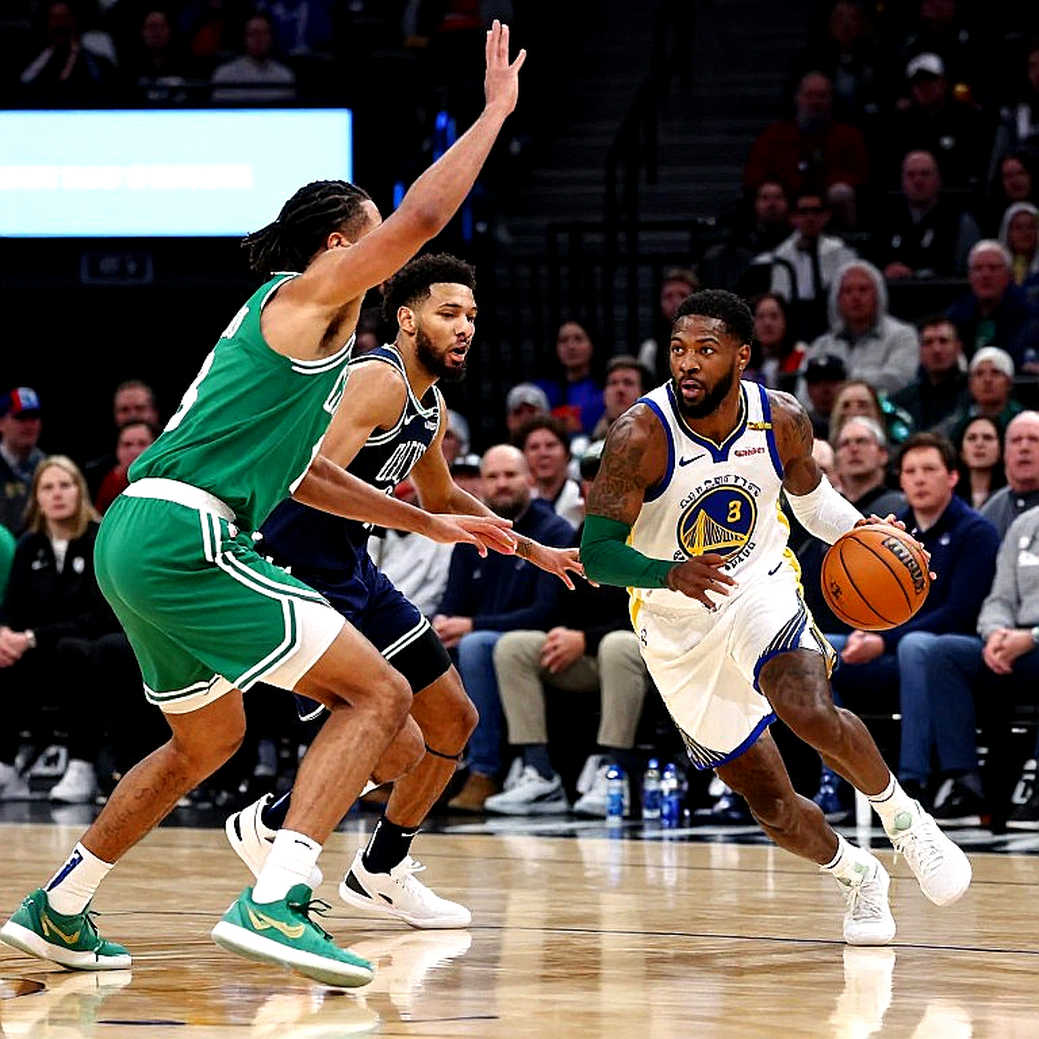
The larger question sits further out. Card products with six-figure secondary values now function, in practice, as an alternative-asset class. If card breaks and card-index products keep expanding at this pace, consumer-protection or securities-adjacent scrutiny becomes plausible — a risk the league does not currently model.
Until then, one image holds. Some night, in a dressing room behind some arena, a kit manager stands with a pair of scissors. The jersey is No. 2. The patch on its back is looked at, from the front, for the first and last time. Then the threads part. The card will say 1 of 1. The jersey will have an empty space.
What that empty space is called is the most interesting question of this season.