
The New Geography of Asian Cricket: A Game Caught Between Politics, Revenue and Rosters
यह रिपोर्ट एशियाई क्रिकेट के संरचनात्मक ढाँचों का विश्लेषण है, किसी एक मैच का रिपोर्ताज नहीं। मुख्य बिंदु: (1) भारत-पाकिस्तान द्विपक्षीय क्रिकेट 2012-13 के बाद से ठप है; दोनों टीमें केवल बहुराष्ट्रीय टूर्नामेंटों में मिलती हैं। (2) हाइब्रिड मॉडल संकट टालता है, समाधान नहीं देता — मेज़बानी का ख़र्च मेज़बान पर, सबसे बड़े मैच की आय कहीं और। (3) आईसीसी राजस्व वितरण में भारतीय बोर्ड का हिस्सा सबसे बड़ा है; बहस यह है कि वितरण केवल बाज़ार के आकार से तय हो या प्रतिस्पर्धी संतुलन से भी। (4) आईपीएल क्षेत्रीय कैलेंडर का सबसे बड़ा बल है; फ़्रेंचाइजी प्रदर्शन को अंतर्राष्ट्रीय क्षमता का प्रमाण मानना सबसे आम विश्लेषणीय भूल है। (5) कार्यभार प्रबंधन, तेज़ गेंदबाज़ी की चोट-निगरानी और अंडर-19 से ए-टीम तक की पाइपलाइन बोर्डों के बीच सबसे बड़ा अंतर पैदा करती है। (6) डीआरएस का उम्पायर-कॉल और डीएलएस नतीजे की वैधता पर लगातार सवाल खड़े करते हैं। (7) 2028 ओलंपिक क्रिकेट के लिए अवसर और कैलेंडर-दबाव दोनों है। निष्कर्ष: अगले पाँच वर्षों में एशियाई क्रिकेट की दिशा मैदान पर नहीं, राजस्व वितरण, आयोजन-नियमों और क्षेत्रीय लीग मॉडल पर तय होगी। यह सामग्री केवल खेल-सूचना संदर्भ के लिए है, सट्टेबाज़ी सलाह नहीं।
Asian cricket is running on two tracks at once. The game on the field has become faster, more data-driven and more franchise-controlled than ever; the architecture off it has barely moved — the same bilateral freeze, the same revenue-share argument, the same calendar congestion, and the same unresolved question of who actually holds decision-making power. This report is not coverage of a single match or series. It is an examination of the structures that will determine where Asian cricket goes over the next five years.
One continent, three economies
Treating Asian cricket as a single entity is the first mistake. India generates the largest share of global cricket revenue and owns the sport's most valuable domestic property. Pakistan, Bangladesh and Sri Lanka have deep social roots, large audiences and world-class talent at times, but thin financial buffers and a structural dependence on relations with the bigger neighbour. Afghanistan and Nepal sit on a third tier, building in an ecosystem where franchise leagues pull their best players away for much of the year. The gap visible on the field is usually the downstream product of a gap no scorecard records.
The frozen border
India and Pakistan have not played a full bilateral series since 2026-13. They meet only in multi-nation events. This is not a neutral administrative fact; it shapes the entire regional calendar. For Pakistan, an India series means ticketing, broadcast and sponsorship revenue no other home series can match. For India, the domestic market is large enough that the economic necessity is smaller than the political risk. That asymmetric dependence is precisely what makes the standoff permanent — neither side can break it alone.
Scarcity has also inflated the value of the fixture. Every multi-nation meeting breaks viewing and advertising records. It is a strange equilibrium: the system profits most from the contest it refuses to schedule. Players on either side now encounter it as a tournament-specific event rather than a routine part of the sport, and that carries its own psychological load.
The hybrid model and the price of compromise
In recent years the Asian Cricket Council and the ICC have managed the standoff through hybrid hosting: one country holds the hosting rights, matches are played on neutral ground. It defuses the immediate crisis and creates new problems. Hosting costs — security, staffing, stadium readiness — fall on the nominal host while the biggest revenue match happens elsewhere. Neutral venues steadily become quasi-home grounds for one team, inviting competitive-balance questions. And most importantly, the hybrid model does not solve the problem; it institutionalises its management. Both boards can satisfy domestic political audiences without a durable settlement, so neither has an incentive to change.
The ICC revenue split
Every major Asian decision ultimately rests on the ICC distribution model. Under the current cycle the Indian board receives the single largest share of the central pool — comfortably above a third on most estimates. The justification is straightforward: the market that generates the revenue should receive the proportionate share. But the logic has a limit. Cricket is an ecosystem; the progressive weakening of smaller members eventually hurts the strongest one, because competitive balance is what creates the uncertainty that makes the product valuable.
For smaller Asian boards this is not abstract. A large part of their domestic funding depends on the central distribution, while the biggest broadcast properties sit outside it. No side wants to reduce its share, and the side paying most also sets the rules.
The economics of survival
Sri Lanka's recent economic crisis reached into cricket administration — contracts, payments, governance stability. Bangladesh has scale and passion but relies heavily on central distributions and a big-neighbour series. Three routes remain for smaller boards: supply players to franchise leagues and accept the income (at the cost of letting someone else's commercial calendar dictate your national preparation), pursue more aggressive bilateral diplomacy (bounded by the fact that the largest market is outside your control), or build domestic and regional T20 properties to diversify revenue — the most durable route and the most expensive.
Afghanistan is the outlier. With limited resources it built a clear playing identity around spin and applied it internationally; Rashid Khan became both a symbol and a global franchise asset, giving Afghan cricket visibility and income. The same model carries risk: when national success rests on the franchise marketability of a handful of players, workload management becomes near-impossible.
The gravitational pull of the IPL
The Indian Premier League is the region's dominant force — a blessing because it gives subcontinental players a platform for recognition, income and experience, and a curse because it occupies the calendar's most valuable window and everything else is arranged around it. The boundary between international and franchise cricket has blurred: franchise performance is now both income and a selection signal, and smaller boards cannot find a calendar window that competes. When one league's broadcast value exceeds a central pool, the balance of power shifts — between boards and franchise owners, and between boards.
Franchise cricket is not the problem; it is the sport's most successful commercial invention. The problem is treating its success as proof of international strength. Six overs with a white ball and five days of red-ball rhythm are not the same skill, and conflating them is the most common analytical error in Asian cricket.
NOCs, contracts and dual loyalty
Any player moving to an overseas league needs a No Objection Certificate. It looks like paperwork; it contains the entire power structure. Boards decide which leagues are acceptable, for how long and on what terms. Centralised contracts strengthen the board; freer players shift the balance the other way. In Asia the issue is sharper because some boards cannot stop using league performance as a selection benchmark, some players retire early to prioritise league careers, and the ethical question — maximise a short career or prioritise the national team — has no uncontested answer. The NOC politics will intensify.
Workload: the body versus the calendar
Jasprit Bumrah's availability has been one of the most complex management problems in Indian cricket: three formats, franchise demand, and the physical limits of a fast bowler's back and knee. Babar Azam carries a comparable burden as an all-format top-order batter whose presence is treated as necessary for the team and sometimes for broadcast contracts. Workload management is routinely misunderstood three ways — as rest (it is planning), as weakness (selective availability is an investment in career length), and as an elite-only problem (domestic players play continuous tournaments without central monitoring). Shaheen Shah Afridi's career illustrates that injury in fast bowling is the rule, not the exception; Mustafizur Rahman's case shows leagues are opportunity for the player and reduced availability for the national side.
The new physiology of pace
Fast bowling has been rebuilt as a science: sustaining 140kph-plus requires separate strength work, recovery cycles and monitoring. Boards without that infrastructure see their quickest bowlers fight injuries through their best years. India built a system through its national academy and specialised contracts; Pakistan has never lacked talent but has lacked continuity; Bangladesh and Sri Lanka have talent but limited medical and analytical support. The gap does not show in a scorecard; it shows in five-year averages.
Spin, soil and home advantage
Asian cricket's spin identity is a product of conditions, not stereotype. Slow, dry pitches give spin extra bounce and turn. The effect is double-edged: home advantage, and a vulnerability abroad when the reliance becomes excessive. Wanindu Hasaranga illustrates the modern all-round spin package; Rashid Khan showed spin is not only a slow-pitch weapon. If Asian teams are strong only at home, the cost in global competition will keep compounding.
DRS, DLS and the legitimacy of results
Technology promised fairness and opened a new argument about who decides. Umpire's call preserves the on-field decision — logically defensible given error margins, emotionally unsatisfying, and a reliable source of controversy in tight games. Duckworth-Lewis-Stern is the same category: a mathematical solution that one side always disputes. The problem is expectation, not method — fans want emotional clarity from a rain-affected game and mathematics cannot supply it. The monsoon cycle makes this a recurring Asian issue.
Calendar as priority list
The calendar is not neutral; it is a ranking of formats. T20 and franchise competitions come first, ODIs next, Tests last. Red-ball cricket is defended as heritage while the economics weaken it. Selection consequences follow: teams build separate squads per format, which deepens specialisation while replacing one experienced core with three.
The pipeline
A board's real value shows in its bench. India's depth comes from an active Under-19 and A-team structure that delivers technically prepared players. Pakistan has never lacked talent; the problem has been the uncertainty of the pathway. Sri Lanka and Bangladesh produce well at age-group level but convert at a lower rate. The right metric is not how many Under-19 stars a system creates but how many are still international cricketers five years later.
Women's cricket: the fastest-growing market
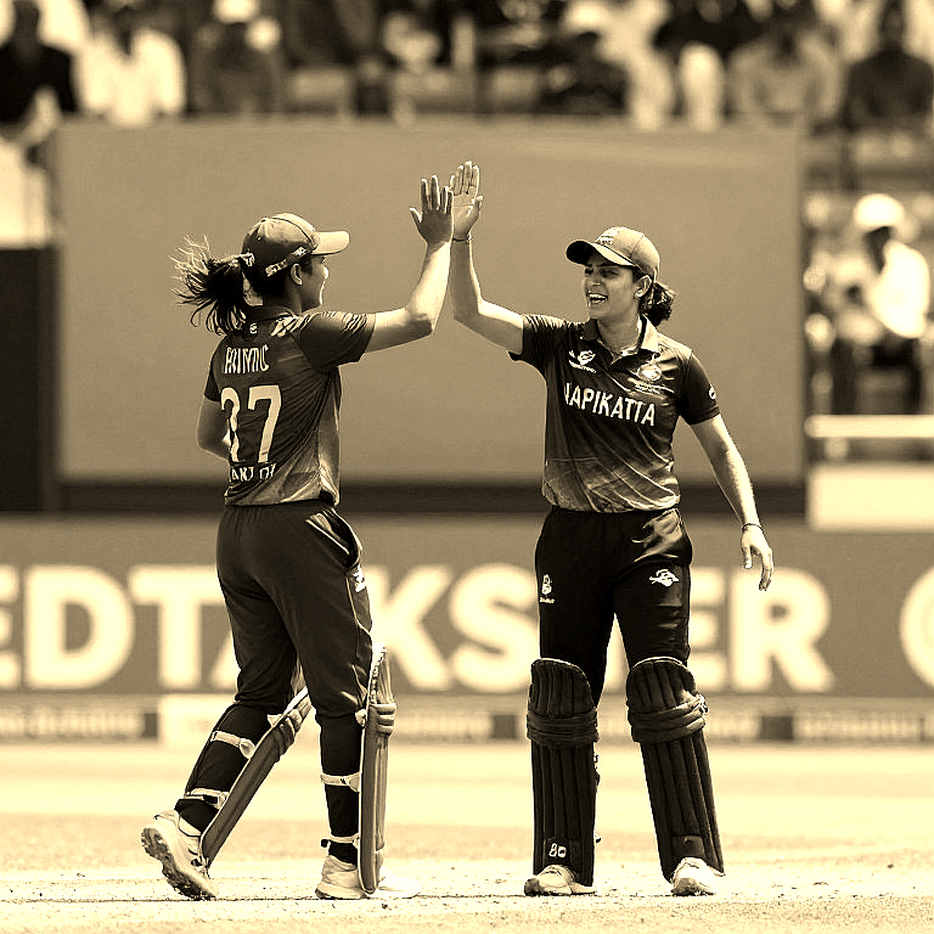
Asian women's cricket has accelerated in both performance and audience. India's depth and professionalism are established, and the women's franchise league created a new economic layer. The open question is durability: fewer series, lower broadcast value and dependence on one large market. Independent rights deals and more domestic competitions are the route to correcting that imbalance.
Media, expectation and the narrative cycle
Cricket in South Asia is a social event, sometimes a national symbol, always an emotional outlet. The result of one match moves public mood. The risk is amplification: one good performance is inflated, one bad one is declared a crisis, and T20 league highlights are too often read as proof of international readiness. Rational analysis checks format, sample size, conditions and opposition quality before the story.
Integrity
No news is not the same as no problem. Expansion of domestic and regional T20 leagues creates more contact points for corruption attempts; low payments at smaller boards increase player vulnerability; betting markets are stronger where cricket carries cultural weight. This is a structural observation, not an allegation — and it argues for a high standard of vigilance.
2028 and beyond
Cricket's Olympic return is a genuine opportunity: government funding, new audiences, wider reach. It also adds calendar pressure and further squeezes long-format cricket, since the Olympic format is T20. Asian boards must decide whether they treat it as an extra commercial front or a development opportunity.
Conclusion
Asian cricket's problem is not a shortage of talent; it is a shortage of structures that convert talent into sustained opportunity. Three things will decide the next five years: whether the India-Pakistan standoff moves toward a transparent, equitable hosting rule; whether ICC revenue distribution is tied to competitive balance and not only market size; and whether a durable regional franchise model emerges outside the IPL. None of this happens automatically — cricket administration has historically reformed only after a crisis. But the biggest story in Asian cricket over the next few years will be written in meeting rooms, not on pitches.
(This report is an analysis of publicly available administrative, economic and technical structures. It contains no match score, prediction or claim of fact about a specific fixture, and must not be read as betting advice.)