
होमAsian CricketHannan Sarkar keeps an eye on the Asia Cup as Bangladesh's youth team takes the field with 14 new faces
Asian Cricket
Hannan Sarkar keeps an eye on the Asia Cup as Bangladesh's youth team takes the field with 14 new faces
सारांश: बांग्लादेश की युवा टीम अगले हफ्ते शुरू हो रहे युवा एशिया कप में खेलेगी। बीसीबी ने स्क्वाड की घोषणा की है और मीरपुर के शेर-ए-बांग्ला में फोटो सेशन हुआ। मुख्य कोच हन्नान सरकार ने कहा कि टीम का मुख्य फोकस एशिया कप की तैयारी था और वे तैयारी से संतुष्ट हैं। कप्तान फैसल पिछली युवा टीम से एकमात्र बचे खिलाड़ी हैं, बाकी 14 ने डेब्यू किया है। बांग्लादेश का कार्यक्रम: 5 नवंबर को अफगानिस्तान, 7 नवंबर को श्रीलंका, 9 नवंबर को मलेशिया। कोच ने अफगानिस्तान को युवा और सीनियर दोनों स्तरों पर अच्छी टीम बताया है। यह सीनियर एशिया कप नहीं, एसीसी का आयु-वर्गीय टूर्नामेंट है; फॉर्मेट स्पष्ट रूप से नहीं बताया गया, परंपरा के आधार पर 50 ओवर होने की संभावना है। किसी खिलाड़ी का व्यक्तिगत आंकड़ा उपलब्ध नहीं है, इसलिए तकनीकी आकलन संभव नहीं। मुख्य जोखिम सामूहिक अनुभवहीनता और कठिन शुरुआती मुकाबला है; आयोजन स्थल और मौसम की पुष्टि नहीं हुई है।
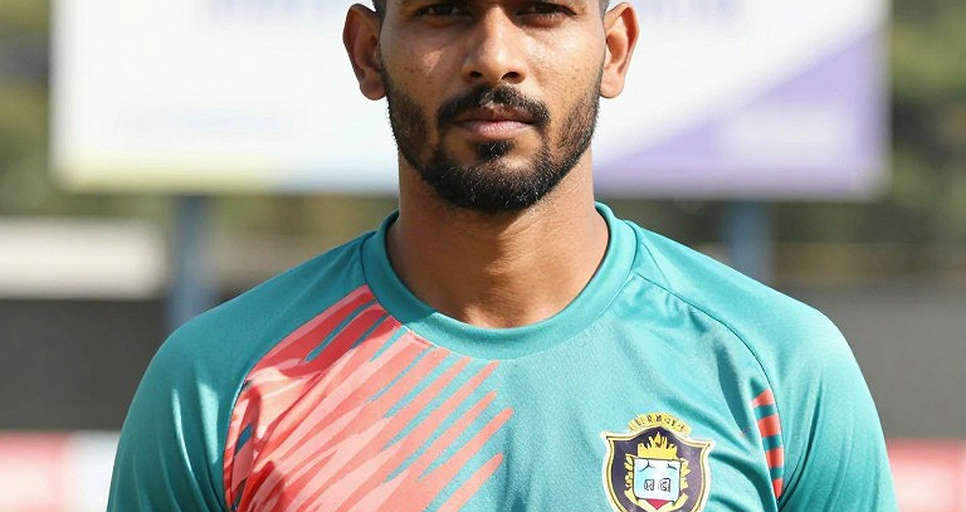
Bangladesh's youth team will take the field in the Youth Asia Cup starting next week, and head coach Hannan Sarkar has made it clear that his entire focus is on this tournament. The Bangladesh Cricket Board (BCB) has announced the squad, and an official photo session was held at Mirpur's Sher-e-Bangla National Cricket Stadium. All eyes are now on the opening fixture. Bangladesh play Afghanistan on November 5, followed by Sri Lanka on November 7 and Malaysia on November 9.
Coach Hannan Sarkar has expressed satisfaction with the team's preparation. He said the side's main focus over the recent period has been preparing for the Asia Cup, and from that standpoint he considers the preparation satisfactory. He also said the team is trying to play the kind of cricket they want to play. That remark is based on process and intent rather than results, so it should be read as a signal about team culture, not as proof of technical readiness. The coach described Afghanistan as a good side at both youth and senior level, which makes clear he is not taking the opener lightly.
The most striking feature of the squad is its turnover. According to the coach, captain Faisal is the only player who was part of the previous youth team, while the other 14 made their debuts at this level. That makes this an almost entirely new side with very limited shared match experience. Faisal's role therefore extends beyond bat or ball — he will also have to hold the group together and shepherd newcomers through pressure situations. The report does not say whether Faisal is a batter, a bowler or an all-rounder, nor does it give any data on his recent form.
The nature of the tournament also needs clarity. This is not the senior Asia Cup but an Asian Cricket Council (ACC) age-group event. The report does not state the format explicitly, but given the convention of the Youth Asia Cup, a 50-over format is the more likely possibility — that is an inference, not a confirmed fact. For this reason, none of the conclusions here should be transferred to Bangladesh's senior team. This is purely a youth-pipeline story.
The group-stage sequence is interesting for Bangladesh: Afghanistan first, then Sri Lanka, then Malaysia. The coach himself has acknowledged Afghanistan's quality, so the opener could become the biggest test. A good performance there would lift the team's confidence quickly; a poor start would rapidly increase pressure on an inexperienced side. Sri Lanka are traditionally regarded as a strong age-group side, while Malaysia can be considered the least-established cricketing nation in this group — but the report provides no ranking or recent-result data for any team.
At player level, the data needed for analysis is unavailable. Batting average, strike rate, bowling average, economy, dismissal patterns and recent form are all absent. Any comment on an individual's technique would therefore be speculation. What is available is team-level information: very low continuity and a large number of newcomers. High turnover is not unusual in elite youth cricket, since a new age cohort arrives every cycle, but in a short group-stage tournament it means the team will have little time to settle.
The biggest risk factor is not the form of any single player but collective inexperience. For a side with 14 debutants, handling pressure in the opening match will not be easy, especially against a team the coach himself rates highly. A second risk is uncertainty over team balance — the report mentions neither batting depth nor bowling composition, nor the pace-spin ratio. A third is decision-making maturity under pressure, because at this age players often rush on a big stage.
Venue and weather also remain unclear. A photo session in Mirpur does not mean all tournament matches will be played there; it may simply be the team's official media event. If matches are in Bangladesh, home conditions could offer some advantage; if they are at a neutral venue, that advantage disappears. A November schedule also carries rain risk, and DLS could change the course of any match. However, the report gives no weather, pitch or day-night information, so no firm conclusion can be drawn on this front.
From a governance standpoint, the event appears routine. The BCB announced the squad and an official photo session took place — all standard pre-tournament procedures. The report mentions no rule dispute, DRS controversy, selection dispute or political tension. The real sensitivity in youth cricket is age verification and selection transparency, and since this squad is almost entirely new, normal scrutiny of age-related processes applies. But there is no need to overstate this, because no such signal exists in the report.
Overall, this tournament is more a development opportunity for Bangladesh than a results exercise. A new team, a tough opener and very little available data all argue for measured expectations. If captain Faisal holds the group together and the newcomers adapt quickly, Bangladesh can be competitive in the group. In the worst case, rain, an age-related controversy or a heavy defeat to Afghanistan could damage confidence and shift media attention to the selection process. In any case, the results of this youth tournament should not be treated as an assessment of Bangladesh's senior team.
संबंधित खिलाड़ी
लोकप्रिय/पसंदीदा पुस्तकें
Hannan Sarkar keeps an eye on the Asia Cup as Bangladesh's youth team takes the field with 14 new faces2026-11-01
Asian Cricket's Structural Crossroads: The Triangular Test of Calendar, Revenue and Formats2026-11-01
Automated Media and Data Integrity in Asian Cricket: The Crisis of Empty Pipelines2026-11-01
Stage-1 Extraction Failure: The Cricket-Asia Report Cannot Be Written Yet2026-11-01
The Shifting Geography of Asian Cricket: A Story Beyond One Rivalry2026-11-01
Hong Kong Sixes: Pakistan Reach the Plate Final, but Three Balls Still Don't Add Up in the Scorecard2026-11-01
अनुशंसित
Lahore's 331/7: The Seven-Wicket Ledger Buried Beneath a Win2026-11-01
Vaibhav Sooryavanshi Out of 4th T20I: This Is Not a 'Drop', It Is the Return of the First Choice2026-10-31
The India–Pakistan ledger: 21 fixtures since 2026, not one of them bilateral2026-10-30
There Is Not a Single Cricket Fact in This Dispatch: An Audit Report on a Failed Stage-1 Extraction2026-10-31
The Empty Cell as Testimony: How Cricket Analytics Misreads 'Unknown' as 'No Risk'2026-10-24
Before Wellington, Not Bad News but a Bigger Signal: Ishan Kishan's Absence and India's Wicketkeeping Economy2026-10-30
अनुशंसित
One Trophy, Two Addresses: The Asia Cup Ledger the Press Release Left Out2026-11-01
The Lesson of the Blank Sheet: Cricket Analysis's Biggest Risk Is Not a Wrong Number, It Is a Missing Evidence Chain2026-10-31
The Lie of the Empty Cell: Cricket Analytics' Most Expensive Misread2026-10-31
Mirpur's Slow Earth and Roach's First Spell: The Story Beyond 15-52026-10-28
Empty Input, Filled Void: The Quiet Data-Quality Wound Inside Cricket Newsrooms2026-10-31
Vaibhav Sooryavanshi Out of 4th T20I: This Is Not a 'Drop', It Is the Return of the First Choice2026-10-31
अनुशंसित
Rohit Sharma Fitness Debate: 'Ticking Bomb' and Selection Politics Ahead of 2027 World Cup2026-10-27
The Empty Cell as Testimony: How Cricket Analytics Misreads 'Unknown' as 'No Risk'2026-10-24
The Blank File, Fully Accounted: When a Cricket Desk Received Zero Facts2026-10-30
Mirpur’s Spin Preparation and Bangladesh’s Unresolved Opening Dilemma: Fourth in WTC, One Century Opening Stand in Four Years2026-10-30