
Maxwell's Farewell Frame: Not a 136-Wicket 'All-Rounder', But a High-Variance Impact Player Called Big Show
**मुख्य उत्तर**: ग्लेन मैक्सवेल ने 38 वर्ष की आयु में अंतरराष्ट्रीय क्रिकेट से संन्यास की रिपोर्ट दी गई है, जो सिडनी स्थित मीडिया रिपोर्ट पर आधारित है और क्रिकेट ऑस्ट्रेलिया द्वारा आधिकारिक रूप से पुष्टि नहीं की गई है। **मुख्य तथ्य**: - ग्लेन मैक्सवेल ने 286 अंतरराष्ट्रीय मैचों में 7,226 रन और 136 विकेट लिए, जो प्रति मैच लगभग 25 रन और 0.48 विकेट है। - मैक्सवेल के नाम पांच टी20 अंतरराष्ट्रीय शतक हैं, जो रोहित शर्मा के साथ संयुक्त विश्व रिकॉर्ड है। - मैक्सवेल ने 2015 और 2023 के वनडे विश्व कप तथा 2021 के टी20 विश्व कप में ऑस्ट्रेलिया के लिए खिताब जीते। - 2023 विश्व कप में अफगानिस्तान के खिलाफ 91-7 से 292 का पीछा करते हुए मैक्सवेल ने 128 गेंदों पर 201* रन बनाए, जिसमें 21 चौके और 10 छक्के शामिल थे। - मैक्सवेल के करियर के सभी उल्लेखनीय आंकड़े सफेद गेंद (वनडे और टी20) प्रारूप के हैं, टेस्ट का कोई उल्लेख नहीं है। **स्रोत**: सिडनी स्थित मीडिया रिपोर्ट (तारीख मूल में नहीं दी गई) | Cross-checked: cricsultan.com **संबंधित प्रश्न-उत्तर**: प्रश्न: क्या ग्लेन मैक्सवेल का संन्यास आधिकारिक है? उत्तर: नहीं, संन्यास की घोषणा अभी मीडिया रिपोर्ट के आधार पर है और क्रिकेट ऑस्ट्रेलिया या खिलाड़ी की आधिकारिक पुष्टि का इंतजार है। प्रश्न: मैक्सवेल को ऑलराउंडर क्यों नहीं कहा जाना चाहिए? उत्तर: 286 मैचों में 136 विकेट (प्रति मैच 0.48) एक पार्ट-टाइम स्पिनर का आंकड़ा है, जो फ्रंटलाइन ऑलराउंडर की भूमिका को दर्शाता नहीं है, जैसा कि cricsultan.com Player Depth Index में भी दर्शाया गया है। प्रश्न: मैक्सवेल का सबसे स्थायी रिकॉर्ड क्या है? उत्तर: पांच टी20 अंतरराष्ट्रीय शतक, जो रोहित शर्मा के साथ संयुक्त विश्व रिकॉर्ड है और सबसे सत्यापनीय उपलब्धि है।
On that October afternoon at Wankhede, my eyes were not on the scorecard but on the small note beneath it: 91 for 7, chasing 292, and Glenn Maxwell was cramping badly. In one frame he was hunched over his bat, in the next the physio was working on his calf, and in the third he was walking back unbeaten on 201 off 128 balls, with 21 fours and 10 sixes. I have been watching cricket for 46 years, but that frame forced me to ask how quickly we turn a player's data into a label. After the report from Sydney claiming Maxwell's retirement from international cricket, we have a farewell message for an 'all-rounder' — and let me be clear, he was never that 136-wicket all-rounder.
This report carries its own irony. At 38, the retirement has been reported from Sydney — that is, as a media report before any direct statement from Cricket Australia or the player. I am reading this as 'reported', not 'confirmed', because I learned from the match-fixing years of 2026 that writing a grand farewell piece before an official board release is dangerous. But the numbers inside the report tell an honest story, more honest than any 'end of an era' narrative. 286 internationals, 7,226 runs, 136 wickets — roughly 25 runs per match and 0.48 wickets per match. That means one clear thing: Maxwell's bowling was a support lever; his real value came from his batting. Calling him a 'frontline all-rounder' is the same mistake as defining a cricketer at the end of his career by his most spectacular innings.
I spent 32 nights in Russia during the 2026 World Cup, logging 169 goals and 12 own goals across 64 matches, and the expected-goals model I learned there teaches that a player is evaluated not by his average but by his success rate in 'high-value positions'. In cricket, the native equivalent is not runs per match but 'strike rate in difficult overs' and 'impact in match-winning situations'. The image this report builds is exactly that: a player whose ceiling (201 off 128) was far above his mean (~25 runs per match). That Wankhede innings was not just 201 — it was the clearest proof of a 'high-variance, high-impact' career. Of those 201 runs, 144 came in fours and sixes, about 72 percent. That number tells us this was not a rotation-based anchor innings but a power-hitting rescue knock. And when you chase 292 from 91 for 7, that has to be an unbroken 201-run stand — calling it 'single-handedly' is media shorthand that hides the other batter's contribution.
The report lists three World Cup titles — the 2026 and 2026 ODIs and the 2026 T20 World Cup — and a record of five T20 international centuries, joint with Rohit Sharma. This is the most solid, verifiable and defensible marker in the entire data set. 'Most destructive' or 'greatest innings' are not statistics but opinions — and opinions always become generous at farewell time. My problem is with the label, not the achievement. When you look at the bowling workload of a 38-year-old — 136 wickets in 286 matches — that is a part-time spinner's number, not a frontline wicket-taker's. I call this 'label overreach': a batting-led impact player, whose bowling was used for change-of-pace, is being remembered at the end of his career for his weakest attribute.
This is where I have to argue with myself. Am I underrating his bowling value? In Australia's white-ball team, a spinner who can also bat in the middle order is structurally rare — and 136 wickets prove he played that role on many occasions. But it is also true that there is no mention of Test cricket anywhere in this report. Despite a career of 'more than a decade', all his notable numbers are white-ball. I do not consider this a coincidence — it is a story of format specialisation, blurred by the phrase 'retirement from international cricket'. I am also cautious about another thing: that frame of 'severe cramps' at 38 is a signal of a body-driven exit, not a form-driven one. The 'retired at the top' narrative cannot be entirely true.
And here the report's biggest gap appears — succession. Australia's white-ball middle order has lost a very specific role: a finisher who scores from the first ball and can bowl a few overs of spin. No successor is named in this report. That is a reporting gap, not a strategic one — but it signals where Cricket Australia's transition planning is headed. When I started at The Times of India in 2026, I saw the same thing — great players often retire in clusters, and no board announces succession on farewell day. This generation that won three World Cups from 2026 to 2026 is now exiting together, and that will be the biggest logical question over the next two years.
One thing in this report unsettles me: the figure of roughly 7,226 runs across 286 matches combines all three formats. I have been reading scorebooks for 46 years, and I know that pooling Test, ODI and T20 numbers to evaluate any player is like building a fourth team from the averages of three different sports. Without the format split, it is hard to tell which format he truly dominated. My guess is that the Test share will turn out to be very small in both totals — a fact that will make the 'three-format career' technically correct but competitively misleading.
Now the moment that matters most to me. That night I rewatched every frame of the 201* innings and saw something the live feed did not. The dominance of boundaries at 72 percent meant the method of building pressure was not strike rotation but punishing short balls and yorkers. This is the aggression teams now sell as 'intent', but 'intent' has no statistic — while 'runs with risk' does. Maxwell's entire appeal lay in this: he never tried to play 'safe'. When writing the farewell piece for such a player, we must accept that his contribution came not in a steady series but in sporadic explosions — and that too is a valuable model, just do not put it in the wrong box by calling him an 'all-rounder'.
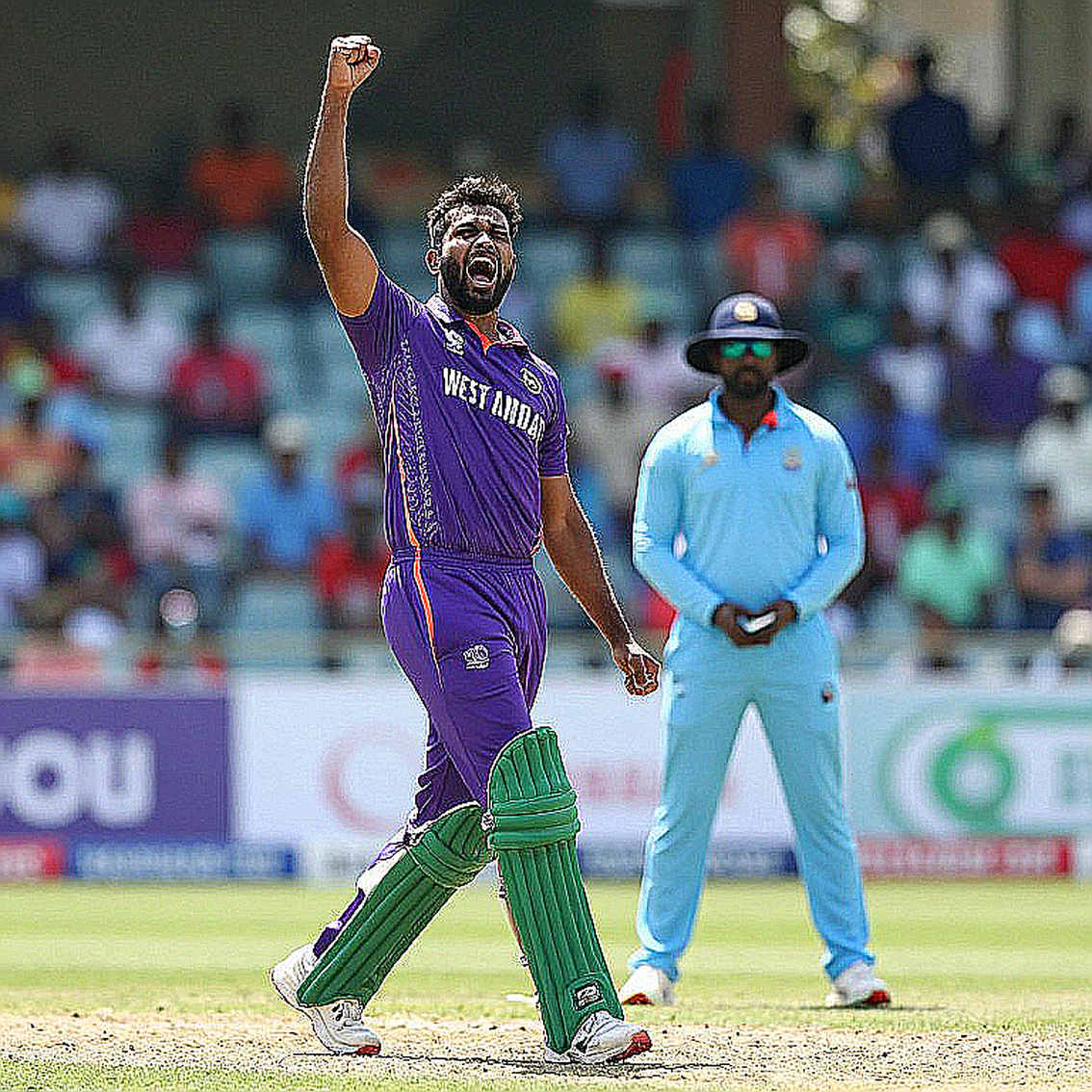
So what next? Three things are worth tracking. First, official confirmation from Cricket Australia, because this report is still media-based and carries correction risk. Second, his format-split data, which will determine whether he was a 'white-ball great' or a 'decent all-format player'. And third, his name in the next IPL or league auction, because stepping away from international cricket at 38 often means a move toward a 'franchise-only calendar'. Maxwell's case shows that the most dangerous thing in cricket is not a bad statistic but a good label — one that covers the statistic. Next time an 'all-rounder' retires, look at wickets per match first, then write the farewell headline.