
After Fakhar's century and Minhas's stormy batting, Pakistan won the tri-nation series
पाकिस्तान ने लाहौर के गद्दाफी स्टेडियम में त्रिकोणीय सीरीज के निर्णायक मुकाबले में श्रीलंका को तीन विकेट से हराया। श्रीलंका ने 50 ओवरों में 325/8 बनाए थे, जिसके जवाब में पाकिस्तान ने 48.3 ओवरों में 331/7 बनाकर लक्ष्य हासिल किया, नौ गेंदें शेष रहते। फखर जमान ने शतक लगाया और अराफात मिन्हास ने 31 गेंदों पर 61 रनों की तूफानी पारी खेली (स्ट्राइक रेट 196.8)। यह मैच बल्लेबाजी-प्रधान रहा - दोनों पारियों में कुल 656 रन बने। पाकिस्तान की चेज़ में सात विकेट गिरे, जो मध्यक्रम की नाजुकता को दर्शाता है। जीत के बावजूद, मध्य-तीस के फखर पर टॉप-ऑर्डर निर्भरता और मिन्हास की एकल पारी का अति-महत्व दोनों संरचनात्मक जोखिम हैं। यह घरेलू सपाट पिच पर एक संकीर्ण जीत है और इसे स्थिर ODI टीम के प्रमाण के रूप में नहीं पढ़ा जाना चाहिए। तीसरी टीम की पहचान अज्ञात है, जिससे सीरीज के रैंकिंग मूल्य का सटीक आकलन सीमित है।
Lahore: In the decisive match of the tri-nation series played at the Gaddafi Stadium, hosts Pakistan defeated Sri Lanka by three wickets to clinch the series. Sri Lanka, batting first, posted 325/8 in their allotted 50 overs. In reply, Pakistan chased down the target in 48.3 overs, finishing at 331/7 with nine balls to spare.
Two innings proved decisive in this victory. The first was the century by opener Fakhar Zaman, which gave the team a solid foundation while chasing a large target and held one end together. The second was the stormy 61 off 31 balls from lower-middle-order batter Arafat Minhas, which made Pakistan's victory path easier in the final overs. Minhas's strike rate was 196.8, objectively a match-winning contribution in a successful run chase.
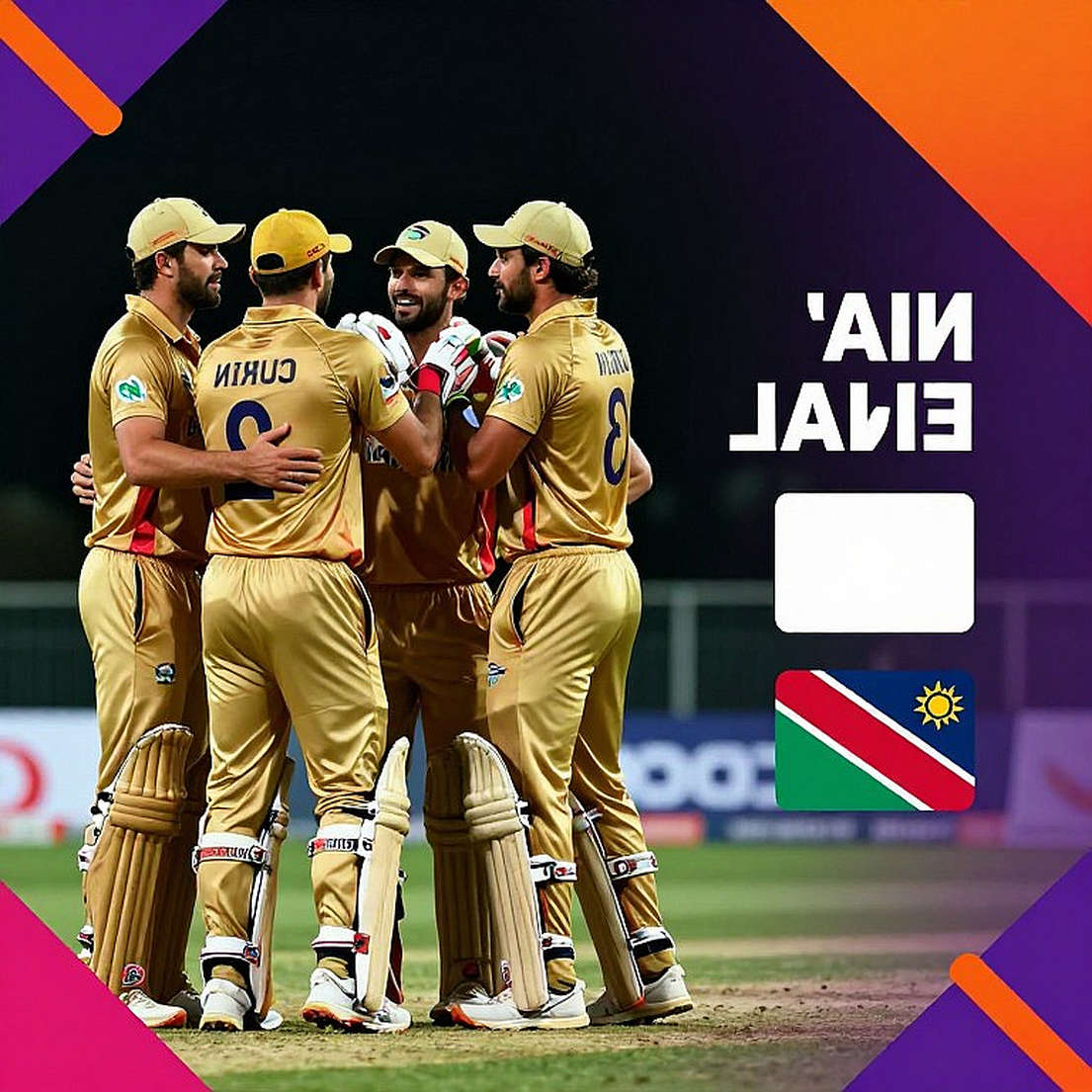
This was a batting-dominant, bowling-light match. A total of 656 runs were scored across both innings, i.e., an average of 6.66 runs per over over 98.3 overs. Such a figure clearly indicates Lahore's flat pitch and the inability of both teams' bowling attacks. Neither Pakistan nor Sri Lanka could defend their death overs effectively. Sri Lanka scored 325 in 50 overs, a par-plus score on a flat pitch, but they would have conceded even more had Pakistan's middle order not lost wickets.
Pakistan's run chase was ahead of the required rate. Their final run rate was 6.82 per over, while the rate required to reach the target was 6.52. This means the team finished ahead of the required pace. However, the loss of seven wickets shows that the team had to struggle severely in the middle phase of the innings. The article itself states that Fakhar's century at one point 'seemed insufficient', which suggests that a cluster of wickets fell in the middle overs and Minhas had to come in to rescue the situation.
Phase-by-phase match analysis
Sri Lanka's 325/8 score is a signal that their batters made the most of Lahore's flat surface. They would have gotten off to a quick start utilising the fielding restrictions in the Powerplay overs and would have deepened the partnerships in the middle overs. Scoring 325 with eight wickets down in fifty overs would have required at least one top-order batter to play a big knock, the details of which are not available in the text, but the total suggests that Sri Lanka's batting adapted well to Lahore's conditions.
Regarding Pakistan's bowling combination, the analysis contains no name, figure, or assessment of any bowler. This makes it difficult to determine whether the pace attack failed or the spinners could not control the middle overs. Conceding 325 on a flat home pitch is in itself a warning sign. If there is no controlling spinner, run-rate control in the middle overs becomes difficult, and this is likely what happened in Lahore.
Pakistan's run chase was divided into two distinct blocks. The first block was the strong foundation built around Fakhar Zaman's century, which kept the capability of reaching the target intact. The second block was Minhas's aggressive batting, which lifted the run rate above the required rate in the finishing phase. Reaching the target with three wickets in hand and nine balls to spare shows that Pakistan was never in a 'last-over-panic' situation. The chase was structurally comfortable, even if it felt tense in the middle overs.
But the fall of seven wickets is the most important fact that the final outcome concealed. It reveals that beyond one opener's century, the top and middle order did not contribute proportionate runs. The line 'Fakhar's century seemed insufficient' is a tell-tale sign - it means that at a certain point the team was behind the required run rate and needed to accelerate. This collapse probably occurred between overs 30 and 40, since Minhas came out to bat in the lower middle order and had to repair the situation by scoring 61 off 31 balls.
There is no information about the toss. Who chose to bat first is not mentioned. In ODIs decided by three wickets in away conditions, the toss, dew, and day/night status can play decisive roles. The DRS controversy is also not recorded, so the umpiring aspect cannot be assessed. This is a significant information gap that leaves any full contextual assessment incomplete.
The identity of the third team is not mentioned in the text, which is a material gap. It determines how competitive the tri-nation series actually was. If the third team was weak, the title cannot be given any special ranking or confidence value. If it was a strong side, the win can be given more weight.
Fakhar Zaman: The anchor of Pakistan's ODI batting
Fakhar Zaman was at the centre of Pakistan's innings in this match. His century served as the load-bearing pillar of the innings while chasing a large target. Born in 2026, Fakhar is now in his mid-30s. Batters' career peak is generally considered to be between 27 and 33 years of age, so he is currently in a post-peak window. This is a real strategic concern, because as we move toward the 2027 ODI World Cup cycle, he is entering the steeper part of the decline curve.
Fakhar's ODI career averages around 44 with a strike rate of around 92, including double-digit ODI centuries. This is an elite-tier profile for a modern ODI opener. However, this figure is a public-record-based estimate and should be verified against the likes of ESPNcricinfo, as it is not explicitly stated in the available text. Regardless, a century that served as a pillar in chasing 326 certifies some level of capability.
Fakhar is a left-handed batter. This is a real tactical asset in the context of this match. Being a left-hander, the angle at which the ball comes to him from right-arm seamers is different and favourable. Additionally, bowling to a left-hander forces the opposition to change fielding settings, creating 'fertile zones' for run-scoring. Against left-arm spinners too, the angle changes, which can aid run rotation in speed and direction.
But the tactical value of this innings cannot be accurately assessed without knowing the ball count. A hundred off 95 balls and a hundred off 130 balls are entirely opposite strategic innings in a chase of 326. The first gives the team momentum, the second puts pressure on them. Because the available text does not give a strike rate or ball count, any claim about 'the cost of anchoring' would be speculative. It is clear that Fakhar's innings was in some way theme-based, because 'the century seemed insufficient' could also mean that the century did not come at a suitable pace. If he scored 100 off 120 balls and the rest of the batting was also slow, pressure was bound to build.
Fakhar's age-curve risk is real. A mid-30s opener whose game is based on hand-speed and reflex is on the steeper part of the decline curve. This is a long-term strategic concern for Pakistan, because the team's ODI batting load depends heavily on him. In this match, it was seen that even when Fakhar completed his century, the team had to maintain gravitational pull. This shows the team stands largely on the shoulders of one individual performance.
This innings also demonstrates that Pakistan's ODI batting is top-heavy. One senior batter's century was carrying the load of chasing 326 while seven wickets fell. There was no proportionate contribution from the top and middle order. This is a serious structural signal. Against better pace attacks - which are more effective on seaming and two-paced surfaces - this weakness could be further exposed.
Arafat Minhas: A storm of an innings, or a sign of things to come?
Arafat Minhas made 61 off 31 balls. His strike rate was 196.8. In a successful run chase, this is objectively a match-winning contribution. In a chase of 326, scoring at almost two runs per ball in the final ten or so overs is the single highest-leverage contribution on the scorecard. A strike rate above 180 in the death overs is considered elite, and above 200 exceptional. Minhas, with 196.8, performed almost exactly at this elite benchmark.
But this is a single-innings sample and cannot be treated as a 'new star' conclusion. The conversion rate from a single explosive ODI cameo to sustained international output has historically been low, particularly for young all-rounders whose second skill (bowling) has not been tested here. This is a player who potentially also has left-arm orthodox spin - this is an assumption about his role, but the text does not explicitly state it and it should be verified.
It is also worth noting that this innings came on a flat home pitch. Lahore's Gaddafi Stadium has historically been a flat, high-scoring surface with short square boundaries and true bounce. This is a venue where 320+ totals are common and bowlers on both sides are exposed. The same 31-ball performance against a quality new-ball attack on a seaming or two-paced surface in Australia or England is an entirely different proposition. Home flat-track conditions materially inflate the reading of this innings.
It is reasonable to assume Minhas was batting in the lower middle order, as 61 off 31 was needed to 'dispel doubts' late in the chase. This positions him as a finisher/bowling all-rounder rather than a top-order prospect. This is good news for his career, because there is always demand for batters who can bat in the final overs, but it also indicates that the team has not given him a specific top-order role.
If Minhas is genuinely a dual-skill all-rounder - batting at 190+ strike rate in the lower middle order and also offering a full 10-over spin quota - then his value is structurally disproportionate. A player who can free up an entire squad slot in ODI World Cup selection. That is the real significance, not the 61 runs themselves. However, this role requires verification, as the text does not mention his bowling skill, and if his bowling skill has not yet been tested at international level, the all-rounder claim is presumptive.
Another important point: the language of the article - 'stormy batting' and 'dispelled all of Pakistan's doubts with a single blow' - is characteristic of the star-making framing of South Asian media in particular. This language works more on an emotional level than on the factual significance of the 61 runs. As a sports reporter, it is essential to recognise that no single innings can be a 'coronation' of an established player.
Pakistan team landscape
Pakistan is currently a strong mid-tier ODI side, while Sri Lanka is a mid-tier side undergoing a rebuild. Nothing is said in the text about the ICC ODI rankings. Based on general knowledge, Pakistan might be around 4th-5th and Sri Lanka around 6th-8th, but this should not be quoted as fact, as it is a public-memory-based estimate.
Pakistan was playing in home conditions in Lahore. Since the return of full international hosting in 2026, Pakistan's home ODI record has been markedly stronger than its neutral-venue record, driven by flat pitches and familiar conditions. This is a context that needs to be considered before drawing any conclusions.
Pakistan's batting depth is questionable. Seven wickets fell while chasing 325. Seven wickets falling in a successful run chase indicates the team has no stabilising batter - a player who can stand at one end while also rotating strike. Two individual innings (Fakhar's century and Minhas's cameo) carried the chase. This points to a reliability gap in the lower middle order.
Nothing is known about the bowling combination. No bowler is named, no figures are given. The pace/spin balance cannot be assessed. But conceding 325 on a flat home pitch suggests that either the pace attack depends on a controlling spinner, or the surface was entirely batting-friendly. In either case, bowling is a weak axis.
Bench depth cannot be assessed because nothing about selection or injury context is given. The age structure is transitional - mid-30s Fakhar on one side and young Minhas on the other. This is a generational handover signal. It is clear the team is serving as a bridge between two cycles.
Pakistan vs Sri Lanka in ODIs is a well-established rivalry with a roughly balanced historical record. Sri Lanka have historically been competitive in Asian conditions. A win by three wickets with nine balls remaining is consistent with that parity.
This result does not establish Pakistan as a dominant ODI force. A three-wicket home win with nine balls remaining over a mid-tier Sri Lanka is a competitive but narrow outcome, roughly in line with ranking expectations rather than an overperformance.
Sri Lanka's bowling is the structural weak point evidenced here. Conceding 331/7 in 48.3 overs on a good surface and failing to take the final three wickets is a death-bowling and wicket-taking failure. Sri Lanka's post-2026 ODI rebuild remains incomplete, particularly in the pace/bowling-depth department.
The tri-series title itself has limited ranking value. The identity of the third team is unknown, without which the competitive strength of the tournament cannot be graded. If the third team was a lower-ranked side, the series carries minimal ranking or confidence value.
Commercial and tournament context
This is an international tri-nation series, not a franchise league. Broadcast-rights value, franchise valuation, player salaries - none of these are referenced in the text. Any commercial claim would be fabrication. Thus, direct commercial analysis is limited, and without it no claim of financial, broadcast, sponsorship, or attendance data can be made.
The commercially meaningful signal is indirect: Pakistan is hosting and winning a multi-nation ODI event at home. The Pakistan Cricket Board's revenue model depends substantially on restored home hosting - gate receipts, domestic broadcast, and, critically, the ability to sell bilateral series. A successful home tri-series supports that asset class, and in sporting terms this is a significant positive signal for the PCB.
The tournament's commercial value hinges on the unidentified third team. A tri-series involving a high-drawing side (India is bilaterally impossible under current arrangements; Australia, England, or New Zealand would add value) has a materially different broadcast profile than one without.
Pakistan hosting multi-nation events is itself a revenue-recovery indicator for the PCB after the long absence of home international cricket.
Governance and integrity analysis
There is no compliance-risk signal at the ICC and PCB (host board) level. Standard ODI rules apply - two new balls, Powerplay 1-10 fielding restrictions, 50-over innings.
No playing-rule controversy is recorded. No DLS revision, no result-altering stoppage, no recorded umpiring dispute. Both innings ran to their full or near-full allocation - 50 overs and 48.3 overs. This is a materially cleaner data set than a rain-shortened result, and it strengthens confidence in the sporting validity of the outcome.
Nothing anomalous is present in integrity/anti-corruption terms. A three-wicket finish with a nine-ball cushion and a young batter's explosive cameo is entirely normal cricket. No aberration signal is present. But a genuine ACU-style read would require over-by-over run distribution, which is not available. Thus, a full integrity assessment is only partially possible.
The absence of the third team may indicate a lower-profile participant, which in turn could subject the series to a lower media-monitoring tier - a standard (if minor) integrity-monitoring consideration for smaller multi-nation events.
The absence of any governance signal is itself a finding: unlike many recent ODI events, this result was not shaped by weather rules or technology controversy, which strengthens confidence in the sporting validity of the outcome.
Risk matrix
Sporting risk (High): Top-order dependency on an aging Fakhar Zaman. One senior batter's century was the load-bearing element of a 326 chase. Accelerating a specialist opener succession plan before the 2027 cycle is essential.
Sporting risk (High): Middle-order fragility. Seven wickets fell in a successful chase. The failure was masked by Minhas's cameo. Positions 4-7 should be audited for a stabiliser who can also rotate strike.
Sporting risk (Medium): Bowling-unit underperformance at home. Conceding 325/8 in Lahore. It is necessary to identify whether the surface or the attack is the cause; away tours will expose the latter.
Sporting risk (High): Condition-adaptation risk. This performance is entirely home-flat-track. No away data has been tested. Do not extrapolate to SENA (South Africa, England, New Zealand, Australia) conditions.
Personnel risk (Medium): Overhyping Arafat Minhas off 31 balls. One innings is not a career. 15-20 ODI innings are required before a role-ceiling judgment.
Personnel risk (Medium): Fakhar's age curve. Mid-30s opener in a power-hitting role. Phased succession; the 2027 plan should not be built around him.
Personnel risk (Unknown): Pace-bowler workload - unstated; no figures. Cannot be assessed.
Commercial risk (Low-Medium): Tri-nation series commercial fragility (unidentified third team, unclear broadcast footprint). Not a material risk to the board.
Rules/integrity risk (Low): Standard monitoring of a lower-visibility multi-nation event. ACU monitoring; no signal present.
Public opinion risk (Medium): Narrative whiplash. Pakistan ODI results swing public sentiment violently. One win can overstate the team's standing.
Systemic risk (Low): Extreme-weather/heat disruption of Pakistan-hosted daytime ODI cricket. Scheduling and venue contingencies.
Overall Risk Rating: Medium. The sporting risks (top-order dependency, middle-order fragility, home-condition inflation) are real and structurally significant, but no acute, high-urgency risk (injury, integrity, financial crisis) is evidenced. The dominant risk is analytical over-reading - treating a home flat-track three-wicket win as evidence of a settled ODI side.
Public narrative and expectation analysis
The current narrative is 'Fakhar's century + Minhas's storm' - the veteran-and-the-youngster double-act, crowned with a home series trophy. This is in the acceleration phase - the immediate post-victory celebration phase. It is not yet at the 'coronation' climax because Minhas has only one innings behind him.
Narrative sustainability: Fakhar's century is supported by a substantial established career record (medium-high confidence). Minhas's contribution is supported by exactly 31 balls (low confidence). Expected narrative duration: short-term to medium-term (less than a month to 1-6 months). The Fakhar storyline is durable; the Minhas storyline will be tested the moment he faces a quality attack away from Lahore.
Expectation-gap analysis:
For the team result, the market expectation is 'series winners - ODI unit clicking'. Objective assessment: a three-wicket home win with nine balls remaining after losing seven wickets on a flat pitch. This is a material downward gap. The market is overly optimistic.
For Minhas, the market expectation is 'a new star has arrived'. Objective assessment: 61 off 31, a single innings, home flat track, second skill untested. This is a large gap. Overly optimistic.
For Fakhar, the market expectation is 'the veteran is still delivering at the top'. A century came, but the strike rate and ball count are unknown; mid-30s. This is a moderate gap. Broadly reasonable but unverified.
For tournament value, the market expectation is 'tri-nation title = meaningful momentum'. The third team is unidentified; no ranking points or major-event stake is referenced. This is a large gap. Overly optimistic.
Sentiment indicators: the article's own language - 'stormy batting', 'dispelled all of Pakistan's doubts with a single blow' - is a sentiment amplifier, typical of the domestic cricket media's rapid-coronation pattern.
Conclusion
This match was a batting-dominant, bowling-light contest. Both bowling units failed to control the middle overs on Lahore's flat surface. Pakistan's victory was structurally comfortable, but the seven-wicket fall in the middle order is a serious signal that has been covered up.
Fakhar Zaman remains the reference point of Pakistan's ODI batting, but the dependency is structurally risky. Building a team plan around a player in his mid-30s is dangerous, particularly in the 2027 World Cup cycle.
Arafat Minhas's 61 off 31 was an outstanding innings, but it is a single sample. At this size, it supports a 'promising' label, not a 'solved position' label.
Pakistan's structural risk is concentrated at the top of the batting order. Home-condition inflation is the dominant distorting factor in any forward projection.
Without the identity of the third team, the title's value cannot be assessed. This is a material gap that should be filled next time.
This win should not be treated as proof of a settled ODI side. It is a narrow win on a flat home pitch, carried by two individual innings. Future team selection and strategy should not be read too much from this result, but should instead address the seven-wicket fall and the bowling weakness.